reducing cat stress : Tips for a Calmer Feline
reducing cat stress : Tips for a Calmer Feline
Table of Contents
Have you ever noticed your furry friend acting a bit off? Maybe they’re hiding more than usual, or their eating habits have suddenly changed. Our feline companions are masters at masking discomfort, often suffering in silence. Just like us, they experience the world in complex ways, and their well-being is deeply tied to their emotional state.
Understanding the subtle cues of anxiety is the first step toward providing a supportive home. Unchecked, these feelings can lead to significant health and behaviour issues. This guide is here to help you decode those signals and create a peaceful sanctuary.
We will walk through the common causes of feline anxiety and provide clear, actionable steps you can take. Your goal is to foster an environment where your pet feels secure, content, and truly at ease.
Key Takeaways
- Your feline friend’s health is closely linked to their emotional well-being.
- Learning to spot subtle signs of anxiety is crucial for early intervention.
- Environmental factors play a major role in your companion’s stress levels.
- Practical changes at home can significantly improve your pet’s quality of life.
- A proactive approach helps prevent temporary anxiety from becoming a chronic issue.
- Creating a predictable routine offers security and comfort to your furry family member.
Understanding Cat Stress and Its Implications
Your feline companion experiences the world in unique ways. Their well-being is closely tied to how they process their surroundings. Recognizing the difference between immediate reactions and long-term tension is a vital part of being a great pet owner.
Recognizing Acute and Chronic Stress Signs
Acute stress appears suddenly. You might see a tense, crouched posture with flattened ears and dilated pupils. The tail is often tucked, and vocalizations like hissing can occur.
Chronic signs are much subtler. Look for shifts in daily patterns, like changes in eating or grooming. Your pet might hide more or seem less playful over time.
The Impact of Stress on Feline Health
Prolonged tension can seriously affect your pet’s health. It can lead to issues like urinary problems or a weaker immune system. The body’s systems are not designed for constant pressure.
Consulting your veterinary team is crucial if you notice behavioral changes. They can rule out other causes and provide guidance.
| Stress Type | Common Signs | Typical Duration |
|---|---|---|
| Acute | Freezing, shaking, rapid breathing | Short-term |
| Chronic | Altered eating habits, increased hiding | Long-term |
Unlike dogs, felines are solitary by nature. They may view others as threats. Understanding this helps you create a safer home.
Creating a Supportive Home Environment
Transforming your living space into a feline-friendly sanctuary begins with thoughtful item placement. The right setup can make all the difference in how comfortable your furry friend feels.
Essential Items for a Calm Cat
Your pet needs specific resources to feel secure. Provide a clean litter box, fresh food and water bowls, and sturdy scratching surfaces. Don’t forget comfortable resting spots and safe hiding places.
Where you position these items matters greatly. Animals prefer their food, water, and elimination areas separated. Keep them away from noisy, high-traffic zones.
For the litter area, choose a box large enough for comfortable movement. Place it in a quiet location and use unscented litter. Daily cleaning encourages consistent use and prevents problems.
Water intake is crucial for health. Many felines don’t drink enough. Consider adding a water fountain to traditional bowls. This can increase daily hydration.
Scratching posts satisfy natural instincts. Offer both vertical and horizontal options. This helps maintain claws and mark territory appropriately.
Every animal needs private retreat spaces. A simple cardboard box or dedicated hide provides security. Unlike dogs, these pets value having their own quiet place.
Spotting the Hidden Signs of Stress in Your Cat
The first clue that your companion is uneasy might not be a dramatic action, but a small shift in their daily routine. These animals are experts at hiding discomfort. You need to become a careful observer to understand their silent language.
Subtle Body Language and Behavior Changes
Watch your pet’s posture closely. A tense, crouched stance with a tucked tail can signal worry. Other subtle signs include exaggerated swallowing or frequent nose licking.
Changes in daily habits are often the biggest giveaway. Your feline friend might start hiding more or seem less interested in favorite spots. They may hesitate to use the litter box or become less tolerant of other people in the home.
Pay close attention to eating and drinking patterns. Some pets eat less when anxious, while others may overeat. A scruffy coat can mean they’ve stopped grooming themselves properly.
If you see major shifts in behaviour, like excessive vocalizing or toileting outside the litter tray, contact your vet. These actions can also point to underlying health issues that need a professional diagnosis.
Strategies for Reducing Cat Stress
Building trust with your furry friend requires understanding their personal comfort zones. Each animal has distinct preferences shaped by their instincts and past experiences.
What seems normal to you might trigger worry for your companion. Recognizing these differences is the foundation of effective anxiety management.
Decoding Your Cat’s Unique Signals
Learning to read your pet’s body language is an essential part of care. Watch for tail positions, ear movements, and vocal cues.
These signals tell you when your feline feels safe or uneasy. Consistent routines help minimize uncertainty in their environment.
Simple Adjustments to Ease Anxiety
Let your companion initiate contact rather than forcing interaction. This approach gives them control, which builds confidence.
Respect their need for quiet time and provide escape routes in every room. Avoid loud noises and sudden movements that might startle them.
| Feline Personality | Preferred Interaction Style | Environmental Needs |
|---|---|---|
| Confident & Social | Seeks frequent attention | Open spaces, interactive toys |
| Timid & Anxious | Prefers initiating contact | Multiple hiding spots, quiet zones |
If you notice persistent behavioural changes, consult your veterinary team. They can provide tailored advice for your specific situation.
A professional assessment ensures you address both emotional and physical health concerns properly.
Practical Daily Care Tips for a Calmer Feline
Consistency in daily life provides a foundation of security for your pet. When they know what to expect, they can relax and enjoy their environment.
Establishing a Consistent Routine
Your furry friend thrives on predictability. Set regular times for meals, play, and rest. This creates a comforting structure.
Interactive play sessions are essential. Dedicate 20-30 minutes twice daily for engaging activities. This strengthens your bond and provides mental stimulation.
Make sure to observe your companion’s behaviour during these moments. You’ll notice patterns and spot any changes early.
Here are key elements for a stable routine:
- Feed at the same times each day
- Maintain a clean litter box with regular cleaning
- Keep essential items in their usual place
- Provide consistent attention and affection
When adjustments are necessary, introduce them gradually. This gives your pet time to adapt in a comfortable way.
Environmental stability matters greatly. Avoid moving furniture or essential items without good reason. Your companion relies on familiar surroundings.
Managing Multi-Cat Environments and Territory Conflicts
Living with multiple feline companions presents unique challenges for their emotional well-being. Unlike dogs who enjoy social groups, these animals are territorial by nature. They may view other pets as competitors rather than friends.
Careful planning helps prevent tension between your furry family members. Providing adequate resources is the foundation of peaceful coexistence.
Ensuring Enough Resources for Every Cat
When you have many cats, competition for essentials can create anxiety. Follow the golden rule: one resource per animal plus one extra. This applies to litter boxes, food stations, and resting areas.
Position these items in different locations throughout your home. Cats prefer having options that allow access without confrontation. Separate water bowls prevent bullying at hydration stations.
Designing Separate Areas to Reduce Competition
Strategic space division gives each pet their own territory. Use furniture or barriers to create visual separation between areas. This is especially helpful when one animal tends to intimidate others.
Blocking sightlines with cat trees or room dividers provides safe passage for timid companions. They can move freely without feeling watched by dominant felines.
| Household Size | Recommended Litter Boxes | Food Station Setup |
|---|---|---|
| 2 Cats | 3 Boxes | 3 Separate Areas |
| 3 Cats | 4 Boxes | 4 Separate Areas |
| 4+ Cats | 5+ Boxes | Multiple Zones |
Consider your neighborhood’s feline population before adding more pets to your home. Outdoor territory conflicts can increase indoor tension when local areas have many cats.
Using Stress-Reducing Products and Environmental Enhancements
Innovative products designed specifically for animal well-being offer powerful support for anxious companions. These tools work alongside your daily care routine to create a more comfortable living space.
Pheromone Diffusers and Calming Tools
Pheromone products mimic natural chemical signals that create feelings of safety. They come in diffusers, sprays, and collars to suit different needs.
Consult your veterinarian to determine which option works best for your situation. These tools can significantly improve your pet’s comfort throughout the home environment.
Interactive Toys and Water Fountains
Engaging toys provide mental stimulation and physical exercise. Try different types to discover what your companion enjoys most.
- Feather wands that mimic bird movements
- Puzzle feeders that challenge their problem-solving skills
- Battery-operated toys for independent play
Water fountains encourage better hydration while adding environmental interest. Many animals prefer flowing water over static bowls.
Elevated perches give your furry friend a safe vantage point. Position them near windows for entertainment and security. Add comfortable bedding to create inviting resting places.
Multiple scratching surfaces and hiding spots allow natural behaviors. This comprehensive approach supports both physical and emotional health.
Preparing for Changes and Minimizing Anxiety
Major transitions in your household can create significant challenges for your pet’s emotional stability. These animals thrive on predictability, and unexpected shifts in their environment often trigger worry.
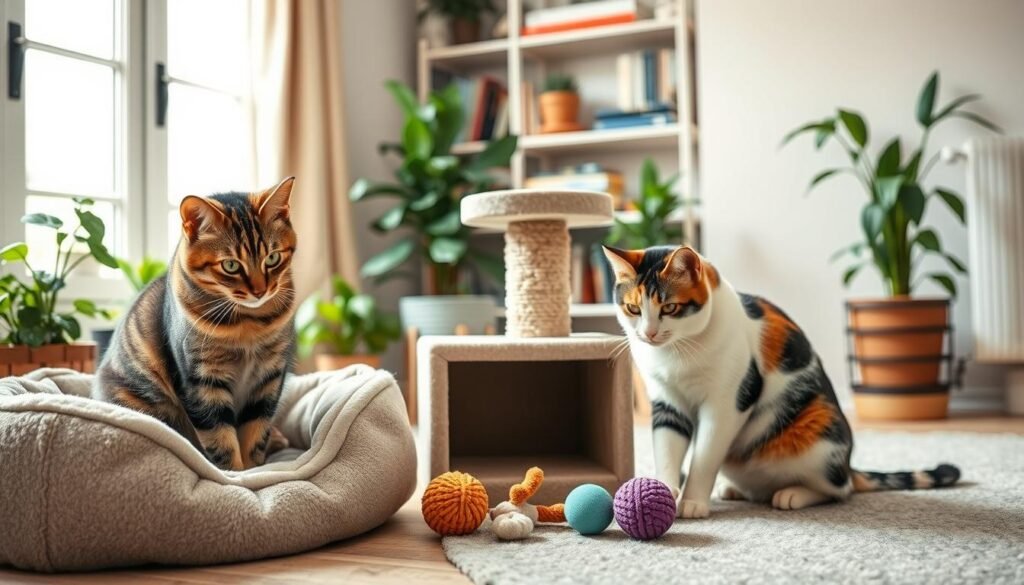
Planning ahead helps your companion adjust more comfortably. Gradual introductions prevent overwhelming feelings during important life events.
Tips for a Smooth Transition During Routine Shifts
When facing unavoidable adjustments, give your furry friend time to adapt. Introduce new elements slowly rather than all at once.
Maintain consistency in feeding schedules and play sessions. These familiar anchors provide security when other aspects shift.
| Type of Change | Preparation Time | Key Strategy | Expected Adjustment Period |
|---|---|---|---|
| Moving House | 2-3 Weeks | Gradual room introductions | 4-6 Weeks |
| New Family Member | 1-2 Weeks | Scent swapping first | 2-4 Weeks |
| Home Renovations | 1 Week | Safe room establishment | 1-3 Weeks |
| Schedule Changes | 3-5 Days | Incremental time adjustments | 1-2 Weeks |
Create a designated safe space with familiar bedding and toys. This refuge offers comfort during uncertain periods.
For outdoor access, allow your companion to choose their venturing times. This prevents territory conflicts with neighborhood animals.
Recognizing potential triggers in advance helps minimize unnecessary disruptions to your pet’s routine.
Conclusion
Caring for your feline friend’s emotional well-being is a rewarding journey that strengthens your bond. This commitment requires ongoing attention to their unique personality and needs.
By implementing the strategies discussed—from creating safe spaces to maintaining consistent routines—you can significantly improve your companion’s quality of life. Remember that each animal has individual preferences that deserve your respect and understanding.
Progress happens gradually with patience and observation. If concerning behaviors persist despite your efforts, consult your veterinary team promptly. They can rule out medical issues and provide expert guidance.
For complex situations, your vet may recommend a qualified behaviorist who can develop a customized plan. With dedication and the right approach, you can create a harmonious home where your furry family member truly thrives.
FAQ
What are some subtle signs my pet might be feeling anxious?
Look for changes in behavior like hiding more often, over-grooming, or shifts in appetite. Body language such as flattened ears or a tucked tail can also indicate your feline friend is uneasy.
How can I make my home more relaxing for my furry companion?
Provide plenty of vertical spaces, like cat trees, and ensure there are quiet, safe hiding spots. Keeping food, water bowls, and litter boxes in separate, low-traffic areas helps create a secure environment.
Are there specific products that can help soothe my anxious animal?
Yes, pheromone diffusers, such as Feliway, mimic natural calming signals. Interactive toys and water fountains can also reduce boredom and encourage mental stimulation, promoting a calmer state.
What should I do if I have multiple pets in the same household?
Ensure each animal has their own resources, including separate feeding stations, litter boxes, and resting areas. This minimizes competition and helps prevent territory conflicts.
How important is a consistent daily routine?
Maintaining a regular schedule for feeding, playtime, and interactions provides a sense of predictability. This stability can significantly lower anxiety levels for your pet.
When should I seek professional advice for my pet’s anxiety?
If you notice persistent signs of distress, significant behavior changes, or if your efforts don’t yield improvement, consult your veterinary team. They can rule out underlying health issues and recommend tailored solutions.