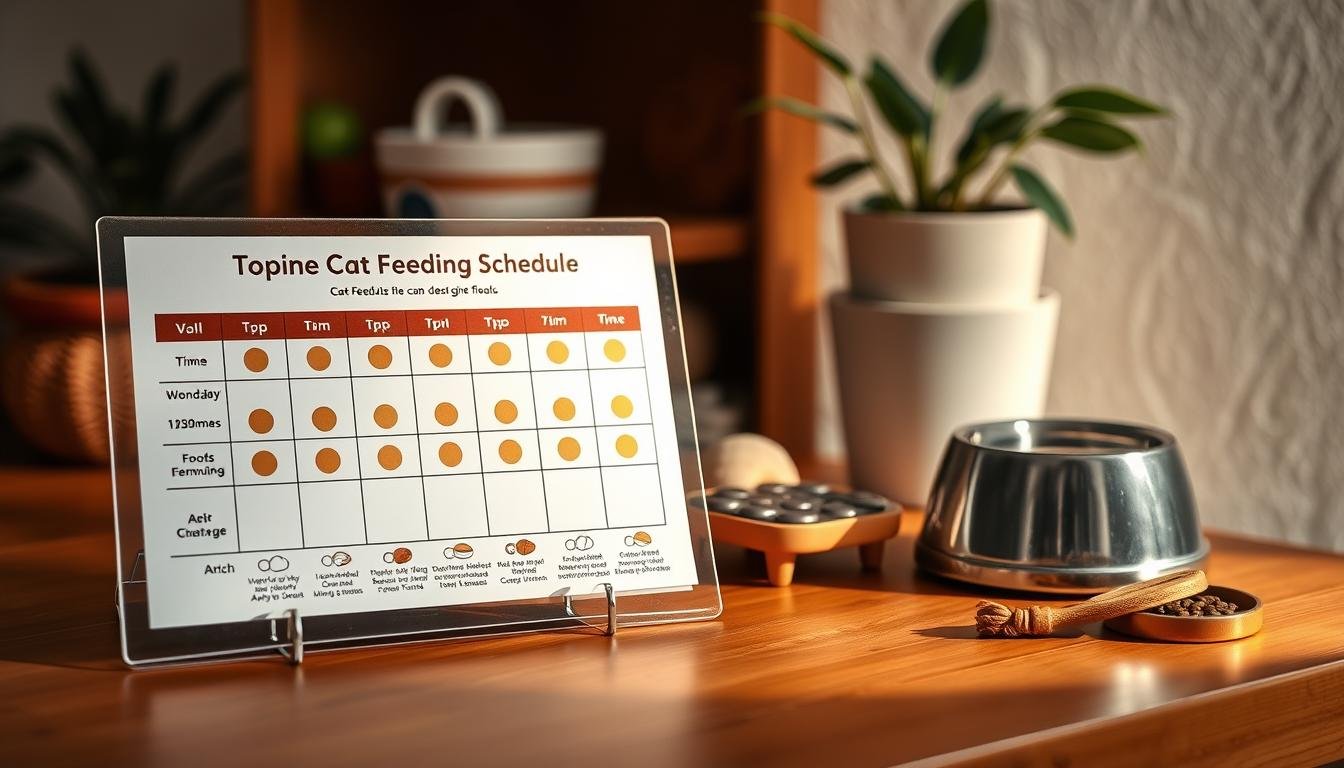
Optimal cat feeding schedule : A Comprehensive Guide
Optimal cat feeding schedule : A Comprehensive Guide
Table of Contents
There’s a special moment every day when your furry friend looks up at you, their eyes full of anticipation. That quiet connection before a meal is more than just a routine; it’s a cornerstone of your bond. Getting this part of your day right is one of the most caring things you can do for your pet’s well-being.
This guide is here to help you understand the best times for your feline companion’s meals. We’ll explore how a consistent routine aligns with their natural instincts. A proper plan prevents overeating and supports a healthy weight.
You will learn how different types of food fit into a daily rhythm that feels natural. Our goal is to give you the confidence to create a system that keeps your pet thriving. Let’s build a foundation for long-term health and happiness together.
Key Takeaways
- A consistent feeding routine strengthens the bond with your pet and supports their well-being.
- Proper meal timing helps prevent overeating and supports maintaining a healthy weight.
- Feeding times should align with your feline’s natural biological rhythms for optimal health.
- Understanding how different food types fit into a daily plan is crucial for good nutrition.
- This guide provides actionable advice for creating a sustainable and effective feeding plan.
- A well-structured routine is a key decision for your companion’s long-term vitality.
Why a Consistent Feeding Schedule Matters for Your Cat
Consistency in when you provide food creates a foundation for your animal’s physical and emotional health. This predictable pattern supports overall wellness in multiple important ways.
Maintaining a Healthy Weight and Digestion
Regular mealtimes help control portion sizes and prevent overeating. This approach supports digestive health by allowing your pet’s body to process nutrients efficiently.
Research shows that structured eating habits significantly reduce obesity risks. In fact, studies indicate that pets with consistent routines maintain healthier weights.
| Benefit | Consistent Routine | Irregular Pattern |
|---|---|---|
| Weight Management | Controlled portions | Risk of overeating |
| Digestive Health | Efficient processing | Potential issues |
| Stress Levels | Reduced anxiety | Increased uncertainty |
Reducing Anxiety Through Routine
Your furry companion thrives on predictability. Knowing when to expect meals creates security and comfort in their daily life.
Establishing reliable habits helps minimize stress-related behaviors. This structured approach contributes to your pet’s emotional well-being and contentment.
Understanding Your Cat’s Nutritional Needs
Your feline companion’s health journey begins with understanding their unique dietary requirements. As obligate carnivores, these animals require specific nutrients found primarily in animal sources.
Nutritional Requirements by Life Stage
Your pet’s dietary needs evolve significantly throughout their life. Kittens need more calories and specific nutrients for growth, while adults require balanced maintenance.
Senior animals often need adjusted formulas to support aging bodies. Always choose AAFCO-approved options for complete nutrition.
| Life Stage | Key Nutrients | Special Considerations |
|---|---|---|
| Kitten | High protein, taurine | Rapid growth support |
| Adult | Balanced nutrients | Weight maintenance |
| Senior | Joint support | Kidney health |
Balancing Wet Food and Dry Food Benefits
Wet food provides excellent hydration with its high moisture content. This helps support kidney function and urinary health.
Dry options offer dental benefits through their crunchy texture. Many owners find them convenient for daily use.
A combination approach often works best. This provides hydration from wet varieties and dental benefits from dry types.
Consider your pet’s specific health requirements when choosing their diet. Both options can meet nutritional needs when selected carefully.
How to Create Your Cat Feeding Schedule
Establishing a daily rhythm for your pet’s nutrition begins with thoughtful planning of meal times. This approach supports their natural instincts while fitting into your lifestyle.
A two-meal system works well for most adult animals. Offer food once in the morning and again in the evening. This pattern aligns with their natural hunting behavior.
Consistency is crucial for your companion’s well-being. Try to serve meals at the same times each day. This predictability helps regulate their internal clock.
| Feeding Approach | Recommended Times | Key Benefits |
|---|---|---|
| Two Meals Daily | 7 AM & 5 PM | Natural rhythm alignment |
| Three Smaller Meals | 7 AM, 1 PM, 7 PM | Better digestion support |
| Custom Schedule | Your preferred times | Personal convenience |
You can adjust these times to match your routine. The important part is maintaining regularity. Your pet will appreciate the predictability.
Always ensure proper portion sizes for each meal. Consult your veterinarian for specific recommendations based on your companion’s needs.
Determining the Right Food Types: Wet, Dry, or Combination?
Understanding the benefits of various food options helps you make informed choices for your furry friend. Each type offers unique advantages for your pet’s health.
Pros and Cons of Wet Food
Wet food provides excellent hydration with its high moisture content. This helps support kidney function and urinary health.
Canned varieties contain 60-80% water, which is vital for pets with specific health needs. While you pay more for water content, the benefits are worthwhile.
Benefits of Dry Food and Meal Enrichment
Dry food offers convenience and dental benefits. The crunchy texture helps clean teeth naturally.
This type of food has a longer shelf life and works well for grazing. Portion control is essential to maintain a healthy diet.
| Food Type | Key Benefits | Best Use |
|---|---|---|
| Wet Food | High moisture, kidney support | Main meals, hydration |
| Dry Food | Dental health, convenience | Grazing, snacks |
| Combination | Balanced nutrition | Complete diet |
A combination approach often works best. This provides variety while meeting all nutritional requirements.
Adjusting Feeding Times According to Your Cat’s Age
From playful youth to graceful senior years, your animal’s daily food routine requires thoughtful adjustments. The right meal frequency evolves as your companion grows. Understanding these changes helps you provide optimal care.
Feeding Guidelines for Kittens and Juveniles
Young animals have high energy demands for growth. Kittens under six months need three to four meals daily. Their small stomachs handle frequent, smaller portions better.

From weaning to four months, maintain this frequent schedule. After four months, transition to twice-daily meals. This supports their changing nutritional needs.
Considerations for Senior Cats
Older companions often benefit from adjusted routines. Senior pets may need two or three smaller meals daily. This supports changing metabolism and health conditions.
Watch for signs that your older animal needs changes. Decreased activity or health issues may require adjustments. Always consult your veterinarian for personalized advice.
| Life Stage | Recommended Meals | Key Considerations |
|---|---|---|
| Kittens (under 6 months) | 3-4 per day | Rapid growth, high energy |
| Adults (1-7 years) | 1-2 per day | Stable energy, maintenance |
| Seniors (7+ years) | 2-3 per day | Health conditions, lower activity |
Regular vet checkups help monitor your companion’s changing needs. Each life stage brings unique requirements. Your attention to these details ensures long-term wellbeing.
Tips for Transitioning to a New Feeding Schedule
Change can be challenging for our furry companions, especially when it involves their daily routine. Shifting meal times requires a gentle approach to ensure your pet feels secure.
Patience is your greatest tool during this process. Making small, gradual adjustments helps prevent stress and digestive issues.
Gradual Time Adjustments
Instead of a sudden shift, move your pet’s mealtime by just 15 minutes each day. This slow method is far less disruptive than larger changes.
Dr. Jane Smith, a feline behaviorist, suggests pairing new times with positive activities. Try offering meals after playtime or grooming for better association.
Consider providing smaller, more frequent meals during the transition. This helps your companion adapt without feeling overly hungry.
Monitoring Your Pet’s Response
Watch closely for signs of stress like excessive meowing or changes in eating habits. Every animal adjusts at their own pace.
Cat owner Emily Johnson shares, “My pet Milo was confused by the earlier dinner time initially. The gradual 15-minute daily shifts made the adjustment smooth.”
Be flexible and willing to slow down if needed. Your attentiveness ensures a successful transition to the new routine.
Factors to Consider When Setting Feeding Times
Your pet’s unique situation requires careful consideration when establishing their meal routine. Several individual elements work together to create the perfect timing plan.
Your companion’s overall health status is the most critical factor. Medical conditions like diabetes or kidney disease often require specific meal times.
Activity level plays a crucial role in determining nutritional needs. Highly active animals who enjoy outdoor time or vigorous play require more calories.
Health Conditions and Activity Levels
If your pet has specific health conditions, your veterinarian may recommend particular timing that aligns with medication schedules. This approach helps manage their condition more effectively.
The type of diet you choose also influences your timing strategy. Wet food cannot be left out as long as dry varieties, requiring more structured meal times.
Consider your animal’s natural hunger patterns too. Some companions are morning grazers while others become more active and hungry in the evening.
| Factor | High Activity Pet | Sedentary Pet | Pet with Health Conditions |
|---|---|---|---|
| Meal Frequency | 2-3 meals daily | 1-2 meals daily | As vet recommends |
| Calorie Needs | Higher intake | Maintenance level | Medically adjusted |
| Timing Flexibility | More consistent | Some flexibility | Strict schedule |
Always consult your veterinarian when establishing meal times, especially for animals with special dietary needs. Professional guidance ensures all important factors receive proper attention.
Portion Sizes and Caloric Needs for Different Life Stages
Understanding caloric needs helps you provide the right amount of nutrition for your companion. The quantity of food matters just as much as timing.
Understanding Caloric Intake Needs
Each life stage has unique requirements. Kittens need 2-3 times more calories than adults for proper growth. Adult animals require stable intake for maintenance.
Senior companions often need fewer calories due to reduced activity. Their metabolism slows with age.
| Life Stage | Daily Calories | Meal Frequency |
|---|---|---|
| Kitten (under 6 months) | 2-3x adult intake | 3-4 meals |
| Adult (1-7 years) | 200-300 calories | 2 meals |
| Senior (7+ years) | 180-220 calories | 2-3 meals |
A common mistake is feeding based on current weight instead of ideal weight. If your pet should weigh 10 pounds but weighs 14, feed portions for a 9-pound animal.
For wet food, a 10-pound adult needs about 9 ounces daily. Dry food requires approximately 3 ounces or 0.7 cups. When combining both, try 1/4 cup dry food twice daily plus wet food as a snack.
Practical Feeding Strategies for Everyday Life
Implementing an effective nourishment system involves understanding the pros and cons of different approaches. Your choice should align with both your routine and your animal’s requirements.
Meal Feeding vs. Free Feeding
Meal-based nourishment means providing food at specific times and removing uneaten portions. This method offers precise control over intake amounts. You can easily monitor consumption patterns.
Free-choice nourishment involves leaving dry kibble available continuously. While convenient, this approach carries obesity risks for animals who tend to overeat. Some pets self-regulate well with this method.
| Method | Best For | Portion Control | Health Monitoring |
|---|---|---|---|
| Meal Feeding | Weight management | Excellent | Easy |
| Free Feeding | Grazers | Limited | Difficult |
| Combination | Most households | Good | Moderate |
Using Automatic Cat Feeders Effectively
Automatic dispensers provide consistent nourishment when you’re away. These devices help maintain healthy habits through scheduled portions.
Many owners find these tools ideal for managing special diets. They prevent overfeeding while ensuring your companion receives meals on time. This consistency supports weight management goals.
Consider combining automatic feeding with interactive toys. This approach adds mental stimulation to your pet’s day. It turns mealtime into an engaging activity.
Conclusion
Your companion’s long-term vitality depends on the daily structure you create around nourishment. Establishing predictable meal patterns is one of the most impactful choices for your animal’s wellbeing.
Most adult felines thrive with two meals daily, typically morning and evening. This approach aligns with their natural hunting instincts. Your pet’s individual requirements should guide the specific timing.
Always consult your veterinarian when designing this important routine. They can help tailor portions to maintain ideal weight and address special dietary needs.
Consistency in timing and portion control supports digestive health and reduces anxiety. This structured approach strengthens your bond while promoting physical wellness.
As your companion ages, be prepared to adjust their meal plan. By implementing these guidelines, you’re supporting a healthier, happier life for your furry friend.
FAQ
Why is a consistent routine important for my feline friend?
A regular routine helps maintain a healthy body weight and supports good digestion. It also reduces anxiety by providing a predictable structure for your pet.
How do I know what my pet’s nutritional requirements are?
Your furry companion’s needs change with their life stage. Kittens, adults, and seniors all require different nutrients. It’s best to consult your veterinarian for personalized advice.
What’s the best way to balance wet and dry food?
A combination can offer variety and benefits. Wet food provides hydration, while dry kibble can help with dental health. Your vet can recommend the right mix based on your pet’s health.
How many meals should I offer each day?
Most adult animals do well with two meals a day, such as morning and evening. This helps manage their daily food intake and keeps energy levels stable.
Should I choose wet, dry, or a mix of both?
Each option has advantages. Wet food is great for moisture, and dry food is convenient for dental care. Many owners find a combination works well to meet their pet’s needs.
Do I need to adjust portions as my pet ages?
Yes, caloric needs change over time. Kittens need more calories for growth, while seniors may require less to avoid weight gain. Always monitor their body condition.
What’s the best way to switch to a new routine?
Make changes slowly over several days. Adjust meal times gradually and watch how your furry friend responds to ensure they adapt comfortably.
What factors affect how much I should feed?
Consider your pet’s activity level, any health issues, and their metabolism. A highly active animal may need more calories than a less active one.
How do I figure out the right portion size?
Check the food packaging for guidelines based on weight and age. Your veterinarian can provide specific recommendations to maintain an ideal body condition.
Is free-feeding or scheduled meals better?
Scheduled meals help prevent overeating and obesity. Automatic feeders can be useful for consistency, especially if your schedule varies.