Decode Your cat tail language
Decode Your cat tail language
Table of Contents
Have you ever wished you could truly understand what your feline friend is thinking? You watch them move through your home, a graceful mystery. While their purrs and meows offer clues, there’s a more subtle, constant story being told.
That story is written in the elegant movements of their tail. This remarkable appendage is far more than just a furry decoration. It is a powerful communication tool, a balance aid, and a sensitive sensory organ all in one.
Learning to interpret these signals can transform your relationship. You’ll move from guessing to knowing. This understanding helps you respond to their needs and emotions, building a deeper, more trusting bond.
Unlike their wild cousins, our domestic companions have a unique ability to walk with their tails held high. This is just one of the many fascinating behaviors we will explore together.
Key Takeaways
- Your pet’s tail is one of their most expressive tools for showing feelings and intentions.
- This guide explains the fascinating anatomy, including how it contains many bones and nerves.
- Understanding these signals is essential for building a stronger bond with your furry companion.
- Domestic felines use their tails differently than big cats, like lions and tigers.
- The tail serves multiple purposes beyond communication, like balance and spatial awareness.
Introduction to Cat Tail Language
Feline communication relies heavily on visual cues rather than vocal expressions to share feelings and intentions. This silent dialogue forms the foundation of how your pet interacts with you and their environment.
What Cat Tail Language Is All About
Your furry friend uses a sophisticated system of non-verbal signals to express everything from contentment to concern. These movements represent a complex vocabulary that developed through evolution.
Unlike humans who primarily use words, felines evolved to communicate through body positioning. This makes interpreting their appendage movements critical for understanding their emotional state.
Why Understanding Your Cat’s Body Language Matters
Learning this visual vocabulary empowers you to build a more trusting and fulfilling relationship with your companion. You can respond appropriately to their emotional needs when you recognize what they’re expressing.
This knowledge also helps you identify when your pet experiences stress, pain, or illness. Early detection allows for timely intervention and veterinary care when necessary.
Research shows that even felines themselves use these signals to determine friendliness or threat. Kittens learn this communication from their mothers, establishing patterns that continue throughout life.
Understanding Your Cat’s Tail Language
You can start interpreting your pet’s mood by focusing on three primary tail positions. These signals offer a clear window into their emotional world.
Recognizing these postures helps you respond in ways that strengthen your bond.
Key Signals: Tail Up, Question Mark, and Tucked Tail
An upright tail is a wonderful sight. This tail position signals a friendly, confident pet who is happy to see you.
It’s an open invitation for interaction, perfect for a gentle play session.
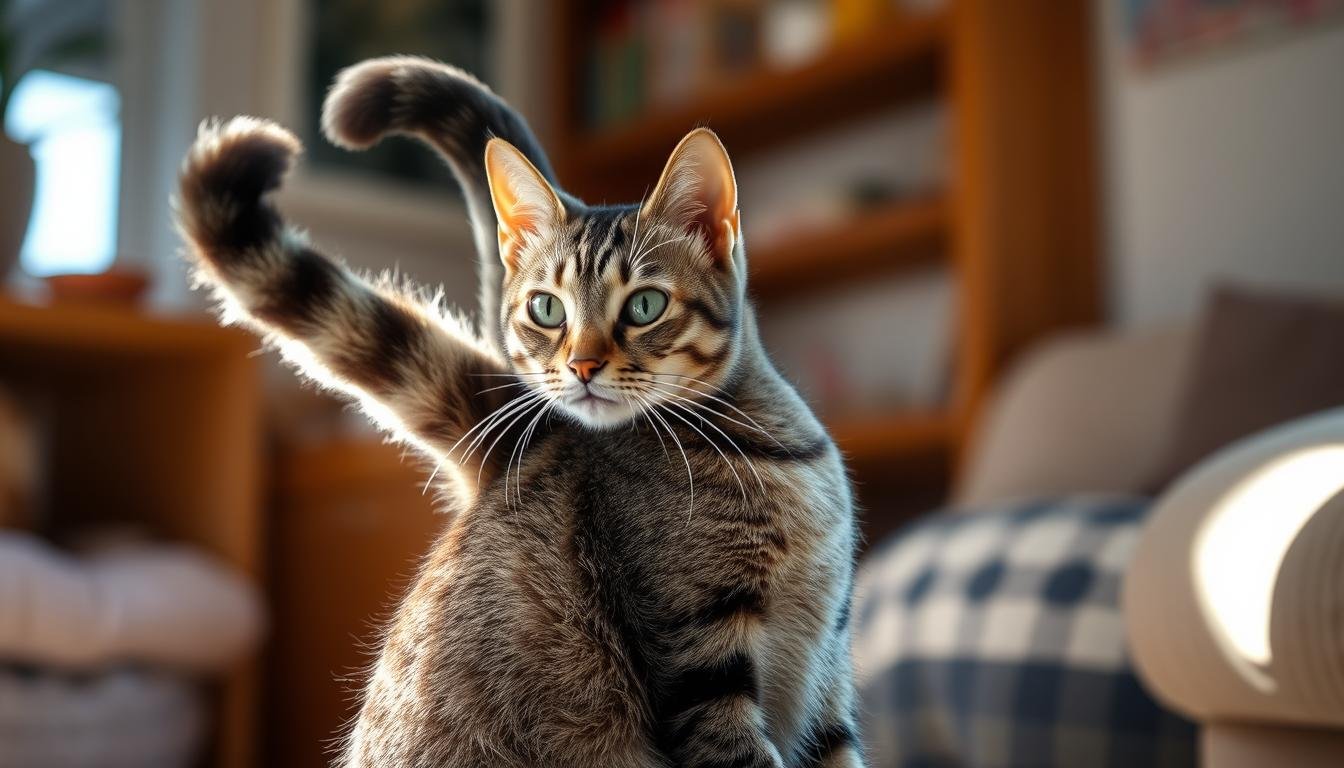
When the tip curves into a hook, it forms a charming “question mark.” This happy shape shows your companion is curious and content.
It’s a great time to engage, but remember most pets prefer scratches on the head or cheeks, not on the tail itself.
A tail held low or tucked between the legs sends a different message. This indicates fear, anxiety, or even pain.
Seeing this is your cue to provide a calm, safe space instead of approaching.
How to Use These Cues to Connect With Your Pet
Responding correctly to these signals builds immense trust. Your actions show you understand their feelings.
- Tail Straight Up: Go ahead and offer affection or a favorite toy.
- Question Mark Curve: Initiate calm interaction, focusing petting on their face.
- Tucked Tail: Give them space and assess the environment for stressors.
Kittens learn these signals early, using them to greet their mothers. This foundational communication continues into adulthood with you.
Interpreting Common Tail Movements
While a wagging tail in a dog often means joy, in your feline companion, it can signal a complex range of feelings. These tail movements are a precise language all their own.
Understanding the difference is crucial for a harmonious relationship.
Wagging, Twitching, and Swishing Explained
Pay close attention to the speed and intensity. A tail thumping or lashing quickly from side to side is a clear sign of irritation.
This is your pet asking for space.
A gentle, slow swish often means your furry friend is focused and playful, perhaps ready to pounce on a toy. A subtle twitch at the very tip can show mild frustration or intense concentration during stalking.
When your companion holds their appendage straight up and it quivers, they are usually very excited to see you.
Distinguishing Between Playful and Aggressive Movements
Context is your best guide. The same movement can mean different things based on the situation.
- Playful: Slow, flowing swishes while watching a bird toy.
- Aggressive: Fast, whip-like lashes when feeling threatened.
- Warning: A thrashing motion during petting means “stop now.”
Recognizing these signals helps you respond correctly, keeping interactions positive and safe for everyone.
Decoding Specific Tail Positions
Some tail positions are so distinct they instantly tell a story of intense emotion. Two of the most telling are the puffed-up tail and the tail wrapped around the body. Understanding these specific signals is key to responding correctly to your pet’s needs.
Puffed Up Tails: Indications of Fear or Threat
When your pet’s fur stands on end, making their appendage look huge, it’s a clear sign of fear. This is a defensive reaction to a perceived threat.
They are trying to look bigger to scare away whatever startled them. Common triggers include loud noises or unfamiliar animals.
Never approach a pet showing this tail position. They may see your approach as a new threat and react defensively. The best response is to give them space and remove the stressor.
Wrapped Around Behavior: A Sign of Trust or Discomfort
A tail wrapped around your leg is a friendly greeting, much like a hug. It shows your companion feels safe and affectionate with you.
However, if the tail is curled tightly around their own body while they are sitting, it can mean something different. This often indicates they are frightened, in pain, or unwell.
If you see this position frequently, a vet visit is a good idea to rule out health issues.
| Tail Position | What It Usually Means | Your Best Response |
|---|---|---|
| Puffed Up and Arched | Severe fear or feeling threatened. A defensive posture. | Give immediate space. Identify and remove the threat if safe. |
| Wrapped Around Your Leg | A friendly, affiliative greeting. A sign of trust. | Accept the affection calmly. A gentle pet on the head is appropriate. |
| Wrapped Around Their Own Body | Possible fear, discomfort, or illness. A self-soothing or protective gesture. | Provide a quiet environment. Monitor closely and consult a vet if it persists. |
Recognizing the context of these positions helps you provide the right support, whether it’s giving space or offering comfort.
Tail Communication in Social and Stressful Situations
Social situations often bring out the clearest tail signals in your feline companion. You see their true feelings when meeting new people or other pets. The tail becomes the main storyteller.
To truly grasp your pet’s mood, you must look at the whole picture. A single sign from one part of their body is not enough. You need to see the combination.
Recognizing Friendly Versus Anxious Tail Displays
A happy pet shows a confident behavior. Their tail stands tall and proud. They might even wrap it gently around your legs.
This is a warm greeting. It shows they feel safe and trust you completely.
An anxious or fearful cat feeling is very different. Their tail might be low or tucked away. The whole body language changes with it.
Ears may go flat. Whiskers might pull back. This signals a need for space and comfort.
Understanding this difference is key. It helps you respond in the right way. You build a stronger bond by respecting their emotions.
Tips for Enhancing Your Cat’s Well-being
Creating a peaceful home is key to seeing those happy tail wiggles. Your pet’s environment directly shapes their mood.
When you spot defensive postures, it’s a signal to act. Removing stressors quickly can prevent escalation.
Reducing Stress Triggers in Your Home Environment
Your furry friend needs safe spaces to retreat. High perches and cozy hideaways offer security.
Loud noises or sudden movements can startle your companion. Keep interactions with other pets, like dogs, calm and controlled.
Persistent nervous behavior might mean your pet’s surroundings need adjustment. A calm environment prevents stress-related health issues.
Interactive Play and Stimulating Tail Movement
Daily playtime is essential, especially for a single kitty. It satisfies their natural hunting instincts.
Engage your pet with various toys. Wand toys, feather toys, and laser pointers encourage healthy movement.
Chasing behavior is usually a sign of boredom, not pain. But constant tail chasing could indicate a deeper issue needing veterinary attention.
Proper stimulation leads to a more content and confident companion.
Conclusion
You have now unlocked a deeper level of understanding with your feline companion. This journey through the nuances of their expressive appendage gives you a powerful tool for daily interaction.
You can confidently interpret signals from a joyful greeting to a clear request for space. Recognizing the question mark curve or a puffed-up position allows you to respond with empathy.
Remember, these cues are one part of a bigger picture. Always observe your pet’s entire body posture and the situation. Your newfound knowledge will undoubtedly strengthen your bond, creating a happier, more harmonious home.
FAQ
What does it mean when your kitty’s tail is straight up?
A tail held high like a flagpole is a wonderful sign! It typically means your feline friend is feeling confident, happy, and friendly. You’ll often see this greeting when you come home.
Why does my pet’s tail sometimes look like a question mark?
That cute, curved shape at the top of the tail is a clear invitation! It signals a playful and cheerful mood. Your companion is likely open to some interaction or a fun game with a favorite toy.
My cat’s tail is wagging quickly. Is that like a dog’s happy wag?
Not exactly! While dogs often wag their tails when excited, a fast, thrashing motion in cats can indicate irritation, overstimulation, or even aggression. It’s best to give your pet some space when you see this.
What does a puffed-up tail indicate?
A tail that’s fluffed out, making your kitty look bigger, is a classic sign of being frightened or feeling threatened. This behavior is an attempt to scare off a perceived danger in their environment.
Why does my feline wrap her tail around my legs?
This is a loving gesture, much like a human hug. When your pet wraps their tail around you or another animal, it’s a sign of affection and trust. It’s a comforting behavior that shows they feel safe with you.
Should I be concerned if my pet’s tail is tucked away?
A tail tucked tightly against or under the body often signals fear, stress, or submission. It can also be a sign of pain. If this position is unusual for your companion, it’s a good idea to observe them closely and consider a vet check-up.
How can I use this knowledge to bond with my kitty?
Paying attention to these cues helps you understand your pet’s mood. You can respond appropriately—engaging in play when they’re cheerful or giving them quiet time if they seem anxious. This respectful communication builds a stronger, happier relationship.