Cat Mental Stimulation Strategies : Enrich Your Cat’s Life
Cat Mental Stimulation Strategies : Enrich Your Cat’s Life
Table of Contents
Welcome to your guide on creating a more fulfilling life for your feline friend. While your pet may seem perfectly happy napping all day, they actually have a deep need for regular engagement.
Our indoor companions face a unique challenge. They lack the natural opportunities to hunt and explore that their outdoor counterparts enjoy. This can lead to boredom and a less than ideal environment.
This article will walk you through simple, proven strategies. You will learn how to understand your pet’s natural behaviors and implement creative activities. Our goal is to help you build a daily routine that keeps your companion sharp and content.
Every animal is unique, but they all share a fundamental requirement for an engaging home. Whether you have a playful kitten or a calm senior, you will find practical ways to meet those needs here.
Key Takeaways
- Indoor pets require regular engagement to stay happy and healthy.
- A stimulating home environment prevents boredom and related issues.
- Understanding natural instincts is key to providing effective enrichment.
- Simple, creative activities can make a big difference in daily life.
- Strategies can be tailored for pets of all ages and energy levels.
- Providing enrichment strengthens the bond between you and your companion.
Understanding the Importance of Mental Stimulation for Your Cat
Engaging your pet’s mind is as crucial as feeding their body. Many owners focus solely on physical needs like food and shelter. But your feline friend requires mental engagement to thrive.
Regular activity provides both physical and psychological benefits. It helps maintain healthy weight and supports emotional balance. Your companion needs outlets for natural hunting and exploration instincts.
The Benefits of Regular Play and Exercise
Daily engagement offers numerous advantages for your pet’s wellbeing. It promotes weight management and reduces anxiety levels. Active animals tend to be more confident and better adjusted.
Play sessions allow your furry friend to express natural behaviors. This leads to improved mood and stronger bonds with family members.
| Benefits of Engagement | Consequences of Boredom |
|---|---|
| Healthy weight maintenance | Weight gain and obesity |
| Reduced anxiety and stress | Destructive scratching |
| Stronger owner-pet bond | Excessive vocalization |
| Natural instinct expression | Aggressive behaviors |
Consequences of Boredom and Understimulation
Without proper enrichment, pets may develop problematic behaviors. These can include furniture scratching and knocking items over. Some animals become excessively vocal when understimulated.
Chronic boredom can lead to more serious health issues. Inactivity contributes to obesity and related conditions. Psychological distress may manifest as over-grooming or aggression.
Providing adequate engagement supports overall quality of life. It prevents both physical and emotional health concerns. Your companion deserves this essential care for long-term happiness.
Understanding Your Cat’s Natural Instincts and Behaviors
The way your furry friend interacts with their environment speaks volumes about their primal needs. Domestic cats retain the hunting and exploration instincts of their wild ancestors. Understanding these natural behaviors helps you provide better enrichment.
Recognizing Hunting and Exploration Needs
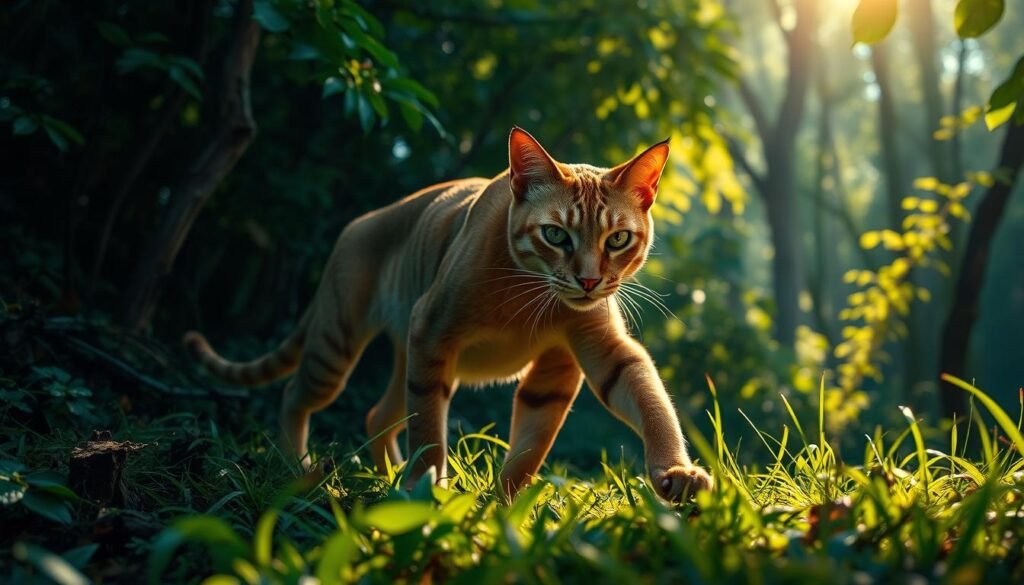
Your feline companion has deeply ingrained hunting instincts. These drives include stalking, pouncing, and capturing prey. Even in a home setting, these behaviors are essential for their wellbeing.
Play activities that mimic hunting provide crucial expression for these instincts. They are not just entertainment but fundamental aspects of your pet’s nature. Regular engagement satisfies their need for exploration and predation.
Interpreting Your Cat’s Behavioral Signals
Your companion communicates their interest through clear body language. Positive engagement signals include forward-facing ears and eager participation. They may bat at toys or chase laser pointers without aggression.
Recognizing when your pet needs rest is equally important. Signs of disinterest include walking away or ignoring toys. Heavy breathing or panting indicates it’s time to pause activities.
| Engagement Signals | Disinterest Signals |
|---|---|
| Forward-facing ears and alert posture | Walking away from toys or interaction |
| Eager batting at moving objects | Ignoring play invitations completely |
| Chasing behaviors without aggression | Heavy breathing or visible panting |
| Responsive interaction with owners | Hiding or seeking solitude |
Respecting these behavioral cues creates positive enrichment experiences. Learning to read your companion’s body language ensures activities remain enjoyable. This understanding helps you provide the right type of engagement at the perfect time.
Effective Cat Mental Stimulation Techniques
Discover practical methods to keep your furry friend’s brain active and prevent household boredom. These approaches work with your companion’s natural rhythms and instincts.
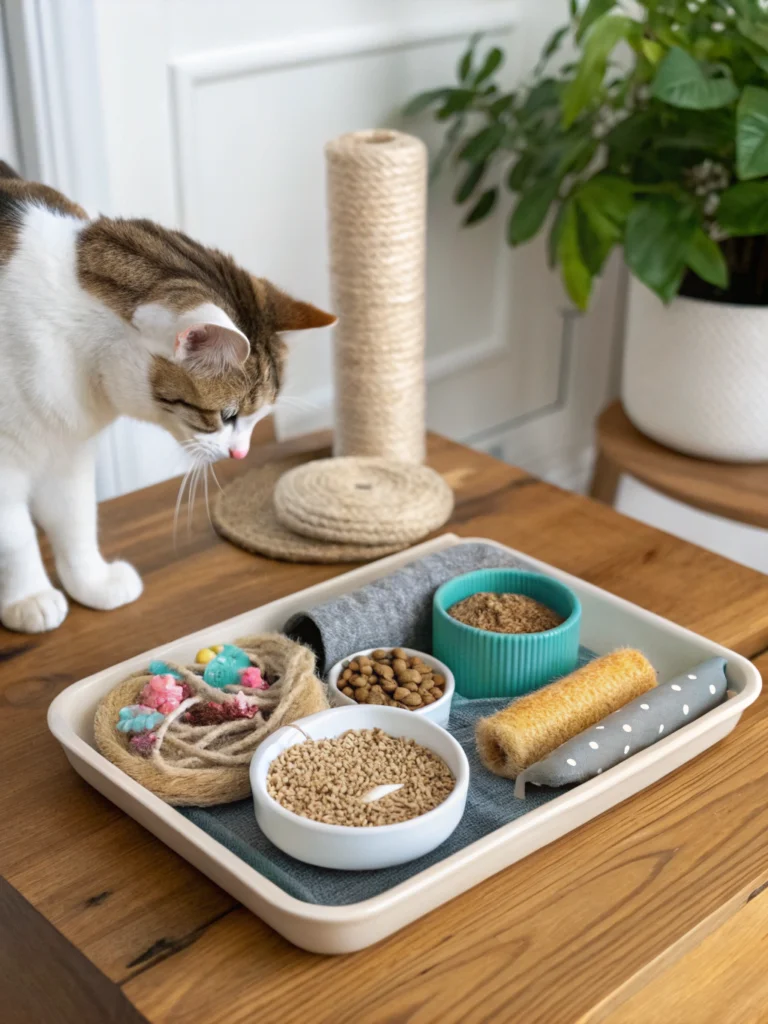
Interactive Toys and Puzzle Feeders
Schedule play sessions during dawn and dusk when your pet is naturally most alert. Keep each session brief—10-15 minutes works best for most animals.
Use these engaging tools to challenge your companion:
- Wand toys that mimic prey movements safely
- Puzzle feeders that dispense kibble as rewards
- Interactive track toys that channel hunting instincts
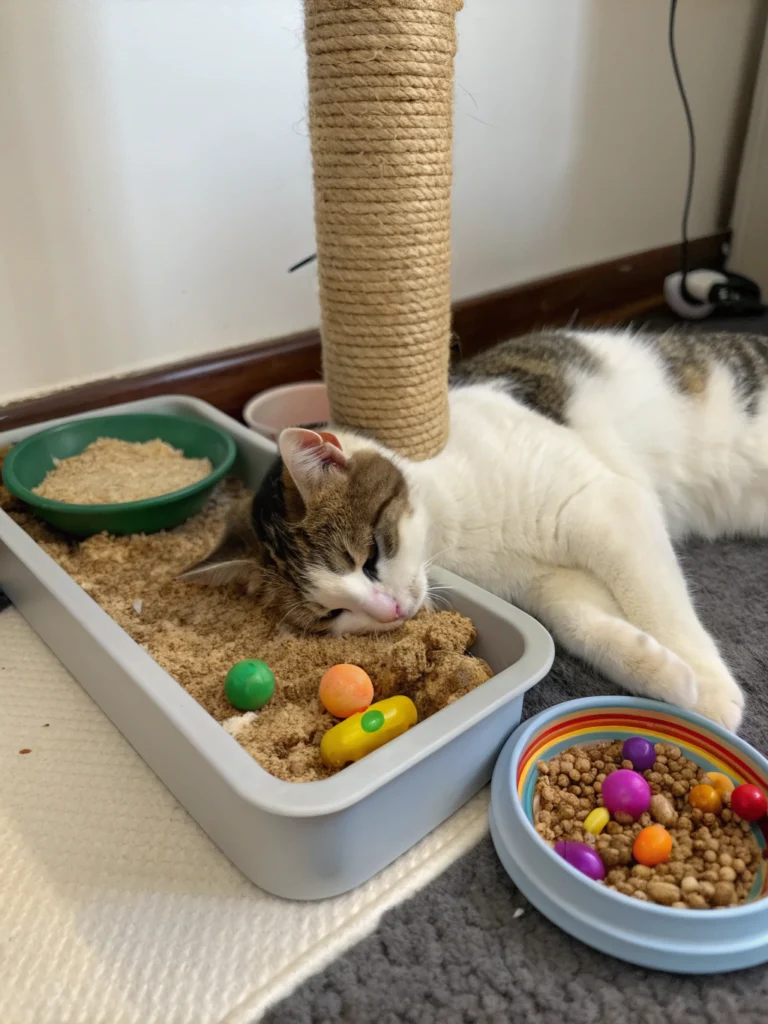
Hide pieces of dry food around your home instead of using a bowl. This turns mealtime into a rewarding scavenger hunt. Always provide a physical toy after laser pointer play to satisfy capture instincts.
Training and Trick Practices for Engagement
Clicker training builds bonds while providing cognitive challenges. Teach simple commands like sitting or high-fiving using positive reinforcement.
Remember these key safety tips during all activities:
- Never use your hands as toys to prevent aggression
- Choose puzzle toys with adjustable difficulty levels
- Match session frequency to your pet’s age and energy
These techniques provide essential enrichment while strengthening your relationship. They tap into natural behaviors in safe, creative ways.
Creative Indoor and Outdoor Enrichment Ideas
Expanding your pet’s world doesn’t require expensive purchases or complicated setups. You can create engaging environments using simple materials and smart design.
DIY Projects and Innovative Cat Toys
Cardboard boxes offer endless possibilities for creative play. Transform them into tunnels, hiding spaces, and scratching surfaces that your companion will love.
Create a simple teaser toy using household items. Tie a string to a chopstick and attach a catnip-filled chew toy for interactive fun.
Scratchers serve multiple important purposes in your home. They allow animals to mark territory, stretch muscles, and maintain healthy claws naturally.
Safe Outdoor Adventures: Harness Walks and Catios
Harness training lets your pet experience the outdoors safely. Always test the fit indoors first and make sure it’s escape-proof.
Essential safety steps include microchipping with updated contact information. Add an ID tag to the harness and maintain current flea prevention.
A catio provides the ultimate secure outdoor space. This enclosed area protects from predators and traffic while offering fresh air and sunshine.
These structures reduce boredom by providing climbing opportunities. They expose animals to changing weather and seasonal variations safely.
Window Perches and Bird Feeders for Visual Fun
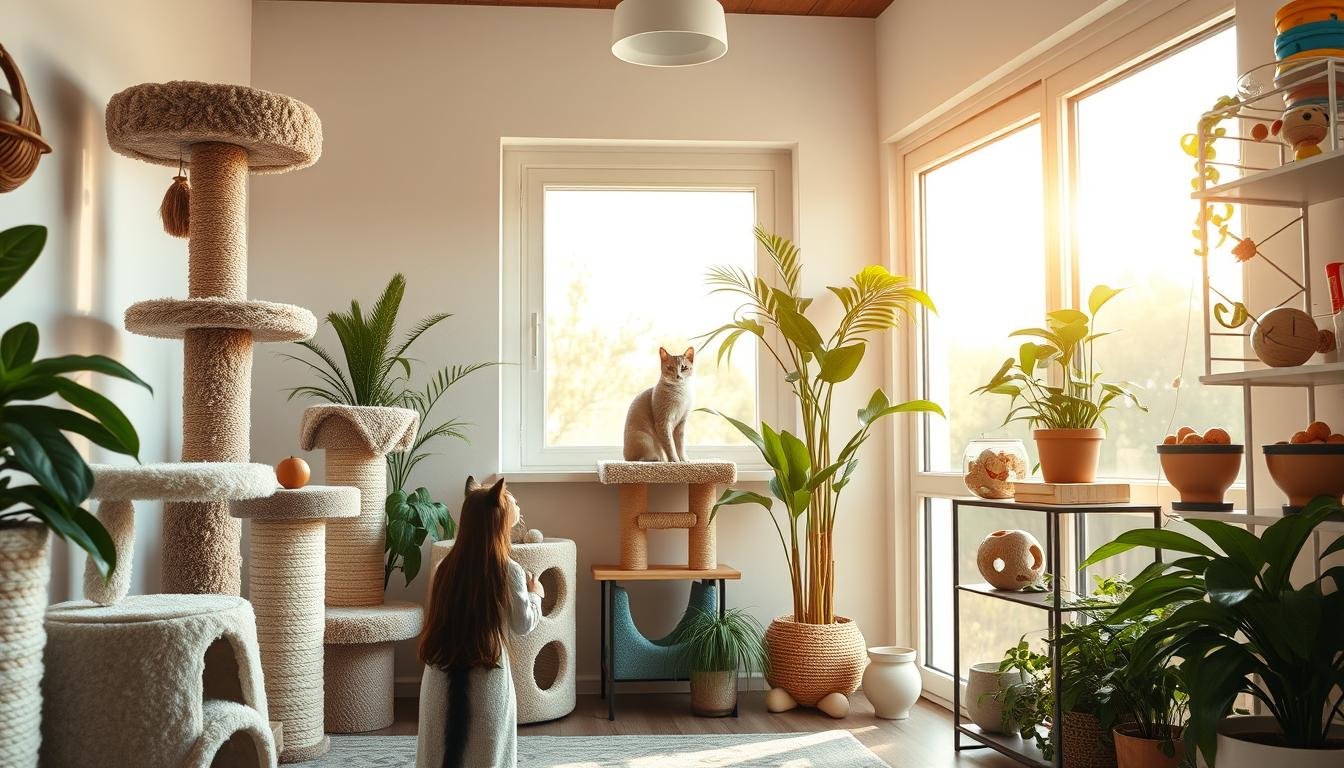
Elevated perches satisfy the natural instinct to observe from above. Window shelves create ideal vantage points for your companion.
Placing a bird feeder outside a window offers hours of entertainment. This setup allows safe bird watching from indoors.
Combining these strategies creates a rich, varied environment. Your pet will enjoy diverse stimulation throughout their daily routine.
Conclusion
Creating a vibrant home life for your indoor companion goes beyond just providing food and shelter. Enrichment and engagement are essential needs, not optional extras, for your pet’s physical and emotional health.
While safe inside, your feline friend faces the real challenge of household boredom. This can lead to stress and other behavioral issues. Simple strategies make a tremendous difference.
Work with your companion’s natural hunting instincts rather than against them. Rotate toys, create vertical space, and hide food to spark curiosity.
Every animal is unique. Observe preferences and adjust activities accordingly. Consistency matters—make play and exercise part of your daily routine.
By investing in your pet’s wellbeing, you’re strengthening your bond and ensuring they live their happiest, healthiest life in your shared space.
FAQ
Why is playtime so important for my indoor feline?
Regular play and exercise are crucial for your pet’s well-being. They help satisfy natural hunting instincts, provide necessary physical activity, and prevent problem behaviors that can stem from boredom. An enriched life keeps your companion happy and healthy.
What are some simple ways to enrich my house for my cat?
You can easily create a more engaging environment with items you already have. Try placing a bird feeder outside a window for visual fun, offering cardboard boxes for exploration, or hiding kibble in a puzzle toy to encourage natural foraging behaviors.
Is a laser pointer a good toy for my pet?
While many felines enjoy chasing a laser dot, it’s important to make sure the play session ends with a tangible reward. Always finish by directing the pointer to a physical toy they can “catch” to prevent frustration, as they never truly satisfy their hunting drive.
How can I safely let my cat experience the outdoors?
For safe outdoor adventures, consider training your pet to walk on a harness and leash. Another excellent option is building or buying a secure “catio”—an enclosed patio space that allows them to enjoy fresh air and sights without the risks of being fully outdoors.
My cat seems bored with their toys. What can I do?
Rotate your companion’s toys instead of leaving them all out at once. Put a few away for a week or two, then reintroduce them to make the items feel new again. You can also add catnip or treats to re-spark their interest in older playthings.