How to Clip a Cat’s Nails Safely
How to Clip a Cat’s Nails Safely
Table of Contents
Does the thought of a nail trimming session make you and your feline friend equally nervous? You are not alone. Many pet owners feel unsure about this important part of pet care.
Regular nail trims are essential for your cat’s health. When claws grow too long, they can curve back and grow into the paw pads. This is very painful and can lead to serious infections.
Keeping those claws at a proper length also protects your home. It saves your furniture, carpets, and even your skin from unwanted scratches. Good paw care is a key part of your pet’s overall well-being.
This guide will show you that it doesn’t have to be a scary task. With patience and the right approach, you can master this skill. We will cover everything from understanding paw anatomy to handling a nervous pet.
Whether you have a playful kitten or a senior cat, you can learn to provide this necessary care. Let’s transform this chore into a positive experience for everyone involved.
Key Takeaways
- Regular nail maintenance is crucial for your cat’s health and comfort.
- Overgrown claws can cause pain, infection, and mobility problems.
- Proper care protects your furniture and home from damage.
- With patience, you can make the process stress-free for your pet.
- This guide provides step-by-step instructions for all experience levels.
Understanding Your Cat’s Paw Anatomy and Nail Care
Understanding the intricate structure of your cat’s paws is the first step toward proper nail maintenance. This knowledge helps you provide better care while keeping your feline friend comfortable.
Cat Paw Anatomy Basics
Your cat typically has 18 claws in total. You’ll find five on each front paw and four on each back paw. The inner, shorter claw on the front paws is called a dewclaw.
Dewclaws don’t touch the ground during walking but serve important functions for climbing and grabbing. Since they don’t wear down naturally, these claws require special attention during grooming sessions.
Importance of Regular Nail Trims
Indoor cats typically need trimming every 2-4 weeks. Front paws often require more frequent attention than rear paws. Each paw should be monitored individually for optimal results.
Older cats with arthritis or reduced activity may need more frequent trims. Their nails can become thicker and more brittle with age. Regular maintenance prevents serious issues.
Watch for curved nails, which indicate overgrowth. In severe cases, claws can curve into paw pads, causing pain and potential infection. Consistent care keeps your companion healthy and comfortable.
How to clip a cat’s nails: Step-by-Step Guide
Transforming nail care from a chore into a positive experience starts with these practical steps and positioning strategies. Proper preparation makes the entire process smoother for everyone involved.
Preparing Your Cat and Environment
Choose a quiet time when your feline companion is naturally relaxed. Avoid high-energy play periods for best results. Make sure your pet is comfortable before bringing out any tools.
Consider different positioning options based on your pet’s temperament. Sitting behind your companion provides security. Holding them facing forward works well for many pets.
For particularly wiggly companions, a two-person approach can be helpful. One person provides gentle restraint while the other focuses on the trimming task.
Effective Clipping Techniques
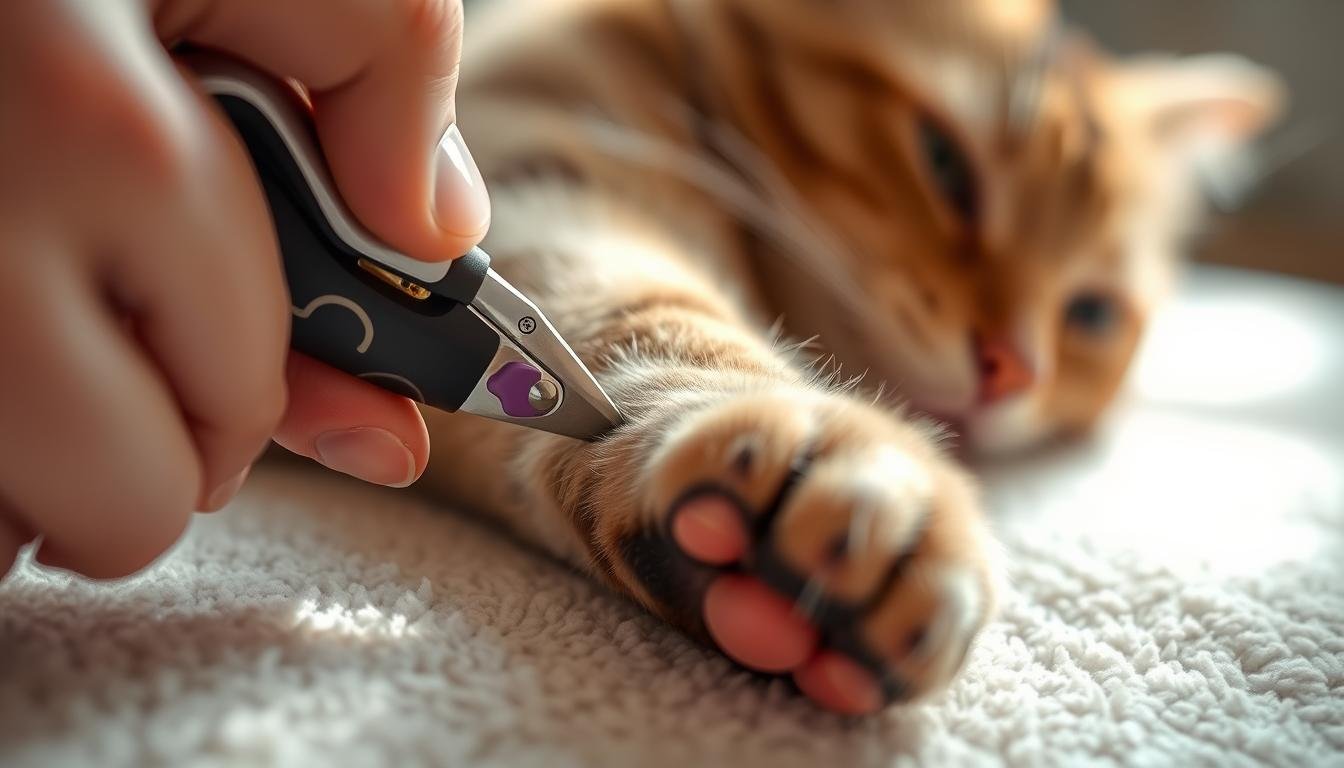
Gently press the top of the paw pad between your thumb and forefinger. This extends the claw fully for clear visibility. Always work with a steady hand.
Identify the safe white portion versus the sensitive pink quick. Only trim the white area to avoid discomfort. For dark nails, cut where the curve begins.
Position your clippers at a 45-degree angle. Apply pressure from top to bottom to prevent splintering. Take small, gradual cuts rather than one large clip.
| Positioning Method | Best For | Key Tips |
|---|---|---|
| Behind Your Pet | Nervous or first-time pets | Provides security and control |
| Facing Forward | Calm, experienced pets | Allows clear visibility of paws |
| Two-Person Approach | Restless or anxious pets | One holds while other trims |
| Front Position | Very relaxed pets only | Requires complete trust |
If you accidentally nick the quick, stay calm. Apply gentle pressure with a clean cloth. Use styptic powder or cornstarch to stop bleeding.
Take breaks if your companion becomes restless. Multiple short sessions often work better than one long attempt. Consult your vet if you encounter persistent difficulties.
Tools and Equipment for a Stress-Free Trim
Selecting the right tools is essential for creating a calm grooming experience for both you and your pet. Having quality equipment designed specifically for feline claws makes the entire process smoother and safer.
The proper tools help prevent accidents and reduce stress. They give you better control and precision during each session.
Choosing the Right Nail Clippers or Grinders
Several types of nail clippers work well for feline care. Scissors-style clippers resemble small scissors with special notches for the claw.
Many people prefer these for their ease of use and precision. They offer excellent control for gradual trimming.
Guillotine-style tools feature a blade that slides across an opening. These clippers stay sharp longer but require careful nail positioning.
Pliers-style options have a spring mechanism for extra strength. They work well for cats with thick or brittle nails.
Nail grinders file claws down gradually rather than cutting. Some pets find the sound and vibration unsettling.
| Tool Type | Best For | Pros | Cons |
|---|---|---|---|
| Scissors-style | Precision work | Easy control | Frequent sharpening |
| Guillotine-style | Quick trims | Long-lasting sharpness | Difficult positioning |
| Pliers-style | Thick nails | Extra strength | Bulky design |
| Nail grinder | Smooth edges | No sharp cuts | Noise concerns |
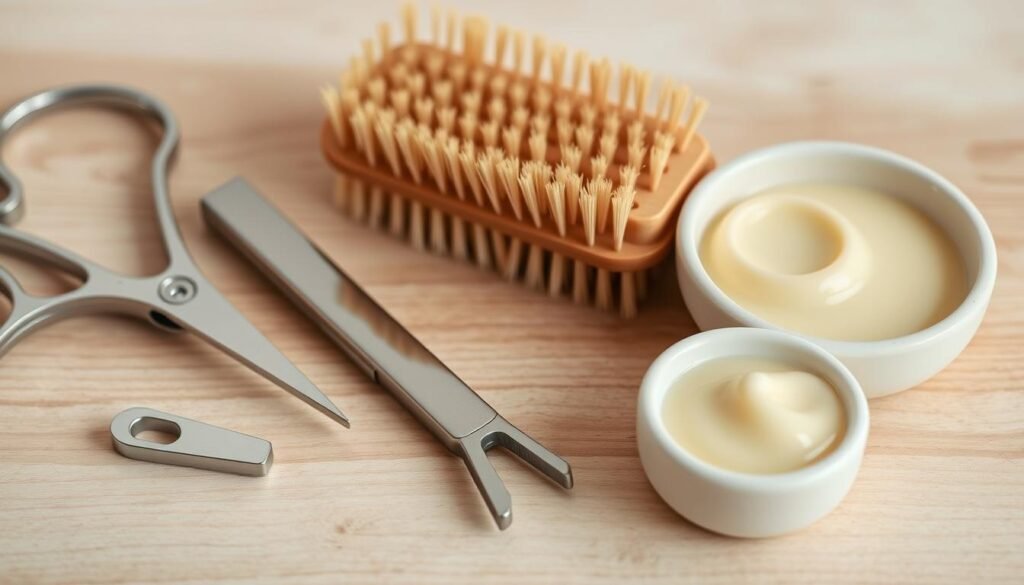
Human nail clippers can work in emergencies. It’s best to maintain separate tools for hygiene purposes.
Keep styptic powder or cornstarch handy for accidental nicks. Treats and soft towels complete your grooming kit.
Experiment to find which clippers suit your pet best. Quality tools make cat nail care much simpler.
Tips for a Calm and Comfortable Trimming Experience
Creating a peaceful atmosphere is the foundation for a successful grooming session. The right approach can turn a stressful event into a calm bonding time.
Your goal is to make the process pleasant for your furry friend. Patience and a gentle touch go a long way.
Managing Anxious or Resistant Cats
If your companion gets upset during paw handling, try the “Kitty Burrito Method.” Wrap your pet snugly in a thick towel or blanket. This gentle restraint provides a sense of security.
Remember the “less is more” philosophy. Many pets resist holding more than the actual grooming. Minimal restraint often yields the best results.
Your feline might happily rest on your lap or a soft bed. An assistant can offer soothing pets while you work. This teamwork makes the experience smoother.
Utilizing Treats, Towels, and the “Kitty Burrito” Method
Strategic use of treats builds positive associations. Give your pet a small reward after each paw is finished. Frequent, tiny treats throughout the session keep things positive.
Never rush the process. Go at your pet’s pace. If your companion dislikes the entire procedure, do not aim for a full trim in one sitting.
Start by simply handling the feet with plenty of praise. Then progress to one nail, then two. Building up to a full paw may take several weeks. This gradual approach is perfectly normal.
Create a quiet environment. Turn off the TV and close the door. Eliminate distractions for a focused, calm session.
Additional Solutions for Cat Nail and Claw Management
Beyond regular grooming sessions, several innovative approaches can help manage your feline companion’s claws. These alternatives work alongside traditional methods to protect your home and keep your pet comfortable.
Innovative Alternatives to Frequent Trimming
Shelter professionals like Jake Confer recommend nail cap products for specific situations. These soft covers provide extra protection from sharp claws in homes with children or other pets.
Claw caps don’t interfere with natural growth or retraction. Your pet may need adjustment time to the new feeling. They’re particularly helpful for pets with skin issues who scratch excessively.
Outdoor pets often maintain their claws through natural activities like climbing. Indoor companions lack these opportunities. This difference explains why indoor pets need more intervention.
Special Considerations for Older Cats
Multiple humane solutions exist for furniture protection. Scratch barrier tape and deterrent sprays can safeguard your home. Provide scratching toys that match your pet’s preferences.
Identify whether your companion prefers horizontal or vertical surfaces. Offer scratching mats for carpet lovers. Add tall posts for those who target furniture ends.
A catio (cat patio) provides outdoor enrichment while protecting indoor spaces. These solutions complement regular maintenance rather than replace it.
Scratching serves important purposes like territory marking and muscle stretching. Consult your vet if you notice unusual claw changes or behavior patterns.
Conclusion
Mastering the skill of trimming your feline companion’s claws is a rewarding part of pet ownership. This essential care task protects your furry friend from discomfort and safeguards your home.
Consistent maintenance is vital for your pet’s health. It prevents painful issues like ingrown claws and infections. Regular attention keeps your companion comfortable and mobile.
Remember, this job gets easier with practice. Be patient and use positive reinforcement. Gradual progress builds trust over time.
If you face challenges, professional groomers or veterinarians can help. Your dedication to this routine strengthens your bond. It’s a meaningful way to invest in your pet’s long-term well-being.
FAQ
What happens if I never trim my cat’s nails?
If you skip regular nail trims, your cat’s claws can grow too long. They might curl back into the paw pad, causing pain and infection. Long claws also get caught on carpets and furniture more easily. Keeping them trimmed protects your pet’s health and your home.
How often should I trim my cat’s claws?
Most cats need a trim every 10 to 14 days. Indoor cats especially benefit from this schedule to prevent damage to your furniture. Check your cat’s paws weekly. If you hear clicking on the floor, it’s definitely time for a trim.
My cat hates nail trims. What can I do?
Start by getting your cat comfortable with you handling their paws. Gently press on their toes during calm cuddle sessions. Use high-value treats and positive reinforcement. For a very resistant cat, try the “kitty burrito” method by wrapping them snugly in a towel or blanket to safely expose one paw at a time.
What’s the best tool for trimming cat nails?
Guillotine-style clippers or small scissor clippers work well for most cats. You can also use a pet-specific nail grinder, which files the claw down smoothly. The right tool feels comfortable in your hand and makes a clean cut without crushing the claw.
What is the quick, and what do I do if I cut it?
The quick is the pink, blood-filled tissue inside the claw. Cutting it is painful for your cat and will cause bleeding. If this happens, stay calm. Apply styptic powder or a clean cloth with gentle pressure to stop the bleeding. Comfort your pet and give them a treat.
Are there alternatives to clipping my cat’s nails?
Yes! Providing sturdy scratching posts and pads helps cats maintain their claws naturally. You can also apply soft plastic nail caps, which are glued over the claw. These are a great solution if trimming is too stressful for you or your feline friend.