How to Litter Train a Cat: Easy Steps
How to Litter Train a Cat: Easy Steps
Table of Contents
Have you ever wondered if your feline friend’s natural instincts are the secret to a spotless home? It’s a common belief that teaching bathroom habits is a difficult task, but what if you could work with your pet’s nature, not against it?
Whether you’ve welcomed a new kitten or given an adult cat a forever home, this process is about partnership. Cats naturally want to bury their waste. This instinct sets you up for success from the very start.
Even older cats can learn this essential skill. With patience and the right approach, your pet will adapt to their new routine. This guide will walk you through choosing the right supplies and setting up the perfect spot.
Understanding your pet’s preferences is key. We’ll cover using positive reinforcement to encourage good habits. The timeline for success varies, but consistency leads to mastery.
Beyond convenience, proper box training helps you monitor your pet’s health. Changes in habits can be early warning signs. You are building a happy, harmonious home for everyone.
Key Takeaways
- Cats have a natural instinct to bury their waste, making the process easier.
- Both kittens and adult cats can successfully learn to use a litter box.
- Success relies on understanding your cat’s preferences and using positive reinforcement.
- Choosing the right box and location is a critical first step.
- Consistency is more important than a strict timeline for training.
- Monitoring your cat’s bathroom habits can provide early signs of health issues.
- This process strengthens the bond and communication between you and your pet.
Understanding Your Cat’s Natural Habits
Your feline companion comes pre-programmed with behaviors that make house training surprisingly straightforward. These instincts aren’t random—they’re survival tools honed over generations.
Recognizing Instincts and Behaviors
Cats instinctively bury their waste as an evolutionary protection method. This behavior helped wild ancestors hide their presence from both predators and prey. Your pet’s natural inclination to dig and cover works in your favor.
Even without early exposure, this deep-rooted instinct remains strong throughout a cat’s life. Understanding these behaviors helps you work with nature rather than against it.
| Age Group | Learning Speed | Key Approach | Common Challenges |
|---|---|---|---|
| Kittens (2-7 weeks) | Very Fast | Observation & Mimicry | Short attention span |
| Young Cats | Fast | Positive Reinforcement | Exploring alternatives |
| Adult Cats | Steady Progress | Patience & Consistency | Breaking old habits |
| Senior Cats | Gradual | Comfort & Accessibility | Mobility issues |
Importance of Early Exposure to Litter Boxes
Kittens often learn bathroom habits by watching their mother during the critical socialization period. Early exposure between 2-7 weeks can make training almost automatic.
However, cats adopted at any age can develop reliable habits. The key is recognizing that your feline’s natural cleanliness and survival instincts are powerful allies in this process.
When issues arise, they’re usually environmental rather than instinctual. Your cat’s built-in preferences make this one of the easier aspects of pet ownership.
How to litter train a cat: Essential Steps
The journey to establishing good bathroom routines begins with understanding your pet’s perspective. Patience and consistency are your greatest allies in this process.
Introducing Your Pet to the Bathroom Area
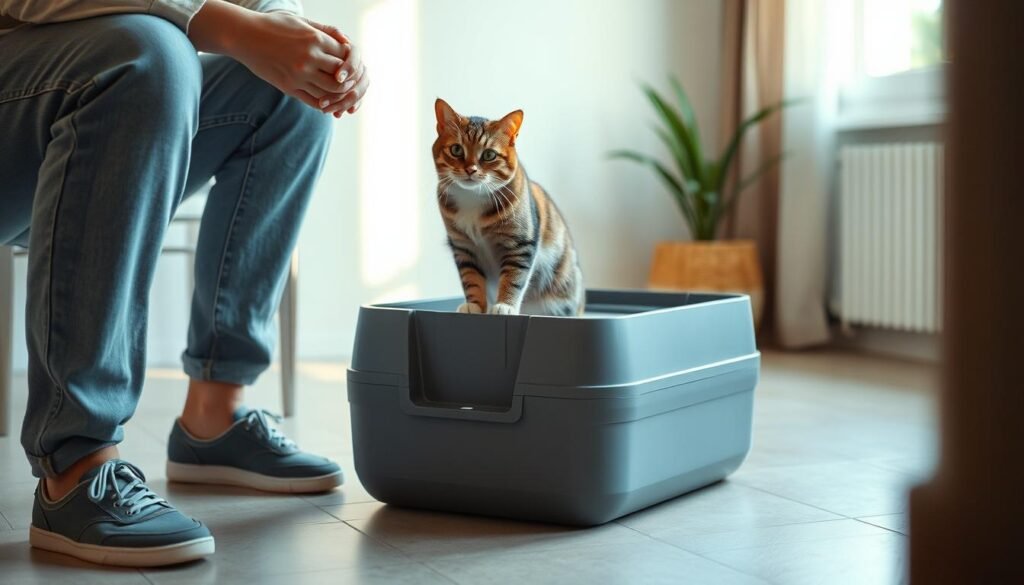
Start by gently placing your companion in the designated spot. Allow them to explore and sniff without pressure. This initial positive experience builds a strong foundation.
Timing is crucial for effective habit development. Place your furry friend in their designated area after naps, meals, or when you notice circling behavior. Young animals especially need immediate access after eating.
Establishing Consistent Patterns
Consider confining your companion to a smaller space initially. This increases the likelihood they’ll find and use their designated spot. Consistency in location helps reinforce the desired behavior.
Create a predictable schedule around feeding times and rest periods. Animals thrive on routine, and regular timing helps establish lasting habits.
Rewarding Desired Behaviors
Immediately reward successful use with calm praise and small treats. Positive reinforcement creates strong associations that encourage repetition.
Avoid scolding or punishment completely. Negative reactions can damage trust and create anxiety around the bathroom area. Instead, clean accidents thoroughly with enzymatic cleaners to remove scents.
Most pets master these routines within 4-6 weeks with consistent positive reinforcement. Stay patient and celebrate small successes along the way.
Creating a Cat-Friendly Litter Environment
Creating an inviting space helps your pet feel secure during private moments. The right setup encourages natural behaviors and prevents future issues. Your companion’s comfort should guide every decision you make.
Selecting the Ideal Litter and Box
Begin with the same type of material your feline already knows. This familiar foundation reduces stress during transitions. If changing varieties, mix them gradually over several days.
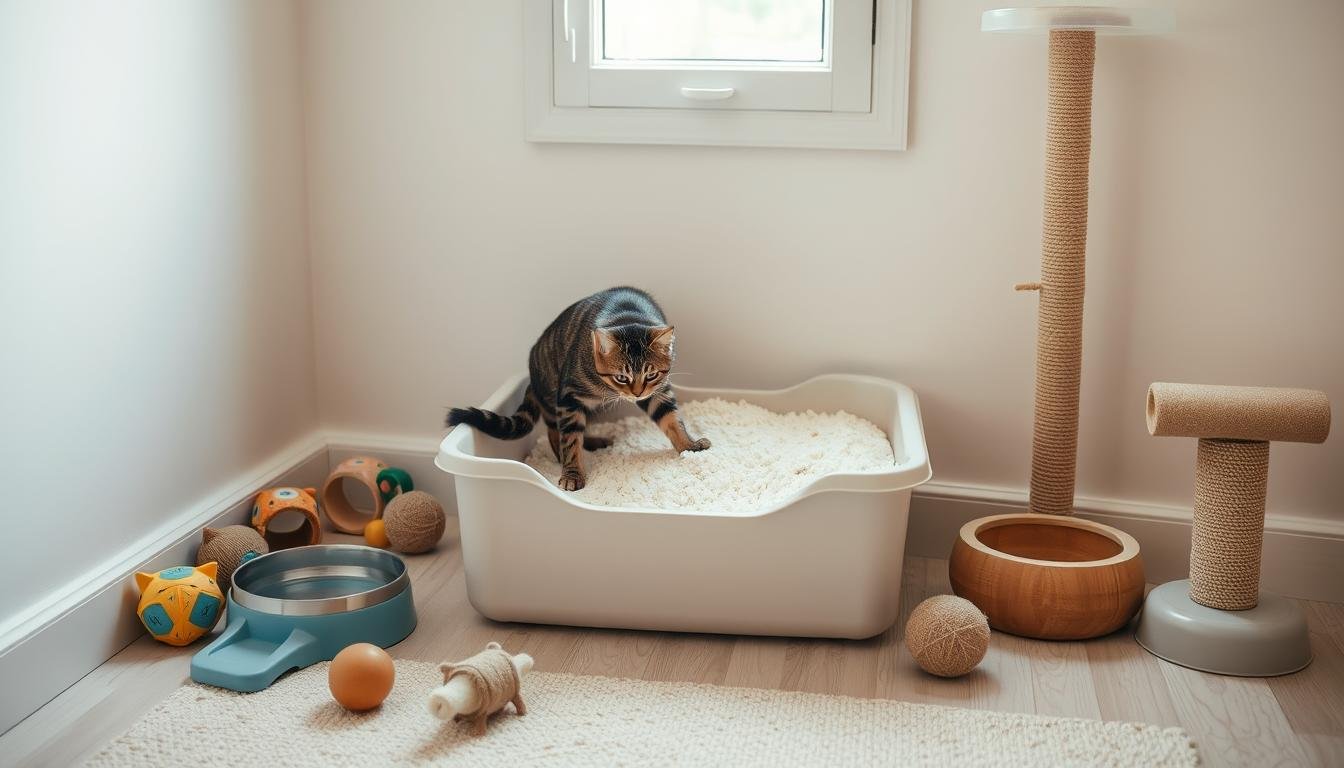
Most pets prefer unscented options with a sandy texture. Provide at least 2 inches of depth for proper digging and covering. This satisfies their natural burying instinct completely.
| Box Type | Best For | Considerations |
|---|---|---|
| Standard Open | All ages, easy access | Most preferred, good visibility |
| High-Sided | Active diggers | May challenge seniors |
| Covered | Odor control | Some pets feel trapped |
| Top-Entry | Containment | Not ideal for mobility issues |
Choosing the Best Location for Privacy and Ease
Select a quiet corner away from feeding zones and noisy appliances. Your companion needs a peaceful spot without interruptions. Multiple floors require boxes on every level.
Follow the “one plus one” rule for multi-pet households. Separate boxes in different areas provide options and reduce competition. Consistency in placement builds confidence.
Maintain a strict cleaning routine for ongoing success. Scoop waste daily and refresh completely each week. A fresh environment keeps your pet happy and healthy.
Troubleshooting and Adjusting Your Approach
What happens when your feline friend doesn’t follow the plan you’ve carefully set up? Even the best preparation can lead to unexpected challenges. Being ready to adapt is key to long-term success.
Handling Accidents and Unwanted Habits
Accidents will happen during the learning process. Stay calm and clean thoroughly with enzymatic cleaners. These break down urine proteins completely.
Regular cleaners leave scent markers that encourage repeat accidents in the same spot. If your cat avoids the litter box, evaluate these factors:
- Is the box cleaned at least once per day?
- Does the location feel safe and private?
- Is the litter type comfortable for your pet’s paws?
- Are there enough boxes throughout the house?
When to Change Litter Types or Box Setups
If your cat consistently eliminates next to the box, they may dislike the current litter. Try a different type gradually over several days.
Consider adjusting the box setup. An uncovered box might work better than a covered one. Larger boxes suit bigger cats. Lower sides help kittens and seniors.
Using Health Cues and Vet Consultations
Sudden changes in toilet habits often signal health issues. Make sure you monitor your cat’s behavior daily. Watch for warning signs like straining, blood, or crying.
Straining with little urine production requires immediate veterinary care. This could indicate a blockage that can be fatal. Stress-related issues may need pheromone products or behaviorist consultation.
Conclusion
Mastering proper bathroom habits with your feline companion is an achievement worth celebrating. You now possess all the essential knowledge to guide your furry friend toward reliable litter box usage.
Remember that success comes from working with your pet’s natural instincts. Cats of all ages can learn appropriate bathroom behavior when their needs for cleanliness and privacy are respected.
The key factors include selecting the right materials, maintaining spotless conditions, and using positive reinforcement. Patience is vital since every animal learns at their own pace.
Even after establishing good habits, continue monitoring your pet’s bathroom patterns. Changes can signal health issues requiring veterinary attention.
This journey strengthens your bond and creates a harmonious home environment. Your dedication to understanding your companion’s needs ensures long-term success.
FAQ
What is the best age to start litter box training for a kitten?
You can begin training as soon as you bring your kitten home, typically around 8 to 10 weeks of age. At this stage, they learn quickly from their mother and are developmentally ready to understand the concept of using a designated area for elimination.
How many litter boxes should I have for one feline?
The general rule is to have one more box than the number of cats in your house. For a single cat, two boxes in different areas are ideal. This provides options and helps prevent accidents if one box becomes unappealing.
My cat suddenly stopped using the litter box. What should I do?
First, check that the box is clean and in a quiet spot. If the setup seems fine, a sudden change in behavior can signal a health issue. It’s a good idea to schedule a vet consultation to rule out problems like a urinary tract infection.
What type of cat litter is most appealing to felines?
Most cats prefer unscented, clumping litter with a fine, sand-like texture. It’s soft on their paws and effective at controlling odor. Avoid heavily perfumed products, as strong scents can deter your pet from using the box.
How often should I clean the litter box?
Scoop solid waste out of the box at least once or twice a day. Completely change the litter and wash the box with mild soap and water every one to two weeks to maintain a fresh and inviting environment for your cat.
Where is the best location to place the litter box in my home?
Choose a quiet, low-traffic area that offers privacy and is easily accessible. Avoid placing it next to loud appliances like washing machines or in cramped corners. A bathroom or spare room often works well.