How to Give a Cat a Bath: Tips and Tricks
How to Give a Cat a Bath: Tips and Tricks
Table of Contents
Is your feline friend truly as self-sufficient as you think? While your cat spends hours grooming with its unique barbed tongue, this natural process has its limits.
That rough tongue spreads saliva and natural oils. It keeps their fur and skin healthy. But it can’t handle everything. Sometimes, your pet needs a deeper clean.
Bathing your cat isn’t just for messy accidents. It’s a key part of their health care. Regular washing can reduce shedding and hairballs. It helps keep their coat and skin in great condition.
Many owners worry about using water. They fear a stressful struggle. With the right approach, you can make bath time calm. This guide provides friendly, practical steps for a successful experience.
Key Takeaways
- Cats are excellent self-groomers but still need occasional baths for a deep clean.
- Proper bathing helps maintain healthy skin and can reduce problems like excessive shedding.
- Using the correct techniques makes the experience with water much less stressful for your pet.
- Bathing is an important part of overall grooming care for your cat.
- Understanding the process helps you care for your cat confidently, even if they get into something messy.
- This guide offers practical advice to keep your pets clean and comfortable.
Preparing Your Cat for a Bath
Proper preparation makes the entire process smoother for both you and your feline companion. Taking time to assess needs and gather supplies beforehand prevents stress.
Assessing Your Cat’s Grooming Needs
Understanding when your pet truly needs a wash is crucial. Immediate bathing is essential if they contact toxic substances like motor oil or antifreeze. These can be harmful if ingested during self-cleaning.
Certain health conditions also require regular washing. Your veterinarian might recommend baths for skin issues like seborrhea or flea allergies. Senior or overweight cats often struggle with self-grooming.
Long-haired breeds benefit from baths every few months to prevent matting. Hairless varieties need weekly cleaning to manage oily skin buildup. Always use cat-specific shampoo to protect their delicate coat.
Gathering Supplies and Setting Up the Right Environment
Choose a warm, quiet place like your bathroom for the washing session. This contained space minimizes escape routes and reduces anxiety. Ensure the room temperature is comfortable.
Gather all necessary items before beginning:
- Feline-formula shampoo
- Multiple soft towels
- Non-slip mat for safety
- Handheld showerhead if available
Having supplies within reach is vital. Once your cat is wet, you cannot leave them unattended. Consult your vet for specific product recommendations based on your pet’s needs.
How to give a cat a bath: Step-by-Step Guide
Now that you’re prepared, let’s walk through the actual process. A calm, methodical approach is your best friend during this experience.
Pre-Bath Brushing and Nail Trimming
Begin with a thorough brushing to remove loose fur and detangle mats. This makes the water and shampoo much more effective.
Trimming nails a day in advance is a smart step. It minimizes scratches for you and makes your pet more comfortable.
Choosing the Ideal Location and Water Temperature
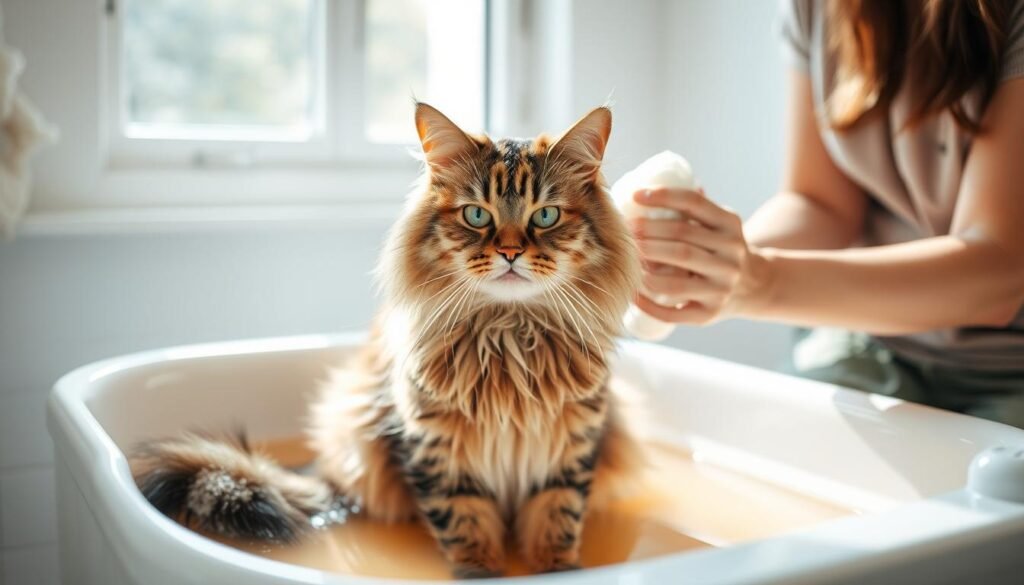
Select a small, enclosed space like a tub or utility sink. A non-slip mat is essential for safety.
Fill the basin with a few inches of warm water. Test it on your wrist—it should feel pleasantly warm, not hot.
Proper Use of Cat-Specific Shampoo and Conditioner
Gently wet your pet’s coat using a cup or low-pressure spray. Avoid the face, ears, and eyes.
Apply a small amount of feline-formula shampoo. Work it into a gentle lather through the fur.
After lathering, rinse thoroughly. Any leftover product can irritate skin. If using conditioner, repeat the rinsing process completely.
Tips for Bathing a Cat That Hates Water
Dealing with a water-resistant cat requires a different strategy than standard bathing procedures. Most felines naturally avoid water, so forcing them can create lasting trauma.
Gradually Introducing Your Cat to Water
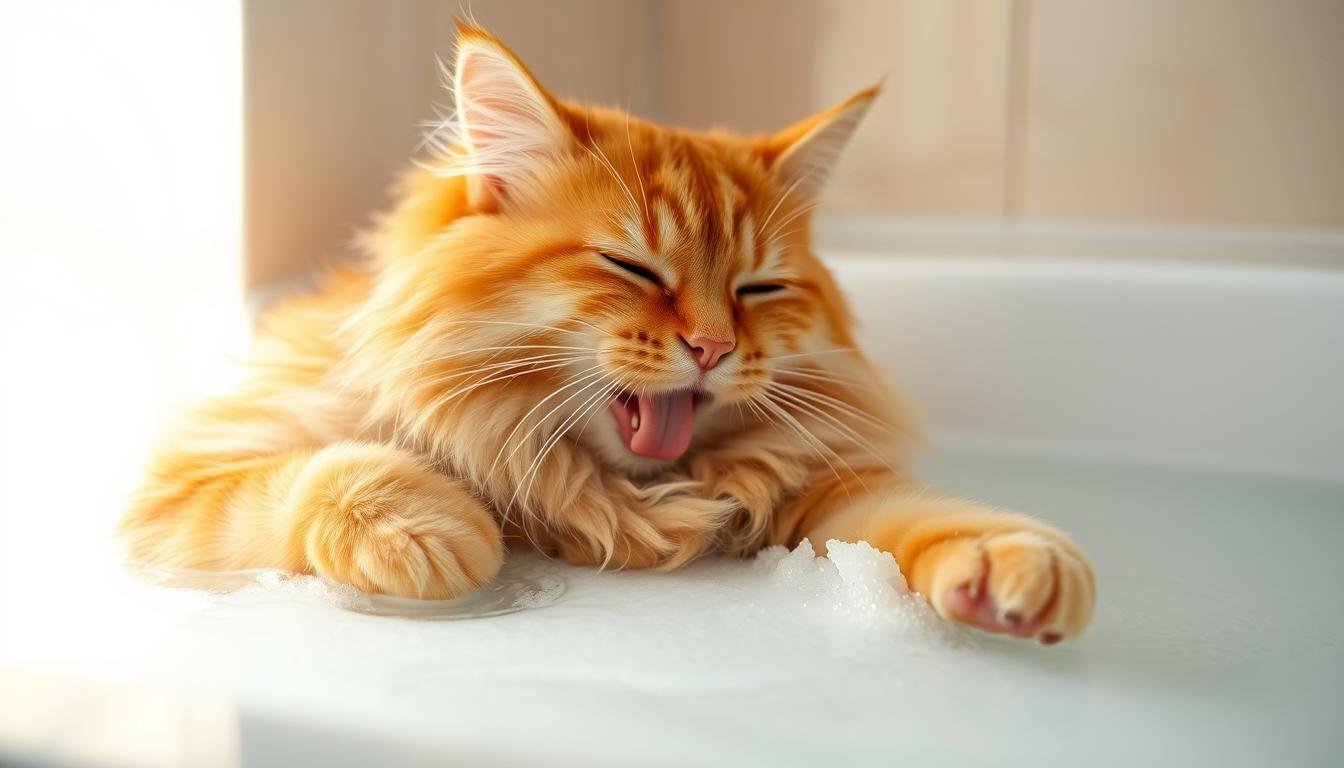
Start by letting your kitty explore water on their own terms. Begin with just wetting their paws during playtime. This gentle approach builds curiosity instead of fear.
The ideal time to begin this process is when your pet is still a kitten. Young cats adapt more easily to new experiences. They’ll grow up viewing baths as normal routine.
Let your cat sit in the bathroom while you take your own bath. They’ll become familiar with the sounds and environment. Minimize running water noise, as this often causes panic.
Using Calming Techniques and Treats
Positive reinforcement works wonders during bath time. Offer treats whenever your cat shows calm behavior near water. This creates positive associations with the experience.
Consider using a pheromone diffuser in your bathroom. These products mimic natural calming scents. They help your pet feel secure in unfamiliar situations.
Stay calm yourself throughout the process. Cats sense your energy and will mirror your emotions. Keep initial sessions short to prevent overwhelm.
If your cat absolutely refuses water, alternatives exist. Special wipes work for spot cleaning. Professional groomers handle difficult cases and flea treatments expertly.
Bathing Without Getting Scratched
With the right preparation and handling, you can confidently care for your pet without fear of scratches. The goal is a calm experience for everyone involved.
Smart timing is your first step. Schedule the session after your pet has eaten or had a good play session. A tired, content cat is much more likely to stay calm.
Effective Handling Techniques
Proper handling is essential for safety. Trim your pet’s nails a day or two in advance and file the ends to dull them. This simple grooming task is one of the most effective ways to protect yourself.
A short brushing session before the cat bath helps relax your pet and makes their fur easier to manage. When it’s time to wash cat, use gentle but firm techniques.
| Method | Best For | Key Consideration |
|---|---|---|
| Scruff Hold | Most cats; mimics natural maternal behavior. | Be gentle; support the body with your other hand. |
| Harness | Squirmy or anxious pets. | Provides secure control without restricting movement. |
| Two-Person Team | All situations, especially for a first-time bathing cat. | One person holds steady while the other focuses on washing. |
Getting Help and Minimizing Stress
Recruiting a friend makes the process faster and safer. One person can hold the cat while the other does the washing. This teamwork minimizes stress for your pet and for the people involved.
Minimize the sound of running water, as it causes panic. Fill your sink or tub with a few inches of warm water beforehand. Focus on washing only the necessary parts of your pet’s fur.
Use a soft washcloth to gently clean around the face and ears. After the cat bath, immediately wrap your pet in a large towel and blot them dry. Ensure they are completely dry before they leave the bathroom to avoid chilling.
Conclusion
Mastering the art of feline bathing transforms a dreaded chore into a manageable routine. Your success depends on understanding your cat‘s unique personality and needs.
Always prioritize your pet‘s health and comfort. Use cat-specific shampoo and maintain warm water temperature. Pay special attention to sensitive areas like ears and eyes.
Consult your veterinarian before bathing, especially if your kitty has skin conditions. Some cats may never enjoy water, and that’s okay. Professional groomers offer excellent alternatives.
This advice helps you provide proper care at home. Remember to always rinse thoroughly and use a soft towel for drying in a warm bathroom.
With patience and the right approach, bath time can become a positive experience for both you and your feline friend.
FAQ
How often should you bathe your cat?
Most healthy cats with short fur don’t need frequent baths. They are excellent self-groomers. You might only need to bathe them a few times a year, or if they get into something messy. Cats with long hair or skin conditions may need more regular bathing, but always check with your veterinarian first.
What kind of shampoo is safe for bathing a cat?
You must always use a shampoo made specifically for cats. Human shampoo or even dog shampoo can be too harsh and irritate your cat’s sensitive skin. Look for a gentle, cat-specific formula, and if you’re dealing with fleas, choose a vet-recommended flea shampoo.
Can I use a bathtub or sink for my cat’s bath?
A>Yes, a sink or a small tub is often ideal. It’s a confined space that can make your cat feel more secure. Just place a non-slip mat on the bottom to help your kitty feel stable and prevent slipping, which can reduce stress.
What’s the best way to keep water out of my cat’s ears and eyes?
Be very careful when rinsing. Use a cup or a sprayer attachment with low pressure. Tilt your cat’s head back slightly to avoid getting water on their face. You can even place a small cotton ball in each ear to help keep them dry, but be sure to remove them after the bath.
My cat absolutely hates water. What can I do?
Start with positive associations. Let your cat explore the dry bathroom and offer treats. Use calm, gentle handling and speak in a soothing voice. For some cats, using a damp washcloth for a “sponge bath” is a less stressful alternative to a full bath.
Should I trim my cat’s nails before a bath?
Trimming your cat’s nails beforehand is a great idea for your safety. It minimizes the risk of scratches if your cat gets anxious. If you’re not comfortable doing it yourself, your vet or a professional groomer can help.
What if my cat gets too stressed during the bath?
Your cat’s health and well-being come first. If the experience becomes too stressful for either of you, it’s okay to stop. Wrap your cat in a warm towel and try again another day. For very anxious cats, ask your vet about other grooming options.