Transform Your Home into a cat friendly home
Transform Your Home into a cat friendly home
Table of Contents
Welcome to the journey of creating a living space where you and your feline companion can thrive together. This guide shows you how to design an environment that meets your pet’s needs without sacrificing your personal style or functional areas.
Understanding what animals naturally require forms the foundation for a happy household. Modern open-plan layouts often lack the cozy hiding spots that pets instinctively seek. With thoughtful planning, you can balance your aesthetic preferences with your animal’s behavioral requirements.
This comprehensive approach walks you through every aspect of making your residence welcoming. From understanding natural instincts to setting up essential resources, you’ll learn practical strategies. The time invested will result in a healthier pet and more peaceful daily life.
Creating the perfect environment is achievable regardless of your dwelling’s size or budget. Minor adjustments can make a significant difference in your furry friend’s well-being. Your efforts will be rewarded with a harmonious living situation for everyone.
Key Takeaways
- Design a space that meets your pet’s needs without compromising your style
- Understand natural feline behaviors to create a secure environment
- Modern open layouts may need adjustments for animal comfort
- Thoughtful planning balances aesthetics with practical requirements
- Small changes can significantly improve your companion’s well-being
- Creating a welcoming environment benefits both you and your pet
- The process is adaptable to any living situation or budget
Discovering Your Cat’s Natural Behavior
The secret to a happy household lies in recognizing your animal’s fundamental instincts. Your feline companion inherits behaviors from wild ancestors that shape their daily routines.
Understanding Hunting and Hiding Instincts
In nature, these animals spend significant time hunting small prey. This hardwired behavior means they’re programmed to stalk, pounce, and explore. These instincts remain strong even in domestic settings.
Your pet needs camouflage and hiding spots to feel safe. Open, minimalist spaces can make them feel vulnerable. Providing concealed areas meets this essential need.
Exploring the Benefits of High Resting Spots
Elevated vantage points allow your companion to survey their territory safely. High perches satisfy natural curiosity while providing security. This bird’s-eye view helps them monitor activity below.
These creatures are solitary hunters by nature. Unlike social animals, they prefer to eat and play independently. Understanding this influences how you arrange their environment.
| Wild Behavior | Domestic Adaptation | Key Benefit |
|---|---|---|
| Hunting small prey throughout day | Interactive toys and puzzle feeders | Mental stimulation |
| Seeking elevated vantage points | Cat trees and shelf perches | Security and observation |
| Alternating rest and active phases | Designated quiet and play areas | Natural rhythm support |
Recognizing these fundamental needs helps you create spaces that align with natural instincts. Your efforts will result in a more contented companion.
Designing a Cat Friendly Home for a Safe and Happy Cat
Creating an environment that supports your pet’s natural instincts requires thoughtful planning beyond simple aesthetics. Your design choices should address psychological needs while maintaining your personal style.
Integrating Multiple Resource Zones
Distribute essential items throughout your living space rather than clustering them. Food stations, water bowls, and litter boxes should be in separate areas. This approach prevents territorial disputes.
For households with multiple pets, provide one resource per animal plus an extra. This reduces competition and stress. Place these zones in quiet, accessible locations away from high-traffic areas.
Creating Spaces for Exploration and Camouflage
Modern minimalist designs can feel stressful for pets who need hiding spots. Pull furniture slightly away from walls to create interesting pathways. These small gaps become perfect retreats.
Vertical spaces like shelves and perches satisfy natural climbing instincts. A slightly cluttered environment offers varied textures and levels for exploration. This complexity enriches your pet’s daily experience.
Strategic placement of objects creates engaging pathways. Your pet will enjoy navigating through these interesting routes. The result is a harmonious space that meets everyone’s needs.
Setting Up Essential Resources
Strategic placement of your pet’s essential resources makes daily life smoother for everyone. Proper setup prevents behavioral issues and maintains household harmony.
Litter Tray Placement and Maintenance Tips
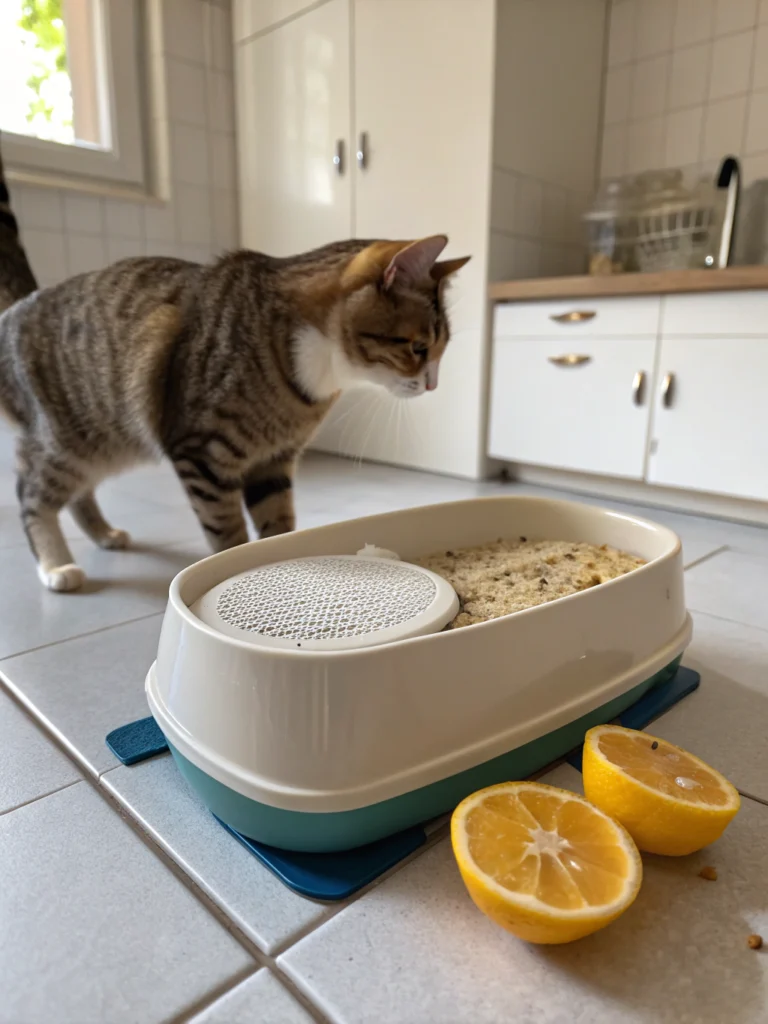
Position litter boxes in quiet, discreet corners away from feeding areas. Avoid high-traffic zones and loud appliances.
Follow the golden rule: provide one box per cat plus an extra. Place them in separate locations rather than side-by-side.
Scoop waste at least twice daily to maintain freshness. Perform complete cleanings weekly using mild, unscented cleaners.
Avoid scented litters and liners that many animals find unpleasant. These preferences help prevent elimination problems.
Choosing Ideal Food and Water Arrangements
Select wide, shallow ceramic or glass bowls for comfortable feeding. These materials don’t retain odors like plastic.
Keep water and food in the same room but separated adequately. This prevents contamination while encouraging hydration after meals.
Many pets prefer running water from fountains. Keep bowls filled to the brim for easy drinking without head lowering.
| Resource Type | Ideal Setup | Common Mistakes |
|---|---|---|
| Litter Boxes | Quiet corners, multiple locations | Clustered together, near food |
| Food Bowls | Wide ceramic/glass, separate area | Deep containers, plastic material |
| Water Stations | Full bowls, possibly fountains | Too close to food, infrequent refills |
These arrangements respect your companion’s natural instincts while keeping your space functional. Proper resource setup creates a stress-free environment for all.
Encouraging Healthy Play and Navigation
Mental and physical stimulation through play prevents behavioral issues while strengthening your bond. Engaging activities satisfy natural hunting instincts and provide essential exercise.
Selecting Engaging Toys and Puzzle Feeders
Choose toys that mimic prey movement to trigger hunting behaviors. Feather wands and small furry mice work well when moved unpredictably. Rotate access to different toys to maintain novelty.
Store playthings after sessions to prevent boredom. Puzzle feeders make mealtime challenging and entertaining. These devices recreate natural hunting experiences.
Establishing Scratching Posts and Climbing Areas
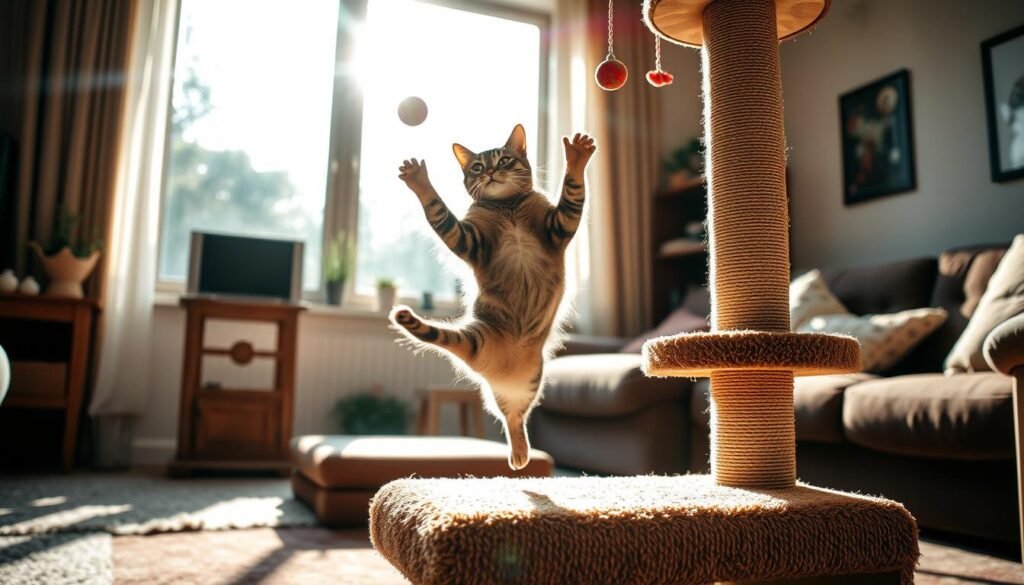
Provide tall scratching posts for full vertical stretches. Wall-mounted panels save floor space while offering adequate surfaces. Cats have individual preferences for materials like sisal or cardboard.
Climbing structures create vertical territory your pet will love. Shelves and cat trees give elevated vantage points. These areas provide exercise and security throughout your living environment.
Variety helps identify preferred scratching orientations. Some animals like horizontal mats while others prefer vertical posts. Proper outlets protect your furniture and keep claws healthy.
Creating Restful and Private Areas
Your companion’s need for quiet retreats and cozy sleeping spots deserves special attention in your living environment. These dedicated spaces provide essential security and comfort.
Choosing the Right Cat Beds and Warm Spots
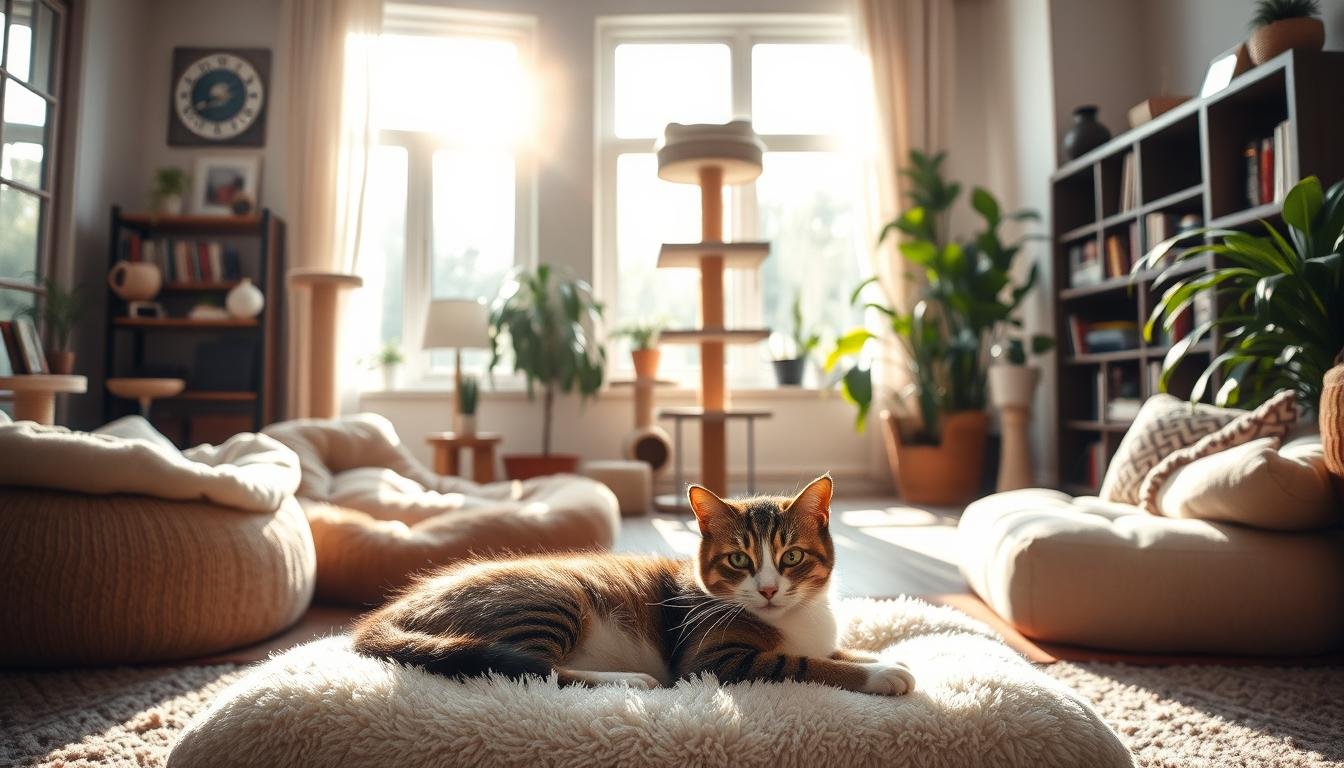
Cats love comfortable beds placed in warm, sunny locations. Elevated positions help them feel safe while observing their surroundings. Provide multiple options throughout your space.
Offer both open and covered bed styles to suit different preferences. Warm spots near radiators or sunny windows are especially appealing. These cozy places encourage relaxation.
Familiar scents provide comfort, so avoid over-washing bedding. Many cats love soft blankets that carry household smells. This creates a secure environment.
Designing Hidden Retreats for Solo Time
Private spaces are crucial for your pet’s well-being. Create hidden nooks using existing furniture arrangements. Leave cabinets slightly open for secret access.
Shelves with concealed spots provide elevated hiding places. Under-bed areas or behind furniture work well for ground-level retreats. These spaces offer needed solitude.
Respect your companion’s private time in these areas. Only interrupt if health concerns arise. This respect strengthens your bond and reduces stress.
Optimizing Indoor Safety
The foundation of a worry-free coexistence lies in systematically identifying and eliminating household dangers. Your curious companion’s natural instincts can lead them into unexpected hazards without proper preventive planning.
Cat-Proofing Your Home for Maximum Security
Start by securing blind cords and anchoring heavy furniture to walls. Store trash in cabinets with closed lids to prevent access. Always check appliances like washers and dryers before use.
Develop habits of closing cabinets and freezers immediately. These simple steps create a safer environment for exploration. Your efforts will prevent many common accidents.
Managing Electrical and Hazardous Areas
Conceal electrical cords using protective covers throughout your house. Remove access to dangerous items like batteries and cleaning chemicals. Keep medications and toxic plants out of reach.
In kitchens, never leave hot stoves unattended. Place water pots on cooling burners to prevent burns. Secure cabinets containing sharp objects and hazardous liquids.
For windows, consider decorative films on lower portions. This helps your pet understand the glass barrier. Secure tilted windows with screens to prevent trapping incidents.
Balancing Cleanliness with Style
Many potential pet owners hesitate due to concerns about maintaining cleanliness alongside style. Fortunately, practical solutions exist that keep your space fresh while accommodating your companion’s needs. You can achieve both goals with thoughtful planning.
Maintaining Odor-Free Litter and Feeding Areas
Daily scooping of the litter box is non-negotiable for a healthy environment. Your pet deserves a clean space, and accumulation causes odors throughout your house. Even with daily maintenance, some odors may persist.
Concealment furniture offers stylish ways to hide essential items. Simple storage cubes or elaborate cabinets blend boxes into your room’s decor. Top-entry designs with mats effectively contain stray litter pieces.
Establish regular cleaning routines for all pet items. Wash food bowls after every meal and launder bedding several times monthly. Change water fountain filters every two weeks for fresh drinking water.
Integrating Functional Furniture without Compromise
Your animal walks on all surfaces, so use pet-safe cleaners on counters and tables. Diluted castile soap works well since residue from paws won’t cause harm during grooming. This keeps your entire home safer.
Filterless air purifiers designed for pets eliminate ammonia and food odors quietly. These devices maintain freshness in litter and feeding areas without constant filter changes. They decompose unpleasant smells effectively.
With these tips, you can maintain a beautiful living space that fully supports your companion’s needs. The right approaches make cleanliness and style completely compatible.
Conclusion
Creating an environment that supports your pet’s well-being while maintaining your aesthetic standards is an achievable goal for any owner. Understanding your animal’s natural instincts forms the foundation for a harmonious living space.
Remember that small adjustments make significant differences. Adding vertical spaces like shelves or repositioning beds can dramatically improve your companion’s quality of life. These changes honor their need for security and observation.
Every animal has unique preferences. Observing your individual pet’s behavior is more important than following rigid rules. Tailor your approach based on what brings them comfort and joy.
The investment in creating this enriched environment pays off through reduced stress and stronger bonds. Start with one or two changes and build gradually. Your efforts will create a space where natural behaviors can thrive for years to come.
FAQ
How many litter boxes should I have?
A good rule is to provide one box per pet, plus one extra. Place them in quiet, low-traffic areas of your house to help your companion feel secure. This setup prevents issues and supports good habits.
What are the best ways to satisfy my pet’s need to climb?
Animals love vertical space. Install sturdy cat trees, wall-mounted shelves, or window perches. These high resting spots fulfill their instinct to survey their territory from above, which reduces stress and promotes confidence.
Where is the ideal place for food and water bowls?
Keep bowls away from the litter area. Choose a calm spot, like a kitchen corner. Some pets prefer their water source separate from their food. Using a ceramic or stainless-steel bowl can help keep things fresh.
How can I protect my furniture from scratching?
Offer appealing alternatives like sisal-wrapped posts or corrugated cardboard scratchers. Place them near your pet’s favorite resting areas. Encouraging use with catnip or toys can redirect this natural behavior away from your sofa.
What toys will keep my animal engaged during the day?
Puzzle feeders that dispense treats are excellent for mental stimulation. Interactive wands and motorized mice mimic prey. Rotating toys every few days keeps things interesting and prevents boredom.
How do I create a safe environment indoors?
Secure loose wires and cords. Ensure windows have sturdy screens. Store household cleaners and toxic plants out of reach. Providing dedicated spaces for play and rest helps prevent accidents and gives your furry friend a sense of security.