solving cat aggression : Effective Strategies
solving cat aggression : Effective Strategies
Table of Contents
That sudden hiss or unexpected swipe can leave you feeling hurt and confused. You love your furry friend, but their hostile behavior creates a tense atmosphere at home. It’s a challenge many pet owners face, and it can make you question your bond.
It’s crucial to understand that this aggressive behavior isn’t about spite. Your feline companion acts from a place of fear, stress, or anxiety. This is a natural survival mechanism from their wild ancestry.
You are not alone in this struggle. In fact, aggression is the second most common feline behavior problem experts see. This guide offers a compassionate path forward. We will provide clear, effective strategies to address the root causes.
Our goal is to help you restore peace and strengthen the loving connection you share with your pet. A harmonious home is within reach.
Key Takeaways
- Aggressive actions in felines are often driven by fear or stress, not malicious intent.
- This type of behavior is a very common issue reported by pet owners.
- Recognizing the early warning signs is the first step toward a solution.
- Understanding your pet’s instincts helps you respond with empathy and patience.
- Practical, proven techniques can successfully manage and reduce hostile tendencies.
- Creating a safe, predictable environment is essential for your pet’s well-being.
- A peaceful relationship with your feline friend is an achievable goal.
Understanding the Nature of Cat Aggression
Your feline friend’s defensive actions are not a personal attack, but a deeply ingrained survival mechanism. This conduct stems from their wild ancestry, where being able to defend territory was essential for survival.
It’s helpful to think of this behavior as existing on a wide spectrum. On one end, you might see subtle signs like hissing. On the other far end, it can escalate to more intense physical actions.
Defining Aggression in Cats
Because these animals are relatively small, they evolved to be highly defensive. This explains why even a comfortable house pet might react strongly to a perceived threat. Their instincts are powerful.
The way your pet expresses itself depends on many factors. Their unique personality, past experiences, and current stress levels all play a significant role.
Common Triggers and Behavioral Cues
Several situations commonly trigger a defensive response. Encounters with unfamiliar people or other pets are a major cause. Pain, discomfort, or feeling their space is invaded can also lead to a reaction.
Sometimes, too much petting can overstimulate your furry companion. Recognizing these fundamental triggers is the first step toward addressing the behavior effectively and with compassion.
Identifying and Recognizing Aggressive Behavior
Decoding the unspoken language of your furry family member is key to maintaining household harmony. Your pet communicates through subtle physical cues that reveal their emotional state. Learning to read these signals helps you respond appropriately before situations escalate.
Understanding your companion’s body language transforms your ability to prevent tense encounters. The signs are often clear once you know what to observe.
Body Language and Vocal Cues
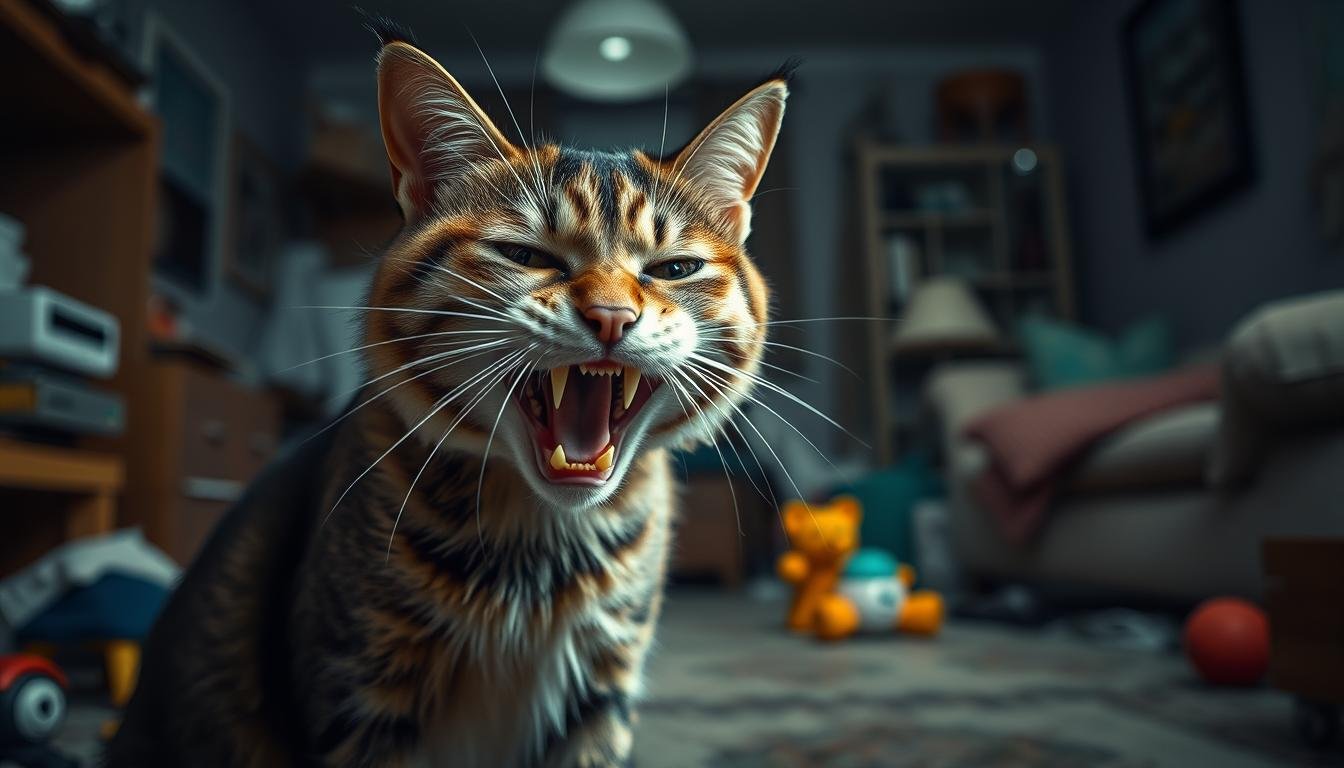
Your pet’s ears provide immediate insight into their feelings. When flattened backward against the head, this indicates offensive posturing. Ears held outward typically signal defensive fear.
The tail position offers another critical clue. An erect tail with raised hairs suggests readiness for confrontation. A tail tucked under the body shows your companion feels threatened.
Physical Signs and Warning Postures
Watch for changes in your pet’s overall body posture. An arched back with fur standing on end means they’re trying to appear larger. A crouched, low position indicates defensive behavior.
Dilated pupils occur in both offensive and defensive situations due to adrenaline. The head position also reveals important information about their emotional state.
Recognizing these signs of aggression helps you provide space when needed. This understanding prevents injuries and maintains peaceful relationships in your home.
Different Types of Aggression in Cats
Your pet’s defensive reactions can be categorized into distinct patterns, each with unique triggers and characteristics. Recognizing which type you’re dealing with helps you choose the right approach.
Play, Fear, and Petting-Induced Aggression
Young animals often display play aggression when they haven’t learned proper boundaries. They may pounce and bite during what they consider normal play behavior.
Fear-based reactions occur when your companion encounters unfamiliar people or situations. Past negative experiences can trigger this defensive response.
Petting-induced behavior seems to come out of nowhere. Your furry friend might suddenly bite during an enjoyable session due to overstimulation.
Territorial, Redirected, and Maternal Aggression
Territorial aggression surfaces when new pets enter the home or unfamiliar animals appear outside. Your companion defends what they consider their domain.
Redirected aggression is particularly concerning. When unable to reach the actual source of agitation, your pet may lash out at whoever is nearby.
Mother animals with nursing offspring often show protective behavior. They view approaching individuals as potential threats to their young.
Understanding these specific patterns helps you identify triggers and develop targeted solutions. Each type requires a slightly different management approach for best results.
Effective Techniques for Solving Cat Aggression
When your furry companion displays challenging behavior, the most effective approach combines patience with practical strategies. These methods focus on creating positive changes rather than punishing unwanted actions.
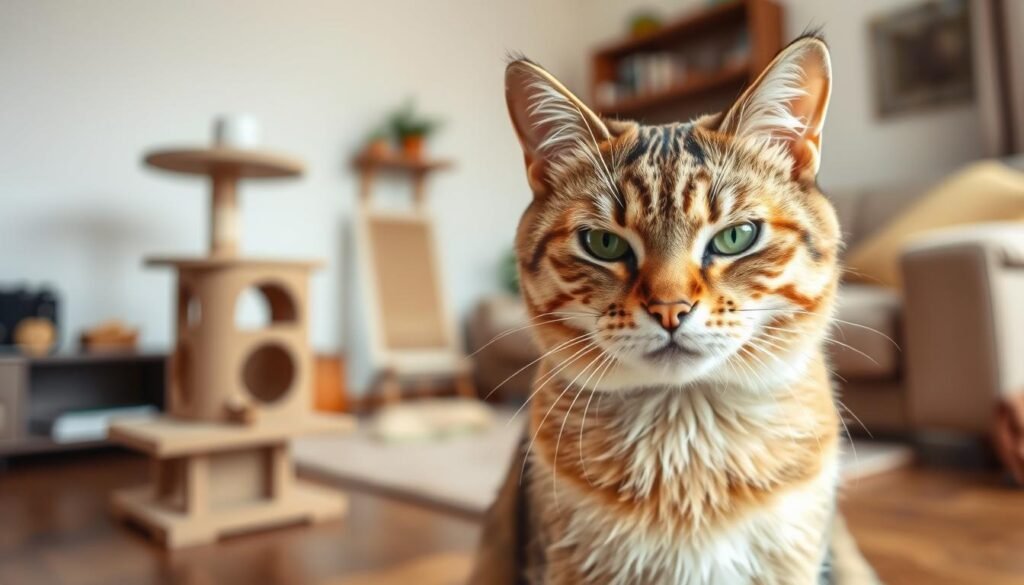
The best way to address difficult behavior is through early intervention. Taking action when patterns first appear prevents them from becoming established habits.
Behavioral and Environmental Modification
Creating a supportive environment reduces stress triggers for your pet. Simple changes like providing vertical spaces or blocking stressful views can make a significant difference.
Positive reinforcement is the best way to encourage calm behavior. Reward your furry friend with treats when they remain relaxed in previously challenging situations.
Never use physical punishment with aggressive behavior. This approach increases fear and anxiety, making the problem worse over time.
If your pet shows hostility toward another cat in your home, separation followed by gradual reintroduction works well. Use feeding time and other positive experiences to build good associations.
Environmental enrichment through toys and play sessions provides healthy outlets for energy. Managing known triggers while working on desensitization offers the highest success rate.
Remember that modifying behavior takes time and consistency. You’ll see the best results through weeks or months of patient application.
How to Safely Intervene in Aggressive Encounters
Your safety is the top priority when your pet shows signs of distress. Acting calmly and wisely can prevent a tense situation from getting worse.
Knowing how to respond without putting yourself at risk is a key skill. The right approach protects everyone involved.
Non-Contact Strategies and Early Intervention
Never attempt physical contact with an upset animal. Putting your hands near a fight can lead to serious injury.
Instead, use sound to create a distraction. A sharp noise, like a loud clap or a hiss from a person, can startle your pet and stop the behavior.
Always keep a safe distance. Use a long object, like a broom, to gently guide pets apart. This keeps your hands and arms out of harm’s way.
Physical punishment is never the answer. Hitting or yelling will only increase fear and make the problem worse.
| Safe Intervention Method | What to Do | Why It Works |
|---|---|---|
| Sound Distraction | Make a sudden, sharp noise | Redirects attention without contact |
| Barrier Use | Slide cardboard or a baby gate between pets | Creates physical separation safely |
| Object Placement | Use toys to distract, but keep them at arm’s length | Prevents redirected bites or scratches |
Early action is crucial. Recognizing the first signs of tension allows you to intervene before things escalate. This reduces the risk of injury for both people and pets.
By using these non-contact methods, you can manage difficult moments effectively. Your calm response helps build trust over time.
Behavioral Modification and Training Strategies
Effective training methods can reshape how your furry companion responds to various situations. The key lies in consistent, positive approaches that build trust over time. These strategies help redirect natural instincts into acceptable behavior.
Using Positive Reinforcement and Desensitization
Positive reinforcement rewards calm conduct with treats or praise. This approach works well for modifying challenging behavior. Desensitization involves gradual exposure to triggers from a safe distance.
For play-related issues, provide abundant interactive sessions with appropriate objects. Ignoring unwanted actions teaches that aggression results in lost attention. This method requires patience but yields lasting results.
Creating a Safe and Calming Environment
Your pet’s surroundings significantly influence their behavior. An enriched environment reduces stress and prevents boredom. Include vertical spaces, window perches, and rotating toys.
Pheromone diffusers can create a soothing atmosphere. These products help ease tension between pets in multi-animal homes. Combine environmental changes with consistent training for best outcomes.
Environmental and Medical Considerations
Sometimes, a change in your pet’s demeanor has a physical origin. It’s wise to look beyond behavior and consider underlying health. A sudden shift in how your furry friend interacts could signal discomfort.
Assessing Underlying Health Issues
Your first step should always be a visit to the veterinarian. A thorough checkup can uncover hidden sources of pain. For instance, dental disease can cause constant discomfort, making your pet irritable.
Senior animals, especially those over ten years of age, are more prone to conditions like arthritis. This joint pain can make them defensive about being touched. Identifying and treating these medical causes is essential. Your vet might suggest medications to manage pain.
Even after treatment, some pets may remain guarded, remembering past discomfort.
Optimizing Your Home Environment
Your house setup plays a huge role in your pet’s stress levels. Create quiet retreats where your furry friend can feel safe. Ensure you have multiple resources, like litter boxes and feeding stations.
Vertical spaces, like cat trees, allow your pet to observe their surroundings from a secure spot. For older pets, consider night lights to ease confusion. A predictable routine provides comfort and reduces anxiety.
A supportive home environment works hand-in-hand with medical care for the best results.
Integrating Professional and Veterinary Guidance
There comes a point when managing difficult pet behavior requires specialized expertise beyond basic training. While many situations respond well to the techniques we’ve discussed, some cases need professional intervention. Knowing when to seek help can make a significant difference in your pet’s well-being.
When to Seek Expert Help
You should consider professional assistance if your pet’s challenging behavior continues despite your consistent efforts. This is especially important when safety becomes a concern for people in your home. A qualified veterinarian or behaviorist can provide the specialized support needed.
These experts conduct thorough assessments to understand the root causes of behavioral issues. They develop customized plans that address your specific situation. Early intervention often leads to better outcomes for everyone involved.
Working with Behaviorists and Veterinarians
Collaboration between different professionals creates the most effective approach. Your veterinarian handles medical aspects while a behaviorist focuses on training strategies. This team effort ensures comprehensive care for your furry companion.
These specialists may recommend medications in some cases to support behavioral changes. They monitor progress and adjust strategies as needed. Working together provides the best chance for successful long-term results.
Conclusion
The path to resolving tension with your animal companion combines observation, patience, and consistent positive reinforcement. You now have the tools to understand what your furry friend is communicating through their ears, tail, and overall body posture.
Remember that this behavior usually stems from genuine needs like fear, pain, or the instinct to protect territory. Your consistent efforts with environmental changes and reward-based training create lasting positive change over time.
Every feline is unique, so flexibility in your approach ensures the best results for your specific situation. Working with veterinary professionals helps address any underlying medical issues that might contribute to the problem.
With dedication and the right strategies, you can build a safer, happier home where both you and your pet thrive together.
FAQ
What are the common signs of aggression I should look for?
Watch for flattened ears, a twitching tail, and a stiff body. Hissing or growling are also clear vocal cues. Recognizing these signs early can help you avoid an escalation.
How can I tell if my pet’s behavior is playful or truly aggressive?
Playful actions usually involve relaxed movements and no hissing. True aggression includes intense staring, pinned-back ears, and an attempt to cause harm. Playful nips are gentle, while aggressive bites are hard.
What should I do if my furry friend gets into a fight with another animal?
Never use your hands to separate them. Make a loud noise or toss a soft object nearby to distract them. Always address any injuries by consulting your veterinarian.
Could an underlying health issue be causing this behavior?
A>Yes, pain or discomfort from an illness or injury can lead to aggressive outbursts. A thorough check-up with your vet can rule out medical causes, which is a vital first step.
How can I make my home environment more calming?
Provide vertical spaces like cat trees and hiding spots. Use pheromone diffusers and ensure resources like food bowls and litter boxes are plentiful and placed in quiet areas.
When is it time to seek help from a professional?
If the behavior is frequent, intense, or you feel unsafe, contact a certified behaviorist or your veterinarian. They can create a tailored plan to address the problem effectively.