Cat Scratching Behavior : What You Need to Know
Cat Scratching Behavior : What You Need to Know
Table of Contents
There’s that familiar sound. The slow, deliberate scratch-scratch-scratch against your favorite armchair. You love your feline friend, but seeing your furniture slowly get shredded can feel frustrating. It’s easy to think they’re being difficult on purpose.
But what if we looked at it differently? Your pet isn’t trying to ruin your day. They are simply following instincts that are as natural as breathing. This action is a core part of their world.
Understanding the “why” behind this conduct is the first step to harmony. It’s about marking territory, maintaining health, and expressing themselves. This guide will show you how to work with your pet’s nature, not against it.
You’ll find practical ways to redirect this powerful instinct. You can protect your home while ensuring your companion is happy and healthy. Let’s explore what your furry friend is really trying to tell you.
Key Takeaways
- Scratching is a normal and necessary activity for felines.
- This action serves multiple health and psychological purposes.
- The main challenge is not the action itself, but the chosen location.
- Recognizing the reasons can prevent damage to your furniture.
- Working with your pet’s instincts leads to a happier home.
Understanding Cat Scratching Behavior
Your feline companion’s actions at the furniture aren’t acts of defiance. They’re following deep-rooted instincts essential for their wellbeing. This conduct serves multiple vital purposes that keep your pet healthy and content.
Natural Instincts and Claw Maintenance
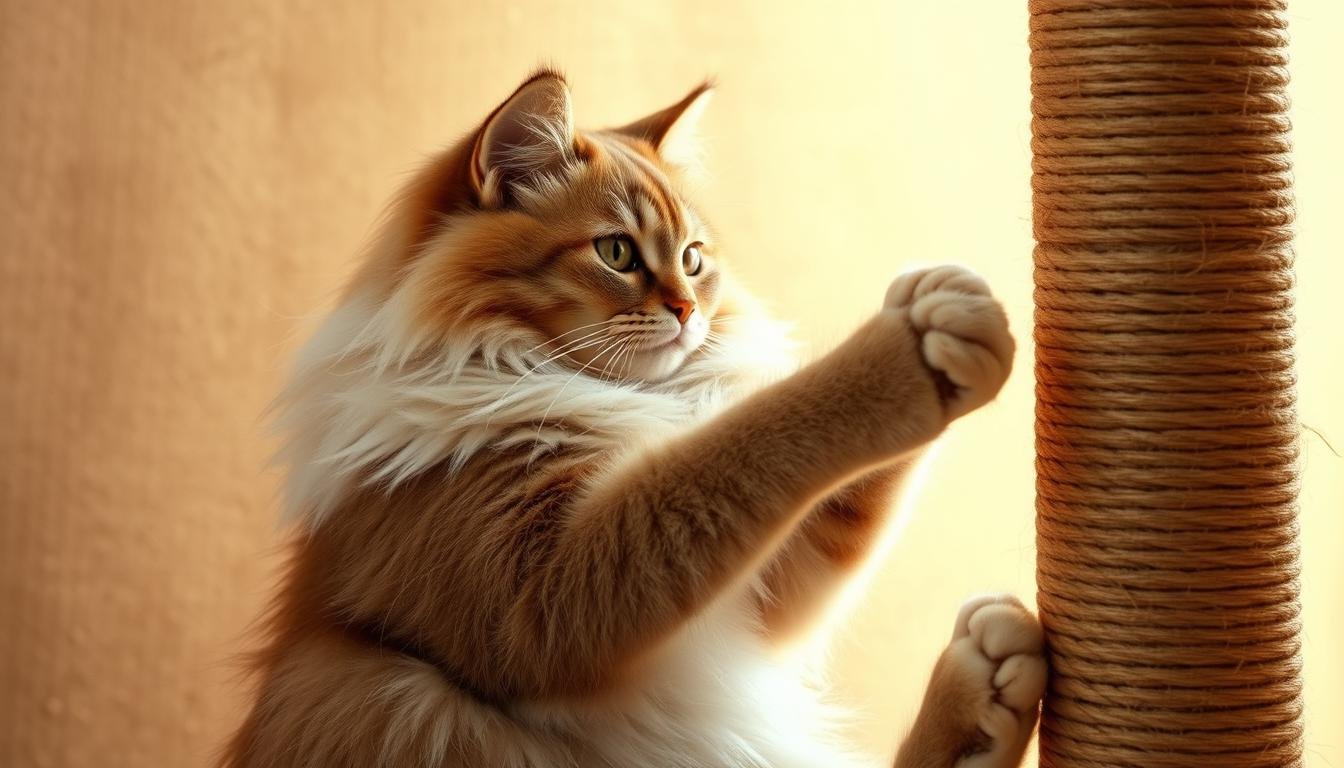
When your pet digs into surfaces, they’re performing crucial claw care. This action removes old outer layers to reveal sharp new points underneath. It’s like getting a manicure that nature designed.
The motion also provides excellent stretching for their entire body. They extend their spine, shoulders, and leg muscles during this activity. This maintains flexibility and muscle tone throughout their life.
This ritual triggers feel-good hormones in their brain. These chemicals help them cope with daily stress and relieve anxiety. It’s their natural way of self-soothing.
Territorial Marking Explained
The most significant reason for this conduct is territorial communication. Your pet leaves both visible marks and scent signals from glands in their foot pads. This declares their presence and claims their space.
These scent markers provide detailed information to other animals. They communicate identity, health status, and availability. The posts become sophisticated message centers.
Understanding these multiple functions helps you appreciate why stopping completely isn’t realistic. Your pet’s claws are essential tools for climbing, defense, and gripping. Maintaining them through regular activity is a biological necessity.
Designing and Setting Up Effective Scratching Posts
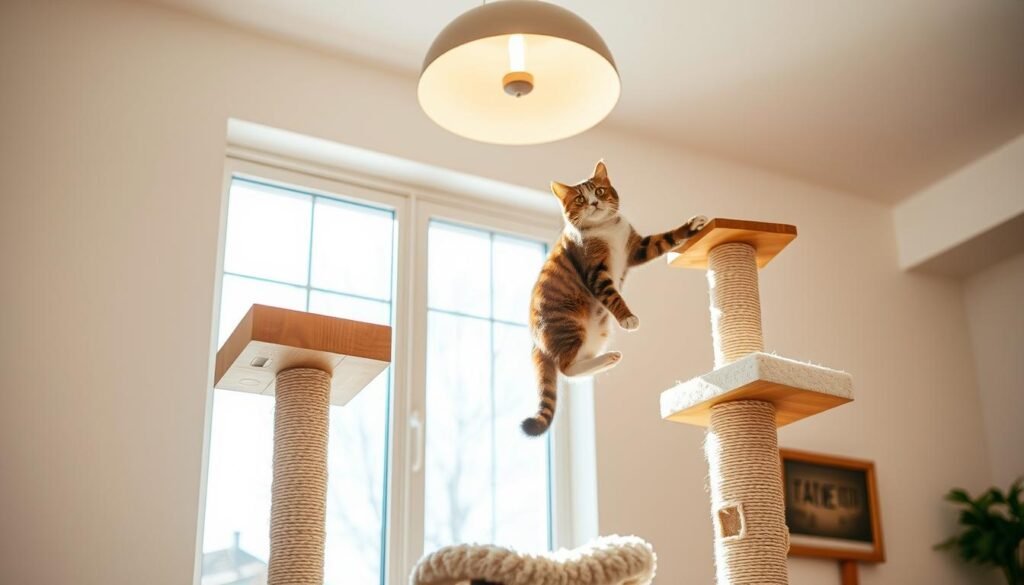
Successfully introducing a scratching post into your home hinges on two critical factors: material and placement. Getting these elements right makes your pet far more likely to use the post you provide instead of your furniture. It’s about offering a better option that meets their natural desires.
Choosing the Right Materials for Your Cat
Pay close attention to the texture of the post’s surface. Many pets prefer loosely woven fabrics like sisal rope. These materials allow their claws to hook and tear, which feels very satisfying.
Observe what your furry friend already gravitates toward. Some enjoy rough sisal, while others like soft carpet, smooth wood, or corrugated cardboard. This observation is your best guide for selecting the perfect material.
Ideal Placement and Post Design
Location is just as important as the post itself. Place these items in prominent, high-traffic areas of your home. Your pet wants their territorial markers to be seen.
Ensure the post is tall and sturdy. It must be at least as tall as your pet standing on their hind legs with front legs outstretched. A wobbly post will be ignored, so stability is non-negotiable.
Consider putting one near their favorite sleeping spot. They love to stretch and scratch after a nap. You can also attract them to the new post by sprinkling a little catnip on its base.
How to Redirect Cat Scratching Behavior
You can guide your pet’s natural instincts toward appropriate outlets. This process is about smart management, not suppression. With the right techniques, you protect your home and keep your furry friend content.
The most effective strategy is twofold. You make unwanted areas unappealing while making the designated post irresistible. This dual approach addresses the root of the conduct.
Training Techniques and Reward Systems
Positive reinforcement is your best tool. Whenever you see your pet using their post, immediately reward them. Use treats, praise, or a favorite toy.
Make the post a fun destination. Add dangling toys or sprinkle a little catnip on it. This creates a positive association.
If your furry friend is relaxed, you can gently guide their paws on the post. Only do this if they seem comfortable. Never force the action.
Here’s a quick guide to effective redirection:
| Action | Do This | Avoid This |
|---|---|---|
| Placement | Put the post near the current scratch spot | Hiding the post in a corner |
| Encouragement | Reward with treats and play | Yelling or physical punishment |
| Deterrents | Use double-sided tape on furniture | Using scents that stress your pet |
For surfaces you want to protect, apply deterrents. Double-sided tape or aluminum foil works well. These textures are unpleasant on paws.
Remember, punishment increases anxiety. It teaches your companion to be sneaky. Focus on rewarding the good actions you want to see.
With patience and consistency, you can successfully redirect this natural impulse. Your home stays safe, and your pet stays happy.
Addressing Behavioral and Environmental Triggers
Sometimes your furry friend’s actions speak volumes about their inner state. When previously good habits change suddenly, it’s often a cry for help rather than defiance.
Identifying Stress and Anxiety Factors
Major life changes can trigger unwanted conduct. Introducing new pets, moving homes, or schedule shifts may cause problems. Your companion might scratch furniture more frequently during these transitions.
Watch for other signs of distress like appetite changes or social withdrawal. These behavior problems often cluster together. Specific scratching areas might reveal relationship tensions within your home.
Enhancing Your Cat’s Environment with Play and Deterrents
Enrichment is your best defense against stress-related issues. Create a stimulating routine with multiple feeding sessions and interactive play time. Rotate toys to maintain interest and challenge natural instincts.
Consider these enrichment strategies:
- Schedule daily predatory play with wand toys
- Provide puzzle feeders for mental stimulation
- Create vertical spaces and hiding spots
- Use Feliway sprays on inappropriate surfaces
When away, a cat-proofed room with appropriate surfaces like sisal or cardboard can keep your pet safe. If problems persist despite these efforts, consult your veterinarian to rule out health issues.
Conclusion
Living in harmony with your feline friend is a rewarding journey. Understanding their natural instincts is the key to a happy home. Their need to scratch is essential for claw health and stress relief.
Provide appealing scratching posts made from materials they love. Place them in strategic areas and reward your pet for using them. This positive approach redirects their natural impulses away from your furniture.
For additional protection, consider regular nail trims or soft plastic caps. These solutions protect your belongings while letting your companion express their instincts. Remember, the goal is redirection, not suppression.
Declawing is a serious surgical procedure with lasting effects. It involves bone amputation and can lead to long-term health and behavior problems. It should only be a last resort in specific situations.
With patience and the right strategies, you can successfully manage this aspect of pet ownership. Your home can be safe and comfortable for everyone.
FAQ
Why do pets scratch furniture and other household items?
Your furry friend scratches to maintain their claw health, stretch their muscles, and mark their territory with scent glands in their paws. It’s a natural and necessary action.
How can I choose the best scratching post for my pet?
Look for posts made of sturdy materials like sisal rope or corrugated cardboard. Consider your pal’s preferences—some like vertical posts, while others prefer horizontal surfaces.
What’s the most effective way to train my companion to use a scratching post?
Encourage use by placing the post near their favorite nap spot and rewarding them with treats or catnip when they use it. Consistency and positive reinforcement are key.
Are there deterrents to keep my animal away from certain areas?
Yes! You can use double-sided tape, aluminum foil, or citrus-scented sprays on off-limit surfaces. These textures and smells are often unappealing to your four-legged friend.
Could stress or boredom be causing unwanted scratching?
Absolutely. Changes in routine, lack of stimulation, or anxiety can lead to this issue. Providing interactive toys and a calm environment can make a big difference.
Is declawing a safe solution to stop destructive scratching?
Declawing is a serious surgical procedure that can lead to long-term physical and behavioral problems. It’s best to explore humane alternatives like regular nail trims and appropriate scratching outlets.