10 Engaging cat exercise ideas to Energize Your Kitty
10 Engaging cat exercise ideas to Energize Your Kitty
Table of Contents
Have you ever watched your feline companion nap the afternoon away and wondered if they’re getting enough activity? That quiet, curled-up ball of fur holds so much playful potential. Unlocking that energy is one of the most rewarding parts of being a pet parent.
Regular movement is crucial for your kitty’s wellbeing. It’s not just about burning calories. Playtime provides essential mental stimulation, keeping your pet emotionally balanced and behaviorally healthy.
A sedentary lifestyle can lead to serious problems. Carrying extra weight puts stress on joints and can lead to conditions like diabetes. An active routine helps your furry friend maintain a healthy weight and improves their overall quality of life.
This guide is here to help. We’ll share fun and simple strategies to get your feline moving. These activities will strengthen your bond and ensure your companion enjoys a long, vibrant life.
Key Takeaways
- Daily activity is vital for your pet’s physical health and mental sharpness.
- Play helps prevent obesity and related health issues like joint stress.
- Structured fun is key to a happy and well-adjusted feline friend.
- Interactive play strengthens the connection between you and your kitty.
- Even indoor pets can enjoy a stimulating and active lifestyle.
- A consistent routine is beneficial for long-term weight management.
Understanding Your Cat’s Exercise Needs
Learning to read your kitty’s unique signals can transform playtime from a chore into a bonding experience. Every feline has distinct preferences and energy patterns that shape their ideal activity routine.
The Importance of Physical and Mental Stimulation
Your companion is naturally crepuscular. This means they’re most energetic at dawn and dusk. Scheduling play during these peak times aligns with their biological clock.
Both physical movement and mental enrichment are essential for your pet’s wellbeing. This dual approach helps maintain a healthy weight and prevents behavioral issues.
| Eager to Play Signals | Needs Rest Signals | Safety Response |
|---|---|---|
| Forward-facing ears | Walking away from toys | Stop activity immediately |
| Active batting at toys | Lack of interest | Allow complete rest period |
| Positive chasing behavior | Heavy panting | Resume only when recovered |
Recognizing Your Cat’s Signals
Watch for positive engagement during your daily sessions. An interested feline will participate willingly without aggressive behaviors.
Respect when your pet communicates disinterest. Forcing activity can create negative associations. Always prioritize safety over duration.
This understanding helps you keep your cat engaged while ensuring their comfort and wellbeing throughout every play session.
How to Incorporate “cat exercise ideas” into Your Routine
The secret to consistent movement lies in weaving it seamlessly into your pet’s regular schedule. This approach makes physical activity feel natural rather than forced.
Integrating Play with Daily Activities
Schedule movement around meal times for effective results. This creates a predictable pattern your companion can anticipate.
Always wait an hour before and after eating for vigorous sessions. This prevents digestive discomfort and keeps your pet comfortable.
Build on activities you already do together. Simple moments like preparing meals or relaxing can include quick, engaging interactions.
Using Treats and Training for Engagement
Food rewards make training sessions more exciting for your furry friend. They learn that participation leads to positive outcomes.
Use small, healthy treats to reinforce desired behaviors. This conditioning builds lasting habits through cause-and-effect learning.
Start with short, rewarding sessions and gradually increase duration. This gradual approach helps your pet build confidence and enjoyment.
Associating movement with positive experiences transforms it from obligation to anticipated fun. Your companion will look forward to these special moments together.
Interactive Toys and Tools for Cat Play
Discover how innovative play tools can unlock your pet’s natural hunting instincts. The right equipment makes activity sessions more engaging and effective for your furry friend.
Exploring Puzzle and Electronic Toys
Puzzle toys provide mental challenges that keep your companion active. These devices require your pet to work for treats, combining physical movement with cognitive stimulation.
Electronic options offer high-energy entertainment when you’re busy. Rotate these with interactive sessions to maintain variety and prevent boredom.
Puzzle feeders serve a dual purpose by slowing down eating. This promotes better digestion and supports healthy weight management.
Wand, Feather, and Laser Pointer Engagement
Wand toys create exciting prey-like movements that trigger chasing behavior. You control the action while keeping hands safe from playful claws.
Laser pointers provide instant movement motivation for quick sprints. Always end sessions with a tangible toy your pet can catch to prevent frustration.
Store wand toys securely when not in use. This prevents string ingestion accidents and maintains the toy’s novelty.
Unlike dogs who enjoy endurance activities, felines prefer short, intense bursts. Match your play style to their natural sprinting preferences for best results.
Scheduling and Routine Strategies for Effective Exercise
The timing and duration of your pet’s play periods significantly impact their effectiveness. A well-planned schedule respects your companion’s natural rhythms while ensuring consistent activity.
Identifying Your Cat’s Active Times
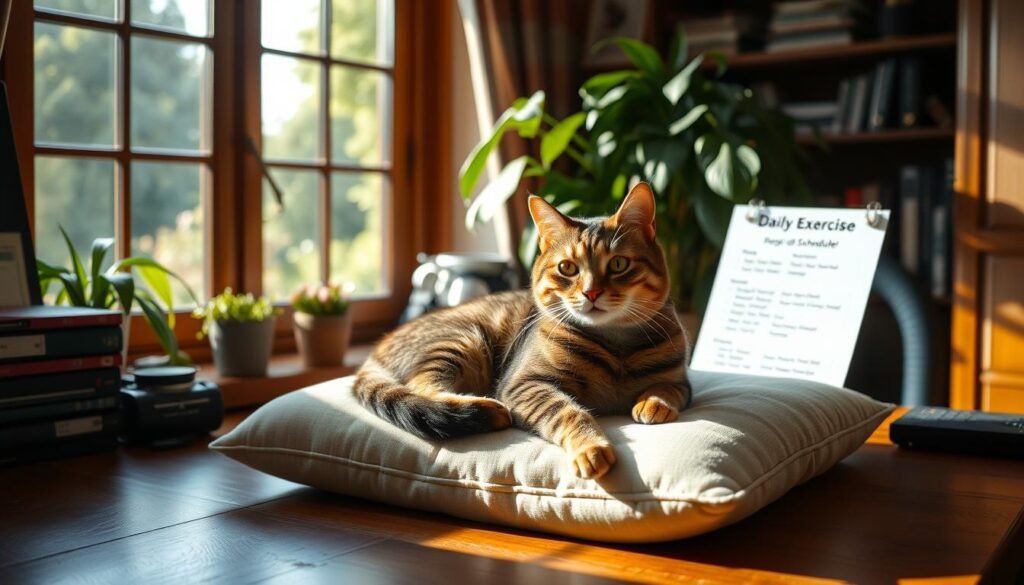
Your feline friend is most alert during dawn and dusk hours. Scheduling movement during these natural peaks helps keep them more engaged.
This crepuscular pattern means your pet is biologically primed for activity at specific times. Aligning sessions with these windows maximizes interest and participation.
Short, Frequent Play Sessions
Brief 10-15 minute sessions work better than extended blocks. Your companion is built for sprints rather than endurance activities.
Older pets typically thrive with 2-3 daily sessions. Younger animals may need up to 10 short bursts throughout the day.
Consistency creates anticipation and enjoyment. Regular timing helps your kitty look forward to these special moments together.
Always watch for signs of fatigue and end on a positive note. Adjust frequency based on age, health, and energy levels for safe, beneficial activity.
Indoor and Outdoor Play for a Balanced Lifestyle
Many indoor pets thrive when given safe opportunities to experience the outdoors in controlled ways. Balancing indoor safety with outdoor enrichment requires careful planning. You can protect your furry friend from dangers like cars and other animals while providing fresh stimulation.
Creating a Safe Catio or Outdoor Enclosure
A catio offers the perfect solution for outdoor access. This enclosed patio lets your companion enjoy sunshine and nature safely. These structures range from simple window boxes to multi-level playgrounds.
Your pet gets exercise opportunities while staying secure. Before any outdoor exposure, ensure they have current flea and tick prevention. This protects them from parasites they might encounter.
Leash Training and Supervised Walks
Leash training opens new possibilities for exploration. Use a secure harness designed specifically for feline friends. Collars alone are not safe for walks since pets can easily escape.
Test the harness indoors first for proper fit. Let your companion adjust before going outside. Many animals appreciate the mental stimulation of supervised walks.
Always microchip your pet with updated contact information. Place identification tags on the harness too. This provides extra security if they manage to escape during adventures.
| Outdoor Option | Safety Features | Preparation Needed |
|---|---|---|
| Catio/Enclosure | Fully enclosed space | Flea/tick prevention |
| Leash Walks | Secure harness required | Indoor training first |
| Supervised Access | Constant monitoring | Identification tags |
These safe outdoor experiences add variety to your pet’s life. They provide enrichment that’s difficult to replicate indoors. This contributes to overall physical and mental health for your beloved companion.
Creative Ways to Engage Both Mind and Body
Creative activities that stimulate thinking and movement create the most fulfilling experiences for your companion. These approaches combine mental challenges with physical activity for complete enrichment.
Clicker Training and Trick Performance
Training sessions using clicker methods can teach impressive behaviors. Your furry friend can learn to sit, high-five, or even perform complex tricks.
Even older pets without prior experience can master new skills. This bonding activity provides excellent mental stimulation while building confidence.
Hide-and-Seek Games with Treats and Toys
Hide treats and toys around your home to tap into natural hunting instincts. This makes your companion work for rewards just like in the wild.
Rotate toys regularly to maintain interest. Hidden discoveries throughout the day keep the excitement alive. Most cats enjoy chasing string pulled along the floor, but always supervise this play.
These creative approaches provide comprehensive benefits. They also help develop problem-solving skills while keeping your pet physically active and mentally sharp.
Enhancing Your Cat’s Environment with Vertical Spaces
Your feline friend’s natural instincts drive them to seek high vantage points for safety and observation. Creating vertical spaces in your home satisfies this deep-seated need while providing excellent physical activity.
Elevated areas give your kitty a sense of security and control over their territory. These spaces encourage natural behaviors like climbing and jumping throughout the day.
Utilizing Cat Trees and Window Perches
Quality cat trees offer multiple benefits for your pet. They provide elevated resting spots and integrated scratching surfaces that help keep claws healthy.
Choose stable structures that reach toward the ceiling for maximum climbing opportunities. Position them near windows where cats enjoy bird-watching entertainment.
Simple additions like wall shelves with cushions work well for expanding territory. Raised boxes or baskets on cabinets create inexpensive perches your companion will love.
| Vertical Option | Key Benefits | Placement Tips |
|---|---|---|
| Cat Trees | Scratching posts, multiple levels | Near windows for viewing |
| Window Perches | Sunlight exposure, entertainment | Secure mounting required |
| Wall Shelves | Space-efficient, customizable | Create climbing pathways |
| Cardboard Boxes | Inexpensive, replaceable | Rotate locations regularly |
Never underestimate a simple cardboard box. These basic structures provide hours of entertainment as your pet climbs in and out. Even basic box toys with cut-out holes offer interactive fun.
These environmental enhancements provide plenty of activity while satisfying natural instincts. They also help keep your furry companion mentally stimulated and physically active.
Conclusion
Transforming your pet’s daily routine doesn’t require complex equipment or extensive time commitments. Starting with just one or two simple strategies can make a significant difference in your kitty’s overall wellbeing. These small changes add up to create a more active, engaged lifestyle for your feline companion.
Regular activity is essential for maintaining a healthy weight and preventing serious health issues. Consistency matters more than intensity when it comes to your cat’s exercise routine. Even brief daily sessions of interactive playtime provide valuable physical and mental enrichment.
Your commitment to your pet’s needs demonstrates responsible ownership that enhances their quality of life. As you incorporate these approaches, you’ll notice improvements in your bond together. This shared journey toward better health creates lasting benefits for both you and your furry friend.
FAQ
Why is play so important for my feline friend?
Play is a great way to provide both physical and mental enrichment. It helps keep your pet at a healthy weight and satisfies their natural hunting instincts. This activity also prevents boredom, which can lead to unwanted behaviors.
How can I tell if my kitty is getting enough activity?
Look for signals like a healthy weight, good muscle tone, and a calm demeanor. If your companion seems restless, is gaining weight, or is engaging in destructive habits, they may need more playtime and enrichment in their life.
What are some easy ways to add movement into our day?
You can integrate fun into daily routines! Try using puzzle toys filled with treats during mealtime or keeping a wand toy near the couch for spontaneous sessions. Short, frequent interactions are a great way to keep things engaging.
What are the best types of toys to use?
Interactive toys like wands with feathers or a laser pointer can trigger your pet’s chase reflex. Puzzle toys that dispense food are fantastic for mental stimulation. Rotating different toys will keep your feline interested.
When is the best time of day to play?
Most cats enjoy activity during their natural peak times, like dawn and dusk. Pay attention to your kitty’s schedule. Short, frequent play sessions often work better than one long, exhausting one.
Is it safe to take my indoor pet outside?
Yes, with proper precautions! A secure catio or outdoor enclosure offers safe enrichment. You can also try leash training with a harness for supervised walks, allowing them to explore safely.
How can I engage my pet’s brain during play?
Clicker training for simple tricks is a wonderful mental workout. You can also play hide-and-seek with their favorite treats or toys to encourage problem-solving and mimic hunting behavior.
How do vertical spaces help with exercise?
Cat trees, shelves, and window perches encourage climbing and jumping. This utilizes vertical space, providing excellent physical activity and a feeling of security, which is vital for their well-being.