Senior Cat Care: Helping Your Older Feline Thrive
Senior Cat Care: Helping Your Older Feline Thrive
Table of Contents
Remember that tiny ball of fluff who used to chase sunbeams across the floor? That playful kitten is now a dignified companion, gracing your home with their presence for many years. Watching your feline friend grow older is a journey filled with deep love.
Today, our pets are living longer, healthier lives than ever before. Thanks to better nutrition and veterinary medicine, many are reaching their twenties. According to Dr. Richard Goldstein of Cornell University, aging itself is not a disease. Your wise companion typically enters their golden years around 12 to 14 years old.
This new chapter can be incredibly rewarding. With a thoughtful approach, you can ensure your beloved pet continues to enjoy a wonderful quality of life. This guide will show you practical ways to support their well-being.
You will feel empowered to make their later years comfortable and full of contentment. Let’s explore how to help your treasured friend thrive.
Key Takeaways
- Feline companions are living longer, healthier lives, with many reaching their twenties.
- The senior stage for a pet typically begins later than many think, around 12 to 14 years old.
- Aging is a natural process, not an illness, and many older pets remain happy and healthy.
- Proactive and informed support can make your pet’s golden years a deeply rewarding time.
- Simple adjustments to your home and routine can significantly enhance your companion’s comfort.
- Evidence-based strategies from veterinary experts provide a clear path for excellent well-being.
Understanding Senior Cat Care
The aging process in our feline companions is more complex than a simple year-to-year conversion. They experience rapid maturation in their first few years before settling into distinct life stages.
This knowledge helps you anticipate their evolving needs. A pet’s life is typically divided into kittenhood (up to 1 year), young adulthood (1-6 years), mature adulthood (7-10 years), and the senior stage (over 10 years).
Defining Life Stages and Aging in Cats
Your pet is generally considered to be entering their golden years around age 10. Many veterinary experts now view the 12 to 14-year mark as the true start of the senior phase.
This gives you a clear timeline for when to begin more specialized support routines. Understanding these stages is key to proactive well-being.
Common Health and Behavioral Changes
As the years pass, your companion’s body undergoes significant transformations. You may notice a drop in activity levels and a reduction in muscle tone.
Their energy requirements can fall by up to 40%, directly impacting dietary needs. Dulled senses of smell and taste can also lead to appetite changes.
Internal changes are just as important. Efficiency in organs like the liver and kidneys can decrease, affecting how they process food and medications.
Immune function may naturally decline with age. This can make them more susceptible to certain health conditions.
Behaviorally, older pets often sleep more and become less playful. They might also experience a diminished sense of thirst, increasing dehydration risk.
These shifts are a normal part of growing older. With your attentive support, your cherished friend can still enjoy a wonderful quality of life.
Recognizing Signs of Aging in Your Cat
Detecting the early warning signals of aging requires becoming a keen observer of your pet’s daily patterns. Felines are masters at concealing discomfort, making your watchful eye essential for catching subtle shifts.
Observing Physical Indicators and Pain Signals
Your companion’s survival instinct means they rarely show obvious symptoms of discomfort. Watch for mobility changes like difficulty jumping or slipping on floors. These could indicate arthritis or other painful conditions.
Conduct gentle weekly checks during grooming sessions. Feel for new lumps or sensitive areas. Altered grooming patterns or breathing efforts are important signs to note.
Monitoring Changes in Activity and Weight
Behavioral shifts often reveal underlying health issues. Notice if your feline hides more or shows less interest in family interactions. Decreased playfulness deserves attention.
Weight fluctuations are particularly telling. Loss can occur despite normal eating, signaling conditions like hyperthyroidism. Monitor appetite, thirst levels, and bathroom habits closely.
Never dismiss these changes as simply “old age.” Early detection allows your veterinarian to address treatable problems before they become serious.
Adapting Your Home for an Aging Feline
Your home environment plays a crucial role in supporting your older pet’s daily activities. Simple adjustments can make a significant difference in their comfort and independence.
Think about the flow of your living space from your companion’s perspective. Their changing physical abilities require thoughtful modifications to ensure easy access to essential areas.
Ensuring Easy Access to Food, Water, and Litter
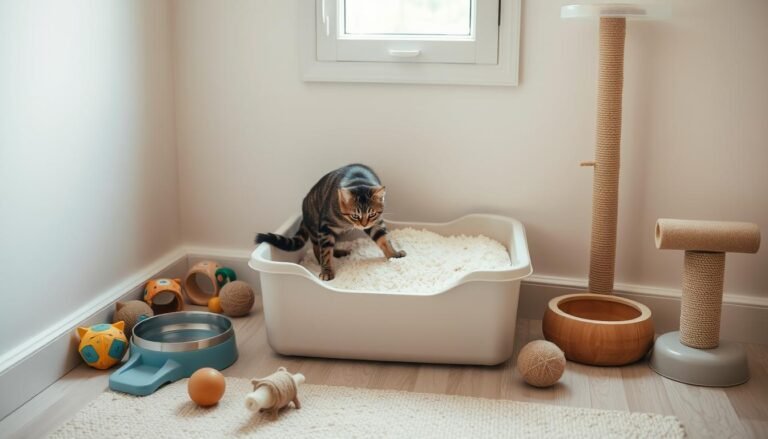
Place litter boxes on every floor of your home. This eliminates the need for difficult stair navigation. Consider low-sided options for pets with mobility challenges.
Multiple feeding stations throughout your house prevent long journeys for basic needs. Keep food and water bowls in convenient, easily reachable locations.
Create safe pathways to favorite spots like windowsills or furniture. Ramps or carpet-covered steps provide secure footing. These modifications help your feline reach elevated areas without strain.
Establish a warm, comfortable resting area away from drafts. Proper bedding supports achy joints and promotes restful sleep.
Nightlights in key areas assist pets with vision changes. They help navigate safely during darker hours. Non-slip rugs on smooth floors prevent slipping accidents.
Your thoughtful adaptations demonstrate understanding of your companion’s evolving needs. These changes maintain their quality of life throughout their golden years.
Nutrition and Diet Tips for Older Cats
What your older companion eats can significantly impact their quality of life and longevity. The right diet supports their changing health needs as they age.
Adjusting Caloric Intake and Food Types
Your pet’s energy requirements may drop by up to 40% with reduced activity. You’ll need to adjust portions to prevent unhealthy weight gain.
Some mature felines experience reduced appetite as senses dull. Try switching to more palatable wet food or slightly warming meals. Stronger flavors like fish can encourage eating.
| Food Type | Benefits | Considerations |
|---|---|---|
| High-Quality Dry Food | Dental health support | Lower moisture content |
| Wet/Canned Food | Higher water content | More palatable |
| Prescription Diet | Specific health support | Veterinary recommendation needed |
Staying Hydrated and Managing Kidney Health
Water intake is crucial for kidney function. Ensure constant access to fresh, clean water in multiple locations.
Mixing wet and dry food boosts hydration. Consider a water fountain if your pet prefers flowing water.
Monitor weight changes carefully. Sudden loss may signal health issues like hyperthyroidism. Regular body condition scoring helps maintain ideal weight.
Daily Grooming and Comfort Strategies
Your gentle touch becomes a vital part of your feline friend’s daily comfort as they age. Regular, attentive sessions help maintain their well-being and provide precious bonding time.
As mobility changes, your pet might struggle with self-grooming. Your assistance prevents painful matting, especially for longhaired cats.
Implementing Gentle Grooming and Dental Care
Brushing several times a week removes loose fur. It also stimulates circulation. This is a wonderful way to check their skin for any changes.
Dental care is critically important. Periodontal disease is common and can lead to serious health issues.
- Brush teeth daily with pet-safe toothpaste. If a brush isn’t tolerated, use gauze on your finger.
- Schedule veterinary dental checks twice a year. Your vet can recommend professional cleanings.
- Trim nails more frequently. Arthritis can make using a scratching post difficult.
A sudden stop in self-grooming may signal underlying pain or illness. Always consult your veterinarian about significant changes. Your consistent care keeps your senior cat comfortable and healthy.
Working with Your Veterinarian for Ongoing Care
Your partnership with a trusted veterinarian becomes your pet’s strongest health advantage. Regular checkups are essential for maintaining wellness during the golden years.
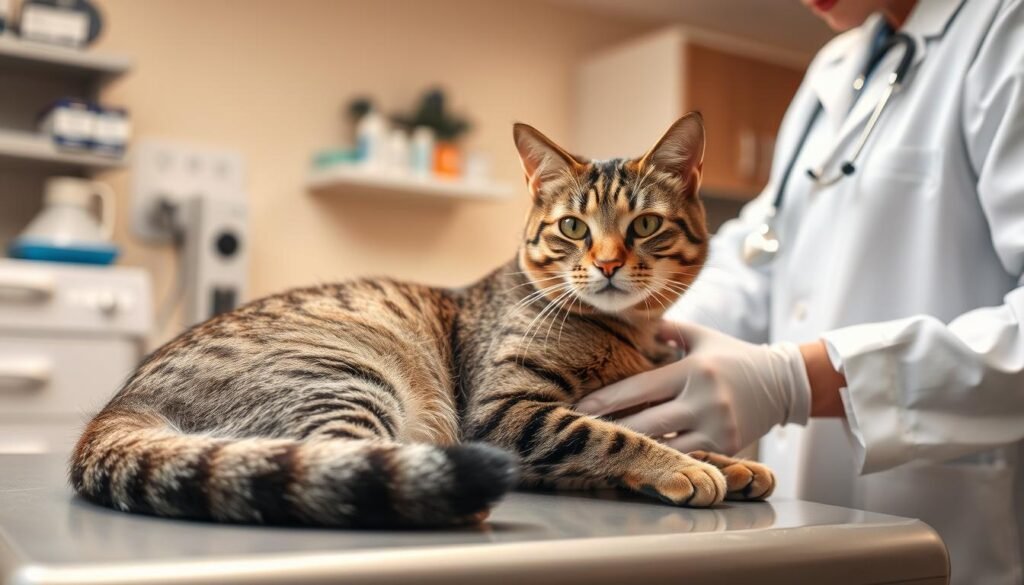
Schedule visits every six months for comprehensive monitoring. These appointments allow early detection of potential issues before they become serious problems.
Scheduling Regular Checkups and Health Screenings
Your animal doctor will recommend specific tests based on age and health status. Annual blood work and urinalysis help identify underlying conditions.
Diagnostic screening can reveal diseases like kidney issues or arthritis. Early intervention often leads to better outcomes and maintained quality of life.
| Checkup Frequency | Recommended Tests | Common Conditions Detected |
|---|---|---|
| Every 6 months | Physical exam, weight check | Dental disease, weight changes |
| Annually | Blood work, urinalysis | Kidney disease, diabetes |
| As needed | X-rays, specialized tests | Arthritis, heart conditions |
Be honest about any symptoms or behavior changes you notice. This information helps your veterinarian make accurate diagnoses. Multiple health issues can occur simultaneously, requiring coordinated treatment plans.
Medication adjustments may be necessary as bodily functions change. Proper dosing ensures safety and effectiveness. Your commitment to regular veterinary care provides the best support for your aging companion.
Conclusion
Your journey with your older feline friend is a special chapter filled with deep rewards. By providing attentive support, you help maintain their quality of life for many years.
Remember, most pets age gracefully and need only small adjustments. Your commitment to regular vet visits and proper nutrition makes a huge difference. Simple home modifications and gentle grooming assistance keep them comfortable.
Your older companion thrives on predictable routines and your loving attention. Understanding their changing behavior is key to meeting their needs. Your dedicated care ensures their golden years are peaceful and happy.
FAQ
At what age is my pet considered a senior?
Most veterinarians consider your feline friend to be entering their golden years around 10 to 12 years of age. However, this can vary depending on the individual and breed.
What are some common health issues I should watch for?
Keep an eye out for changes like weight loss or gain, dental disease, kidney issues, and arthritis. Regular vet visits are key to catching these conditions early.
How can I make my home more comfortable for my older pet?
You can help by providing easy access to their favorite spots. Consider ramps or steps to furniture, a cozy bed, and keeping their litter box, food, and water on the same floor.
Should I change my older pet’s diet?
Yes, their nutritional needs often change. Your veterinarian can recommend a food that’s easier to digest and supports kidney health, joint function, and maintains a healthy weight.
How often should I take my older pet to the veterinarian?
It’s a good idea to schedule checkups at least twice a year. These visits allow for early detection of potential problems and help maintain your pet’s quality of life.
My pet seems to be grooming less. What should I do?
This is common as mobility decreases. You can help with gentle daily brushing. This not only keeps their coat clean but also gives you a chance to check for any new lumps, bumps, or sore spots.