Understand Your cat body language
Understand Your cat body language
Table of Contents
Have you ever watched your furry companion and wondered what they were thinking? You’re not alone. Our feline friends have a rich, complex way of expressing themselves. They may not use words, but they are constantly communicating.
Every flick of the tail, twitch of the ears, and subtle shift in posture holds meaning. Learning to interpret these signals is like unlocking a secret code. It allows you to truly understand what your pet is feeling.
This knowledge is a powerful tool. It helps you build a stronger, more trusting relationship with your beloved pet. You can better meet their needs and ensure they feel safe and content in your home.
This guide will help you decode the mysteries of feline communication. You’ll gain insights from expert behaviorists and veterinarians. Soon, you’ll be having conversations with your pet without saying a word.
Key Takeaways
- Your pet communicates its feelings and needs through physical signals.
- Observing posture, tail, ears, and eyes is key to understanding them.
- This knowledge helps you build a stronger, more trusting bond.
- Recognizing signs of stress or fear can improve your pet’s well-being.
- Every signal has meaning, and context is crucial for accurate interpretation.
- Understanding these cues allows you to better meet your pet’s needs.
Introduction: Why Your Cat’s Body Language Matters
Learning to interpret your pet’s physical signals transforms random interactions into meaningful communication. This skill bridges the gap between human and feline understanding.
When you master this silent language, you gain access to your companion’s emotional world. You can respond to their needs before problems escalate.
Connecting with Your Cat Through Non-Verbal Cues
Your furry friend communicates primarily through physical expressions rather than sounds. Their entire posture serves as their main method of conversation.
By paying close attention, you can distinguish between different emotional states. A relaxed posture indicates comfort, while tense muscles signal anxiety or fear.
This understanding helps you build trust and strengthen your bond. You’ll know when your pet seeks affection versus when they need space.
The Role of Context in Interpreting Behavior
The same physical signal can mean different things depending on the situation. Always consider what’s happening around your pet at that moment.
Ask yourself how the environment might make them feel. Loud noises, unfamiliar people, or sudden movements can change their behavior completely.
This contextual awareness prevents misunderstandings. It helps you avoid situations where well-intentioned actions might be perceived as threatening.
Exploring the Impact of Environment and Context on Cat Behavior
Interpreting your companion’s signals accurately requires looking beyond them to their surroundings. The setting provides crucial clues about their true feelings.
Your pet’s entire demeanor can shift based on their immediate environment. A familiar, comfortable home encourages relaxed behavior.
Assessing Your Home’s Layout and Safe Spaces
Think of your house from your pet’s perspective. They need clear paths to essential resources like food, water, and their litter box.
Blocked routes or loud appliances nearby can create anxiety. High perches offer a wonderful sense of security, allowing them to survey their space confidently.
Always provide access to safe hiding spots. A cozy retreat gives them a place to decompress if they feel overwhelmed.
Recognizing Stress Triggers in Everyday Situations
Many common events can trigger stress. Loud noises, unfamiliar guests, or even rearranged furniture are classic examples.
These changes disrupt their sense of routine and safety. You might notice different postures or more cautious movements during these times.
Travel and vet visits are almost always stressful. Expect more defensive signals outside their controlled home environment.
Understanding Cat Posture and Overall Body Signals
Your pet’s physical stance serves as a direct window into their emotional state. The way they hold themselves tells you immediately whether they feel safe or threatened.
Open vs. Closed Postures and What They Indicate
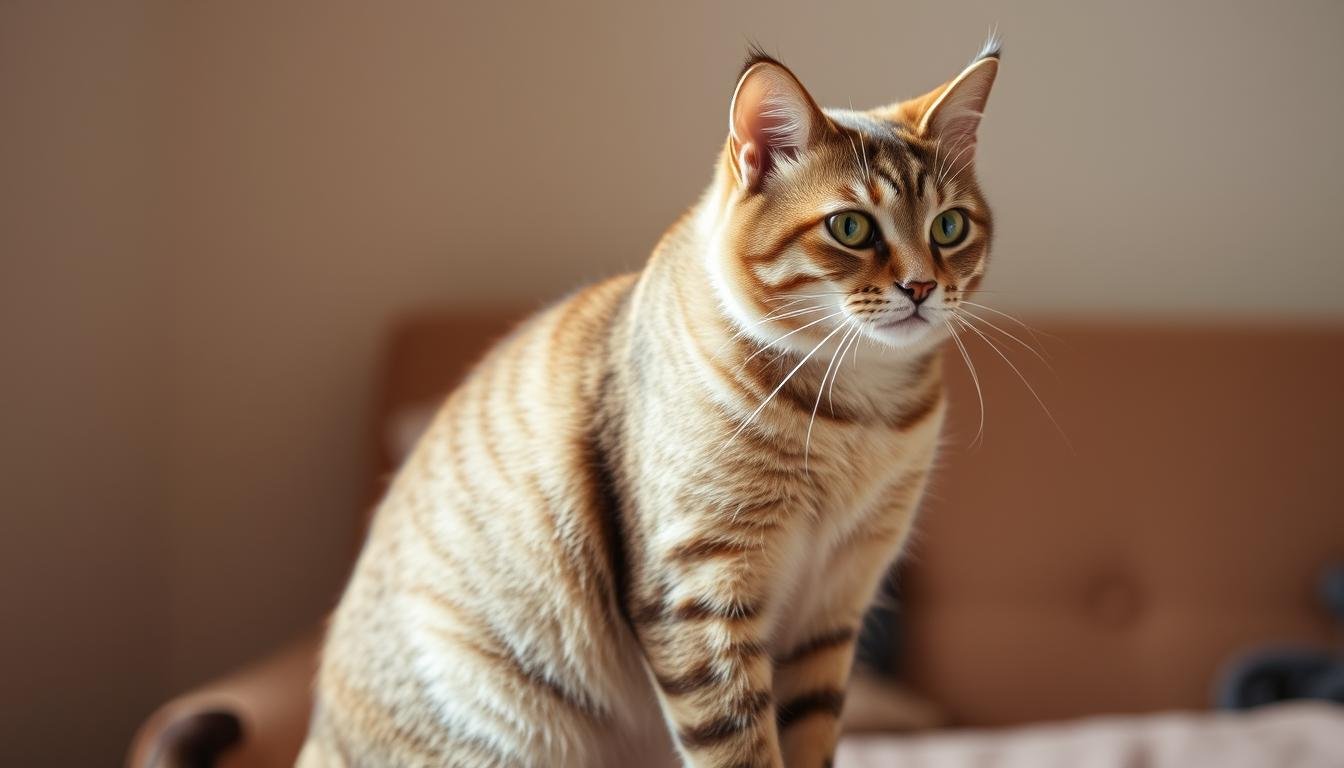
When your furry friend stretches out with limbs extended, this open posture signals complete relaxation. They feel confident in their environment and trust you completely.
A belly-up position demonstrates ultimate comfort. However, this vulnerable display doesn’t always mean they want a tummy rub. Many pets will defend this sensitive area if touched.
Closed postures show the opposite emotional state. A hunched body or tight ball shape indicates fear or stress. Your companion is trying to protect themselves from perceived threats.
| Posture Type | Physical Characteristics | Emotional Meaning | Recommended Action |
|---|---|---|---|
| Open Posture | Stretched out, limbs relaxed, belly visible | Confident, relaxed, feeling safe | Approach gently for interaction |
| Closed Posture | Curled tightly, limbs tucked, low to ground | Anxious, fearful, stressed | Give space, avoid sudden movements |
| Crouched Position | Body low, muscles tense, ready to move | Nervous, preparing to flee | Stay still, speak softly |
Understanding these signals helps you respond appropriately to your pet’s needs. You’ll know when they welcome attention versus when they need quiet time alone.
Decoding Cat Body Language: Interpreting Signs and Signals
Deciphering your pet’s mood is like learning a new language. It requires you to observe the whole picture, not just one part. A single tail flick or ear twitch can be misleading on its own.
Look at the entire combination of signals. Notice the position of the tail, the angle of the ears, and the expression in the eyes. These behaviors work together to tell a clear story.
Every pet has a unique personality. Some are very expressive, while others are more reserved. Paying attention to small changes helps you understand their individual ways of communicating.
This holistic approach prevents misunderstandings. It allows you to respond correctly to their emotional needs. You will build a stronger, more trusting bond over time.
Becoming fluent takes practice and patience. The reward is a deeper connection with your furry companion. You will be able to ensure their well-being and happiness.
Interpreting the Tail: Key Signs and Signals
Among the most dynamic indicators of your furry friend’s mood is the tail. It acts like a real-time mood barometer. You can quickly gauge their feelings by watching its position and movement.
This part of their anatomy is incredibly expressive. Learning its language helps you understand their needs instantly.
High Tails, Tucked Tails, and Their Meanings
A tail held high and vertical is a classic sign of a happy, confident pet. They feel comfortable and are often open to interaction. A slight curl at the tip adds to this friendly message.
In contrast, a low or tucked tail signals fear or anxiety. Your companion is trying to appear smaller and less threatening. This position clearly asks for space and reassurance.
Flicking and Puffed-Out Tail Behaviors Explained
Watch for flicking or twitching motions. These behaviors can mean focused excitement during play. They can also signal growing irritation if the context suggests it.
The dramatic “bottlebrush” tail, puffed out wide, is a defensive display. Your pet is trying to look bigger to intimidate a perceived threat. It’s a clear warning to back away.
| Tail Signal | Appearance | Likely Emotion | Your Best Response |
|---|---|---|---|
| High & Vertical | Straight up, possibly curved at tip | Confident, Friendly, Happy | Approach for gentle interaction |
| Tucked or Low | Pressed against hind legs or low to ground | Fearful, Anxious, Submissive | Give space, speak softly |
| Puffed-Out | Fur standing on end, looks larger | Defensive, Threatened, Scared | Do not approach; remove the threat |
| Quick Flicking | Sharp, side-to-side twitches | Agitated, Alert, Annoyed | Pause interaction, assess context |
| Quivering | Subtle vibration while held high | Excited, Affectionate (often during greeting) | Offer a friendly greeting in return |
Remember, context is king. A high tail usually means joy, but in a confrontation, it can show readiness to defend. Paying attention prevents misunderstandings and strengthens your bond.
Deciphering Ear, Eye, and Whisker Communication
The ears, eyes, and whiskers work together as a sophisticated communication system that reveals immediate emotional states. These facial features provide real-time feedback about your furry companion’s feelings.

Reading Ear Positions: From Upright to Flattened
Your pet’s ears are incredibly expressive. Forward-facing, upright ears indicate a relaxed and alert animal. They feel confident in their environment.
When ears flatten sideways against the head—called “airplane ears”—this signals fear or stress. The more flattened they become, the more distressed your companion feels. Ears pinned completely back show extreme fear or anger.
Understanding Eye Expressions and Slow Blinking
Your furry friend’s eyes tell another important story. Relaxed, partially closed eyes indicate contentment and comfort. Dilated pupils signal stimulation, which could mean excitement or fear depending on context.
The slow blink is one of the most endearing forms of communication. When your pet blinks slowly at you, they’re expressing trust and affection. You can strengthen your bond by returning this gentle gesture.
Whiskers pushed forward show interest, while whiskers pulled flat against the face signal fear. Reading these features together gives you a complete picture of your companion’s emotional state.
Understanding Vocalizations: What Cat Noises Mean
Your furry friend has a rich vocabulary of sounds. These vocalizations offer direct insight into their emotions and needs. Learning this auditory language helps you respond with greater understanding.
Each sound provides clues about their inner world. Paying attention to these cues builds a stronger bond.
From Purring to Hissing: Differentiating Emotions
Purring often signals contentment, especially during petting sessions. But your companion may also purr when in pain or feeling unwell. This self-soothing behavior can be confusing.
Warning sounds follow a clear pattern. Growling suggests annoyance, while hissing shows startled fear. Yowling indicates high stress or the need to play.
Chirping expresses excited frustration, often at unseen prey. Trilling is a friendly greeting, like a happy hello. Meowing has a lot of meanings, from hunger to wanting your attention.
Constant vocalization can be among the first signs of trouble. If meowing increases dramatically, consult your vet to rule out health issues. Understanding these sounds helps you care for your pet’s well-being.
Bonding with Your Cat: Tips for a Deeper Connection
The real magic happens when you transform your understanding into daily actions that strengthen your bond. Applying what you’ve learned about feline communication can dramatically improve your relationship.
One of the most effective ways to connect is by respecting boundaries. When your furry friend shows signs of discomfort, give them space. This builds trust more effectively than forced interaction.
Practical Advice to Enhance Trust and Communication
Slow blinking is a powerful tool for connection. When your companion slow blinks at you, return the gesture. This simple act communicates affection in their own language.
Environmental enrichment keeps your pet stimulated and content. Provide scratching posts, climbing opportunities, and interactive toys. These items satisfy natural instincts and prevent boredom.
Regular play sessions are essential for bonding. Use wand toys or puzzle feeders to engage their hunting instincts. This creates positive associations with your presence.
Always provide safe hiding spots throughout your home. Your companion needs retreats where they feel secure. This demonstrates your understanding of their needs.
Never punish natural behaviors. Instead, redirect unwanted actions gently. Positive reinforcement builds much stronger connections than negative reactions.
Monitor for changes in behavior patterns. Sudden hiding, aggression, or reduced activity could signal health issues. Consult your vet if you notice concerning changes.
Building a strong bond requires patience and consistency. The reward is a relationship based on mutual understanding and trust.
Conclusion
Mastering feline communication opens a new dimension in your relationship with your pet. This skill transforms guesswork into genuine dialogue that benefits everyone involved.
Your furry companion isn’t mysterious—they simply express themselves in unique ways. Learning their methods requires observing the complete picture of signals and context.
With consistent practice, you’ll become fluent in reading postures, tail positions, and vocalizations. Remember that each animal has individual patterns you’ll learn through ongoing interaction.
Significant changes in behavior often indicate underlying health issues. Consulting your veterinarian ensures your pet’s well-being remains the top priority.
The effort you invest pays enormous dividends in relationship satisfaction and quality care. You can now recognize the constant conversation happening through subtle cues.
FAQ
What does it mean when my pet has its tail straight up?
A tail held high is often a great sign! It usually means your feline friend is feeling happy and confident. You might see this when they greet you or explore their space.
Why do whiskers sometimes point forward?
When those whiskers are pushed forward, it typically shows curiosity or excitement. Your companion is likely interested in something, like a new toy or a sound. It’s a posture of engagement.
Should I be worried if my companion’s ears are flattened?
Flattened ears are a clear signal of fear, stress, or aggression. It’s best to give your pal some space and try to identify what might be causing the distress, like a loud noise or an unfamiliar person.
Is a slow blink from my furry friend a good thing?
Absolutely! A slow blink is like a kitty kiss. It’s a sign of trust and affection. You can try slowly blinking back to communicate that you feel safe and comfortable with them, too.
What does a puffed-out tail indicate?
A puffed-out or bushy tail is a classic sign of being startled or frightened. Your pet is trying to look bigger to scare away a perceived threat. It’s a good idea to reassure them and remove the stress trigger if you can.
How can I tell if my animal is in pain by looking at its posture?
Signs of pain can include a hunched back, hiding more than usual, or a reluctance to move. Their eyes might be squinted, and they may react negatively to being touched. If you notice these changes, a visit to the vet is important.