cat communication signs : Recognizing Your Feline’s Signals
cat communication signs : Recognizing Your Feline’s Signals
Table of Contents
Have you ever watched your furry companion and wished you knew what they were thinking? That quiet stare or gentle head bump holds a world of meaning. For centuries, our pets have seemed mysterious because they speak a different language than we do.
Unlike humans, who rely heavily on words, your pet uses a rich, silent language. This system combines body postures, various sounds, and even scent cues. Learning this language is the key to a deeper bond.
True understanding requires looking at the whole picture. A single tail flick or meow doesn’t tell the full story. You must observe the physical cues, the situation, and see the world from their perspective.
This guide draws on expert knowledge to help you decode these everyday signals. With practice, you can learn to interpret the context and respond in ways your companion understands. This knowledge builds a more harmonious and joyful life together.
Key Takeaways
- Cats use a complex system of body language, vocalizations, and scent marking to express themselves.
- Adult cats developed meowing primarily as a way to interact with people, not other cats.
- No single signal guarantees a specific meaning; context is critical for accurate interpretation.
- Learning to see situations from your cat’s point of view is essential for understanding.
- Decoding your pet’s language strengthens your bond and reduces household misunderstandings.
- With attentive observation, you can become fluent in your feline friend’s unique way of communicating.
Understanding Your Cat’s Body Language
The way your pet carries itself reveals volumes about its inner world. Learning this physical vocabulary helps you understand their needs and feelings better. It’s like learning a new language that brings you closer together.
Context and Environmental Cues
Interpreting your pet’s body language starts with understanding their situation. The same physical signal can mean different things depending on the environment. A high tail might show confidence at home but signal aggression when facing a stranger.
Your companion’s evolutionary background influences their behavior. As both predator and prey, they have instinctual responses to perceived threats. Safe, open spaces allow relaxed postures, while confined areas may trigger protective crouching.
| Posture Type | Body Position | Likely Meaning | Recommended Response |
|---|---|---|---|
| Relaxed | Stretched out, loose | Comfortable and content | Approach gently if desired |
| Defensive | Arched back, puffed fur | Fearful or threatened | Give space, avoid direct contact |
| Protective | Ball-like, scrunched | Anxious or in pain | Assess situation carefully |
Posture and Emotional States
Your pet’s body orientation speaks volumes about their intentions. They typically point their body where they plan to go next. Sideways positioning often indicates they’re considering an escape route.
Stretched-out postures show trust and comfort. Your companion feels safe enough to expose their body. Scrunched positions signal stress or discomfort as they protect vulnerable areas.
Defensive postures make your pet appear larger when they feel threatened. This includes arched backs and raised fur. Understanding these cues helps you respond appropriately to their emotional needs.
Decoding Cat Communication Signs
Your feline friend is always talking to you, but some messages are quieter than others. Mastering the art of understanding these subtle cues means looking at the whole picture. It’s like solving a puzzle where every piece matters.
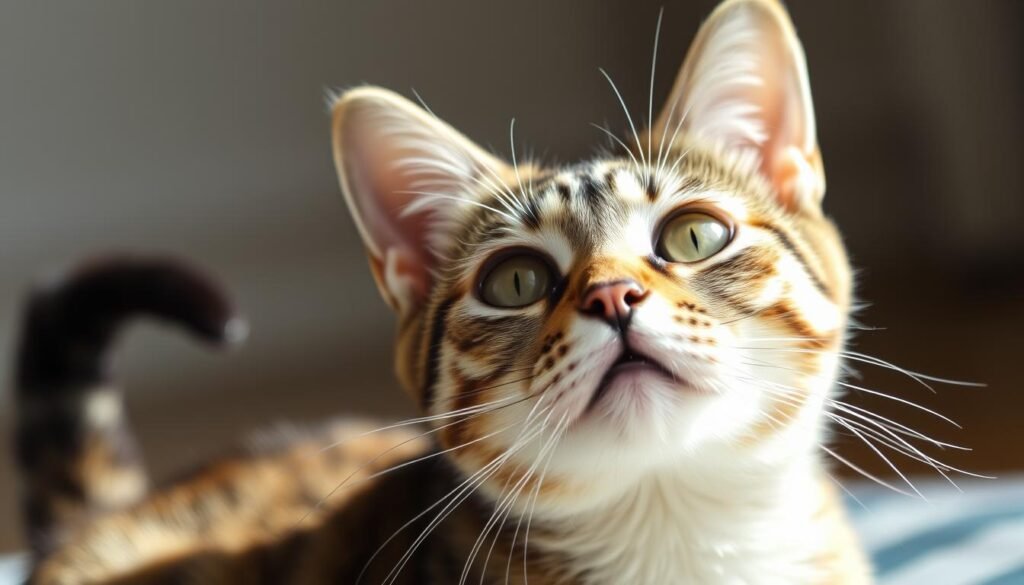
Begin by noticing everything around your pet. What do they see, hear, and smell? All these sensory inputs shape how a cat feels. A loud noise or a new scent can change their entire mood.
Once you assess the big picture, look closer at their physical behavior. Your companion uses a complex mix of postures, sounds, and scents. These layers work together to form a detailed language.
Some signals are obvious, like a hiss. Others are much softer, like a slight ear twitch or a slow blink. Recognizing these gentle hints helps you understand your pet’s comfort level before they become upset.
This awareness prevents misunderstandings. You’ll learn to see when your furry friend is reaching their limit. With consistent attention, you’ll start to predict their needs and responses.
Every animal has a unique personality. Learning your specific pet’s patterns is just as important as knowing general rules. Your dedication will build a stronger, happier bond.
Interpreting Tail, Ear, and Eye Signals
Your companion’s tail, ears, and eyes work together like a detailed mood dashboard. These features provide continuous feedback about their emotional state.
Tail Movements and Meanings
A high, vertical tail shows confidence and friendliness. A low or tucked tail indicates fear or anxiety. Watch for tail quivering during happy greetings.
Tail flicking can mean different things. During play, it shows alertness. But when being petted, it might signal irritation.
Ear Positions and Eye Contact
Forward-facing ears show your pet is engaged and relaxed. Ears flattened sideways often mean fear. Backward-pointing ears can signal anger.
Relaxed eyes with slow blinking indicate trust. This is often called a “cat kiss.” Dilated pupils show high stimulation from play or fear.
By combining these signals, you get a complete picture of your furry friend’s feelings. Each element confirms what the others suggest.
Understanding Vocalizations and Other Sounds
Your animal friend uses a rich vocabulary of sounds to convey their needs and moods. These vocalizations provide direct access to their emotional state. They represent the most obvious method pets use to express themselves.
Purring, Hissing, and Beyond
Purring typically indicates contentment and pleasure. Surprisingly, pets may also purr when in pain or sick. Veterinarians often report animals purring when injured.
When threatened, pets use escalating vocalizations. It begins with growling as a warning. Hissing follows when they feel seriously threatened.
Yowling and shrieking occur when animals feel cornered. These intense sounds signal they’re out of options. Understanding this progression helps you respond appropriately to defensive behavior.
What Meows and Chirps Tell You
Chirping and chattering express hunting excitement. This occurs when prey is nearby but inaccessible. It shows a mix of anticipation and frustration.
Trilling sounds like high-pitched purring. Mother animals use it with their young. Pets trill to greet owners, showing familial affection.
Meowing has multiple meanings depending on context. Domesticated animals developed this specifically for humans. Constant unusual meowing may indicate health issues.
| Vocalization | Typical Meaning | Context | Response |
|---|---|---|---|
| Purring | Contentment or pain | Relaxed or stressed | Observe other cues |
| Hissing | Serious threat | Defensive situation | Give space |
| Chirping | Hunting excitement | Prey spotted | Allow observation |
| Trilling | Friendly greeting | Happy interaction | Return affection |
Each sound must be interpreted within its specific situation. Paying attention to patterns helps you understand your pet’s unique language.
Creating a Cat-Friendly Environment
Environmental design directly shapes your animal’s stress levels and willingness to interact openly with family members. A well-planned space can transform your furry friend’s behavior and comfort.
Designing Safe Spaces
Your companion’s surroundings significantly impact their sense of security. Open areas with good visibility help your pet feel in control. Elevated perches satisfy their natural instinct to survey territory.
Provide dedicated retreat spots where your kitty can withdraw when overwhelmed. These safe havens are essential during loud gatherings or busy household activities. Having personal space reduces anxiety and promotes relaxation.
Window access offers vital mental stimulation for indoor pets. Even brief outdoor observations provide enrichment. Proper environmental setup prevents behavioral issues.
| Environmental Feature | Benefit | Implementation |
|---|---|---|
| High Perches | Security & Observation | Cat trees, window shelves |
| Escape Routes | Stress Reduction | Multiple exit paths |
| Retreat Spaces | Privacy & Comfort | Enclosed beds, quiet rooms |
| Window Access | Mental Stimulation | Window perches, screened areas |
Travel carriers should limit sensory overload while allowing ventilation. Familiar items inside create comfort. Environmental control empowers your pet to choose engagement or solitude.
When your companion feels secure in their surroundings, they display more relaxed body language. This foundation supports better understanding between you and your furry family member.
Tips for Enhancing Interaction and Building Trust
Building a strong relationship with your furry companion starts with respecting their unique personality. It requires patience and learning how they like to receive attention.
True trust is earned by understanding their boundaries and offering affection in ways they appreciate.

Safe Play Techniques
Always use interactive toys like wands and feathers for playtime. This lets your pet engage their natural hunting instincts safely.
Never use your hands as toys. This teaches them that human hands are acceptable targets for biting and scratching.
Proper play keeps your hands away from their teeth and claws. It makes your time together fun and stress-free.
Recognizing Stress and Affection
Your kitty shows love through specific actions. Grooming, snuggling, and headbutting are clear signs of affection.
They also use a slow blink to show trust. When you return this gesture, it strengthens your emotional bond.
Watch for stress signals like a tucked tail or flattened ears. If your pet tries to move away, give them space.
Respecting their limits builds more trust over time. Every animal has different preferences for physical contact.
Some enjoy belly rubs, while others do not. Learning your pet’s individual behavior is the key to a happy relationship.
Advanced Insights into Feline Behavior
Mastering feline behavior requires looking beyond individual signals to understand the complete picture. This advanced approach helps you interpret complex situations with greater accuracy.
Integrating Body Language with Context
Expert interpretation means connecting multiple behavioral clues simultaneously. Watch how posture, ear position, and tail movement interact with the environment.
For example, a pet might show different tail positions based on whether they’re playing or feeling threatened. The same physical cue can have opposite meanings depending on the situation.
Body blocking is a subtle behavior where animals position themselves to control access. This can look like casual resting but signals underlying tension when combined with intense staring.
Adjusting Your Approach Based on Cues
Your response should match the animal’s emotional state. A playful pet with dilated pupils needs different interaction than a fearful one with flattened ears.
Chemical signals are another important layer of feline interaction. Pets use scent glands throughout their body to mark territory and express emotions.
Rubbing, scratching, and other marking behaviors leave pheromone messages. Understanding these subtle cues helps you create a more comfortable environment for your furry friend.
Conclusion
You’ve now unlocked the fascinating code behind your feline companion’s world. Your pet isn’t mysterious; they express themselves through a rich blend of posture, tail flicks, ear twitches, and sounds.
The true key is seeing all these elements together. A single signal doesn’t tell the full story. You must consider the entire situation from your furry friend’s point of view.
With this guide, you have the tools to interpret their unique language. Consistent observation over time will make you an expert on your specific animal’s personality and quirks.
This deeper understanding transforms your relationship. It builds a stronger bond and creates a more harmonious home for everyone. Your effort pays off with a happier, more confident companion.
FAQ
What does it mean when my pet’s tail is straight up?
A tail held high is often a sign of a happy and confident feline. It’s a friendly greeting, showing your kitty is content and comfortable in your presence.
Why does my furry friend sometimes flatten its ears?
Flattened ears, often paired with wide pupils, usually indicate fear, stress, or aggression. It’s a clear signal that your companion feels threatened and needs space.
Is a slow blink from my animal a good thing?
Absolutely! A slow, deliberate blink is like a kitty kiss. It’s a powerful sign of trust and affection. You can try slowly blinking back to show you feel the same way.
What’s the difference between a playful paw and an aggressive one?
Playful behavior usually involves claws retracted and a relaxed posture. An aggressive or fearful swipe will have claws out, often accompanied by hissing or a puffed-up back.
My buddy follows me everywhere. What does this behavior mean?
This is a strong sign of attachment! Your pet likely feels a deep bond with you and enjoys your company. It’s a feline way of showing loyalty and seeking your attention.
Should I be worried about excessive vocalizations like constant meowing?
While some breeds are more talkative, a sudden increase in meows or other sounds can signal that something is wrong. It could be a sign of pain, hunger, or stress, and it’s wise to observe the context.