Top Cat Enrichment Ideas to Stimulate and Entertain Your Pet
Top Cat Enrichment Ideas to Stimulate and Entertain Your Pet
Table of Contents
Have you ever watched your feline companion stare out the window with a look of longing? Or noticed them batting at the same toy they’ve ignored for weeks? That restless energy isn’t just boredom—it’s a sign your pet needs more mental and physical stimulation.
Creating a rich environment for your furry friend goes beyond basic care. It’s about understanding their natural instincts and providing outlets for their behaviors. This approach to pet care ensures your companion leads a happy, fulfilled life.
The best part? You don’t need expensive toys or complicated setups. Simple, thoughtful changes can make a huge difference in your pet’s daily experience. Proper stimulation prevents behavior issues and strengthens your bond through positive engagement.
Key Takeaways
- Enrichment addresses your pet’s mental, emotional, and physical needs
- A stimulating environment prevents boredom and behavior problems
- Simple modifications can make a big impact on your feline’s happiness
- Every pet has unique preferences that should guide your approach
- Enrichment strengthens the bond between you and your companion
- You can implement effective strategies regardless of your budget
Overview of Cat Enrichment
Think of your pet’s world from their perspective. A stimulating environment fulfills their natural instincts and prevents boredom.
What Cat Enrichment Means for Your Pet
This approach is about more than just toys. It means creating a home where your feline friend can express natural behaviors in safe ways.
Meeting these mental and emotional needs is as vital as providing food and water. It honors their animal nature.
Benefits for Behavior and Bonding
A engaged pet is a happier pet. Proper stimulation directly leads to fewer behavior issues.
Boredom can cause problems like scratching furniture or excessive meowing. Providing outlets for their energy reduces these challenges.
This process also strengthens your bond. Shared positive experiences help you understand what makes your companion happy.
Every animal is unique. The table below highlights key differences in pet responses to a stimulating home.
| Behavior | Without Stimulation | With Proper Stimulation |
|---|---|---|
| Daily Activity | Lethargic, sleeps excessively | Energetic, curious, and playful |
| Interaction | May hide or seem distant | Seeks attention and engagement |
| Common Issues | Destructive scratching or chewing | Content and well-behaved |
Finding the right way to engage your pet is a journey. Observation is your best tool for a happier, healthier life together.
Interactive Toys and Self-Play Solutions
The right interactive toys can transform your pet’s daily routine from mundane to exciting. These engaging tools provide essential exercise while strengthening your bond through shared fun.
Choosing the Right Interactive Toys
Wand-type toys with feathers or fabric attachments create realistic prey movements that trigger natural hunting instincts. Products like the Da Bird Feather Teaser are particularly effective for this purpose.
Laser pointers offer another engaging option, but make sure your companion can eventually “catch” something to prevent frustration. Always point the beam at a treat or physical toy they can capture.
Supervision and Safety Tips
Safety should always come first during playtime. Toys with long strings require constant supervision to prevent accidental ingestion or entanglement.
When introducing new toys, watch your pet closely to ensure they’re playing safely. Remove any item immediately if they attempt to chew or swallow it. Proper supervision makes playtime both fun and secure.
Rotate self-play options regularly to maintain interest. Simple items like cardboard boxes or paper bags (with handles removed) provide cheap entertainment when you’re not available for interactive sessions.
DIY Cat Enrichment Ideas for Home
You don’t need to visit a pet store to provide stimulating activities for your companion. Many household items can become engaging toys that spark natural curiosity.
Low-Cost and Recycled Material Projects
Wadded-up paper balls and cardboard containers often become preferred playthings. Plastic rings from milk jugs and ping pong balls offer variety without cost.
Test different objects to discover what your furry friend enjoys chasing most. This approach helps you understand their unique preferences.
Step-by-Step DIY Food Puzzles
Create simple feeding challenges using paper towel tubes. Cut slits in one end and fold the flaps inward.
Make holes slightly larger than kibble pieces. Fill the tube with treats and let your pet push it around until snacks fall out.
Creative Play with Everyday Items
Transform shoe boxes into interactive stations by inserting toilet paper rolls. This creates a reach feeder that challenges problem-solving skills.
Cardboard containers can become tunnels or mazes with some creative cutting. These engaging spaces provide hours of exploration right in your living area.
Vertical and Environmental Enrichment
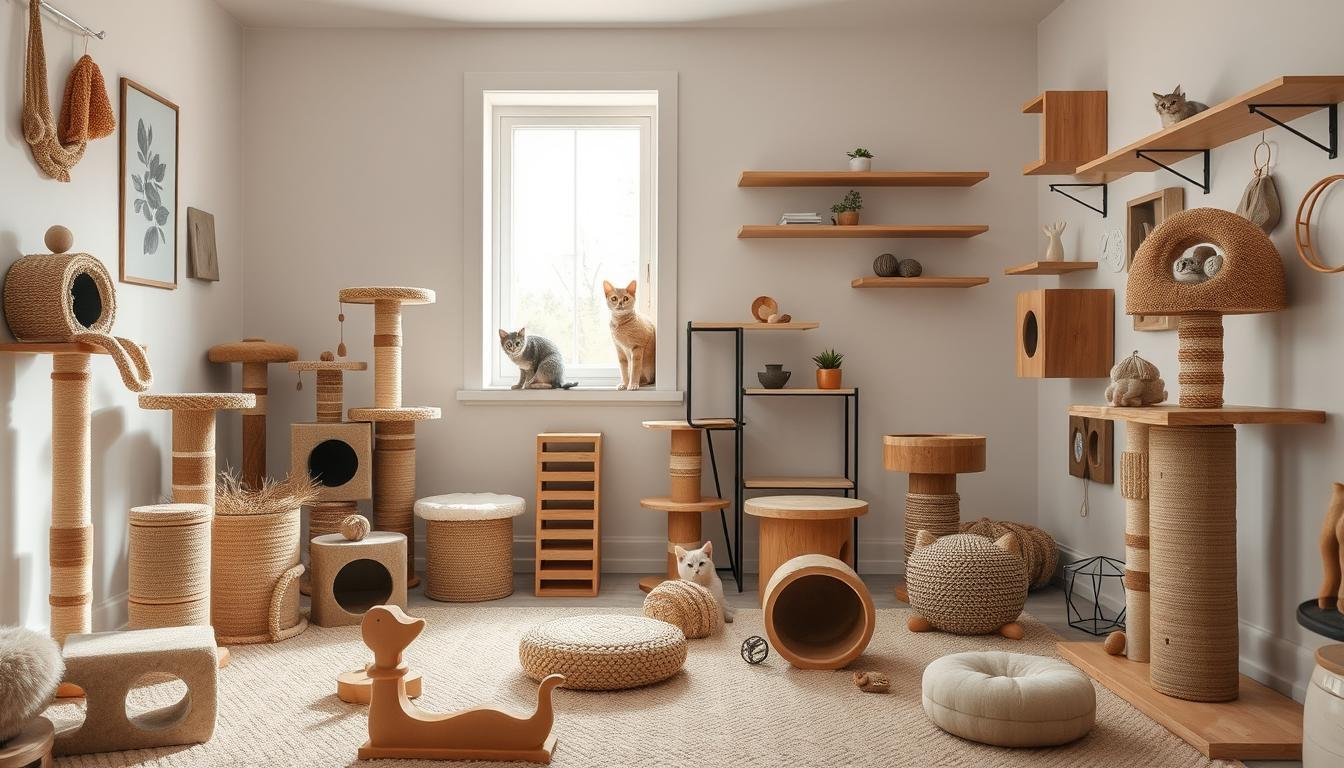
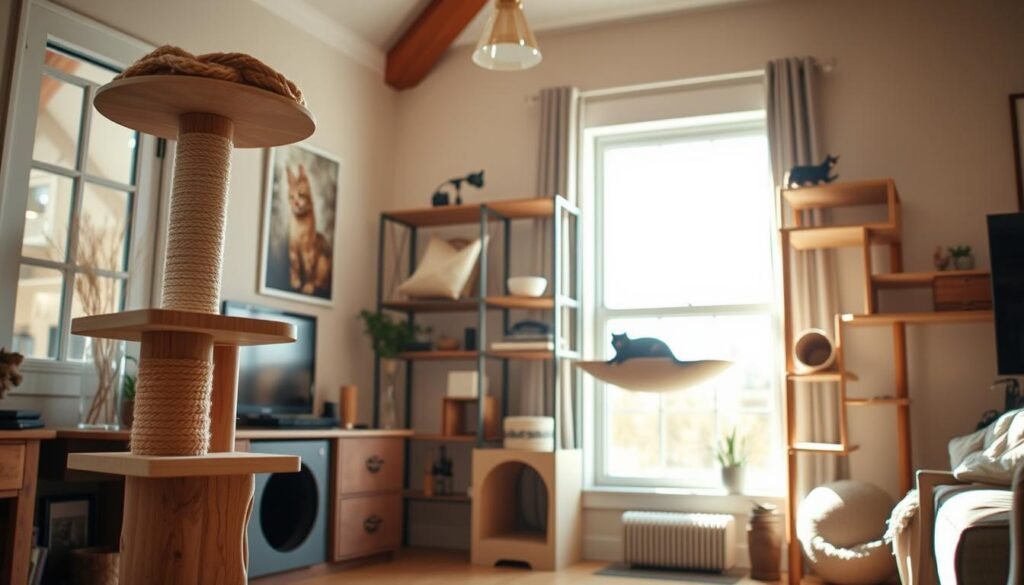
Elevated spaces in your home can dramatically transform your pet’s daily experience by tapping into their natural climbing instincts. Providing vertical territory satisfies their need to survey their domain from safe vantage points.
Setting Up Cat Trees and Perches
Climbing structures like tall posts with platforms offer perfect spots for your furry friend to exercise and rest. You can create budget-friendly options by clearing couch backs near windows.
This creates instant observation spaces without expensive purchases. Simple shelves arranged at different heights work well too.
Enhancing Views with Window Seats
Window perches provide hours of entertainment as your companion watches outdoor activity. Positioning a bird feeder outside creates natural “TV” that captures their attention.
Be mindful of roaming animals that might cause stress. Digital videos of birds offer alternative stimulation when live viewing isn’t available.
Different vertical options suit various home environments. The table below shows popular choices for creating engaging spaces.
| Vertical Structure | Benefits | Considerations |
|---|---|---|
| Multi-level Trees | Provides climbing, scratching, and resting spaces | Requires adequate floor space |
| Window Perches | Offers bird watching and sunlight enjoyment | Needs secure installation |
| Wall Shelves | Maximizes vertical space in small areas | Requires proper mounting |
Combining these elements creates a stimulating environment that keeps your pet engaged throughout the day. Variety in vertical spaces prevents boredom effectively.
Cat Enrichment Ideas with Food and Treats
Mealtime can become your pet’s favorite adventure with simple food-based challenges. These activities tap into natural foraging behaviors that keep your companion mentally sharp.
Food puzzles transform feeding from passive consumption to active engagement. Your furry friend must work for their kibble or treats by manipulating these clever devices.
Designing Interactive Food Puzzles
Stationary puzzles with small holes release pieces slowly as your pet interacts with them. Mobile versions roll around, requiring batting and chasing to access the rewards inside.
You can create effective DIY versions using household items. An ice cube tray becomes a simple puzzle when you place kibble in each compartment.
Cardboard boxes filled with crinkled paper and hidden treats simulate natural hunting conditions. Your companion will enjoy digging through the layers to find their prize.
Using Treats for Training and Engagement
Strategic treat placement turns your home into a foraging ground. Scatter feeding involves tossing kibble across the floor for your pet to gather.
For more advanced challenges, hide small piles in different locations. This activity encourages natural searching behaviors and provides physical exercise.
Training sessions become more rewarding when paired with puzzle solving. The combination of mental stimulation and tasty rewards creates positive associations.
| Puzzle Type | Difficulty Level | Best For |
|---|---|---|
| Stationary Feeders | Beginner | Slow eaters and older pets |
| Rolling Toys | Intermediate | Active companions who enjoy play |
| Hidden Treasure Games | Advanced | Pets needing mental challenges |
These food-based activities provide daily mental stimulation without extra time commitment. Every meal becomes an opportunity for engagement and fun.
Scent-Based & Agility Activities for Feline Stimulation
Your furry friend’s world is rich with scents we can barely perceive. Tapping into this powerful sense opens up amazing new ways to engage their natural curiosity.
Start with simple scent exploration. A sprinkle of catnip, silver vine, or valerian root on a familiar toy can instantly renew its appeal.
You can also dust these scents in quiet corners or on a scratching post to draw your companion to new areas. This encourages exploration throughout your house.
Incorporating Scent and Natural Instincts
For a real adventure, create a “sniffari” box. Fill a cardboard container with untreated leaves, twigs, and safe plants from your garden.
This brings the outdoors inside safely. It satisfies their deep-rooted instincts to investigate new smells.
Consider growing your own catnip or valerian. It’s a rewarding project that provides fresh stimulation.
Building Agility Courses and Obstacle Play
Agility isn’t just for dogs! With a little patience, you can teach your pet fun obstacle courses.
Use clicker training to guide them over pillows, through boxes, and around chairs. Start with low barriers and short distances.
Even without formal training, you can create a fun course. Arrange cushions and boxes to make tunnels and hiding spots.
Use a wand toy to lead them through the course. This combines physical activity with mental focus for a complete workout.
Teaching simple cues like “sit” or “wave” provides excellent mental stimulation. Always use positive reinforcement like treats and praise.
Conclusion
Every pet owner has the power to dramatically improve their animal’s quality of life through creative engagement. You now possess a complete toolkit of feline enrichment ideas that can transform daily routines.
The most valuable thing you can offer is your time. Shared activities like gentle brushing or interactive play create lasting bonds. These moments bring genuine fun to both of you.
Remember that simple changes make the biggest impact. Everyday things around your home can provide excellent stimulation. This approach prevents common behavior issues effectively.
Always make sure to supervise new activities, especially DIY projects. Safety ensures every experience remains positive for your companion.
Start with one or two approaches that suit your space and schedule. Observe what brings your pet the most joy. This personalized way ensures lasting happiness and well-being.
FAQ
What is feline enrichment, and why is it important?
Feline enrichment involves providing activities and an environment that stimulate your pet’s natural instincts. It’s crucial for preventing boredom, which can lead to behavior issues like scratching furniture or excessive meowing. A stimulated animal is a happier and healthier companion.
How can I create fun activities without buying expensive toys?
You can use many items from around your house! A simple cardboard box with holes cut in it makes a great puzzle for hiding kibble. Crumpled paper balls or a paper bag (with handles removed for safety) can provide hours of fun. These DIY projects are low-cost and highly engaging.
What are some safe ways to bring the outdoors inside for my pet?
Setting up a secure window perch is a fantastic way to let your furry friend watch birds and squirrels safely. You can also grow cat-friendly grass indoors. Always ensure screens are sturdy to prevent any falls and keep your companion secure while they enjoy the view.
How do food puzzles help with my pet’s behavior?
Food puzzles turn mealtime into a brain game. They encourage natural foraging behaviors, slowing down eating and providing mental stimulation. This can reduce anxiety and prevent weight gain by making your animal work for their treats or kibble.
Are there training activities I can do with my feline friend?
Absolutely! You can use small, healthy treats to teach simple commands like “sit” or to come when called. This kind of engagement strengthens your bond and provides excellent mental exercise. Training sessions should be short, positive, and fun for both of you.